


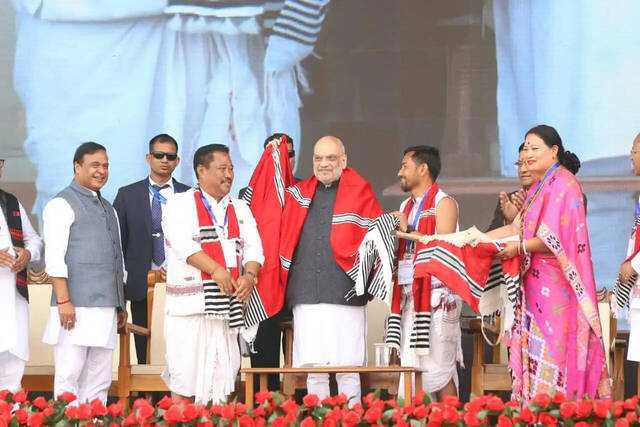
Campaigning for the upcoming Assembly elections in Assam has entered a high-energy phase, with major political parties ramping up their outreach efforts across the state. As polling day draws closer, leaders are holding back-to-back rallies, roadshows, and public meetings to consolidate support and sway undecided voters.
The Assam Assembly elections campaigning has witnessed a surge in political activity, reflecting the high stakes involved. From national leaders to regional figures, political heavyweights are actively engaging with voters, highlighting achievements, and presenting their vision for the state’s future.
Read More: Meghalaya seeks higher LPG allocation amid supply issues
Surge in Political Rallies and Roadshows
Across Assam, political rallies have become a daily occurrence. Major towns and rural constituencies alike are witnessing large gatherings as parties attempt to maximize their visibility.
Leaders from the ruling party, including Chief Minister Himanta Biswa Sarma, have intensified their campaign schedule. His speeches often focus on development initiatives, infrastructure projects, and governance achievements.
On the other hand, opposition parties are also stepping up their efforts. Senior leaders are traveling extensively to connect with voters and challenge the ruling party’s narrative. They are raising issues such as unemployment, price rise, and social concerns.
Roadshows have emerged as a key campaign strategy. These events allow leaders to interact directly with the public, creating a sense of connection and accessibility.
Focus on Key Electoral Issues
As the Assam Assembly elections campaigning gathers momentum, political parties are sharpening their focus on key issues. Development, employment, and welfare schemes dominate campaign speeches.
The ruling party has highlighted its track record, emphasizing progress in infrastructure, healthcare, and education. It has also pointed to initiatives aimed at improving connectivity and boosting economic growth.
Meanwhile, opposition parties are focusing on gaps in governance. They are questioning the effectiveness of certain policies and promising alternative approaches to address public concerns.
Additionally, issues such as land rights, evictions, and regional identity have become significant talking points in several constituencies. These topics resonate strongly with voters and are likely to influence electoral outcomes.
Role of Star Campaigners
The presence of star campaigners has added intensity to the election atmosphere. National leaders are visiting Assam to support their respective parties and boost morale among party workers.
Chief Minister Himanta Biswa Sarma continues to play a central role in the ruling party’s campaign. His extensive outreach and frequent public appearances have kept the momentum high.
At the same time, opposition leaders are also drawing crowds with their rallies. Their participation brings national attention to the state elections and amplifies campaign messaging.
Star campaigners not only attract voters but also energize party cadres. Their involvement often sets the tone for the overall campaign strategy.
Grassroots Outreach and Digital Campaigning
In addition to large rallies, parties are focusing on grassroots outreach. Door-to-door campaigns, small group meetings, and community interactions are being organized to connect with voters at a personal level.
This approach helps candidates understand local issues and tailor their messaging accordingly. It also builds trust and strengthens relationships with constituents.
Digital campaigning has also gained prominence. Social media platforms are being used to share campaign messages, highlight achievements, and counter opposition narratives. Videos, graphics, and live interactions are helping parties reach a wider audience.
The combination of traditional and digital strategies is shaping a dynamic campaign environment in Assam.
Electoral Battlegrounds and Key Constituencies
Certain constituencies have emerged as key battlegrounds in the Assam Assembly elections campaigning. These areas are witnessing intense competition, with multiple parties vying for dominance.
Candidates in these constituencies are leaving no stone unturned. Frequent visits, targeted campaigns, and issue-based messaging are being employed to gain an edge.
Local dynamics play a crucial role in shaping electoral outcomes. Factors such as community composition, past voting patterns, and candidate credibility influence voter decisions.
As a result, parties are carefully analyzing each constituency and adapting their strategies to maximize impact.
Challenges and Competition
The intensified campaigning also highlights the challenges faced by political parties. Managing resources, coordinating large-scale events, and maintaining consistent messaging require significant effort.
Moreover, the competitive nature of the elections means that parties must constantly respond to each other’s strategies. This often leads to rapid shifts in campaign narratives.
Ensuring voter turnout is another challenge. Parties are focusing on motivating supporters to participate actively in the electoral process.
Despite these challenges, the high level of engagement reflects the importance of the elections and the enthusiasm among voters.
Voter Engagement and Expectations
Voters in Assam are closely observing the campaigns and evaluating the promises made by different parties. Many are looking for tangible solutions to everyday issues.
Youth participation has increased, with younger voters showing interest in political developments. Their expectations often revolve around employment opportunities, education, and digital connectivity.
At the same time, older voters continue to prioritize stability, governance, and welfare measures. Balancing these diverse expectations is a key task for political parties.
The Road Ahead
As the election date approaches, Assam Assembly elections campaigning is expected to intensify further. More rallies, announcements, and strategic moves are likely in the coming days.
In conclusion, the current phase of campaigning in Assam reflects a vibrant and competitive democratic process. With multiple parties actively engaging with voters, the elections promise to be closely contested. The final outcome will depend on how effectively each party connects with the electorate and addresses their concerns.
Read More: Arunachal Anti-Trafficking Operation Rescues Seven Women