


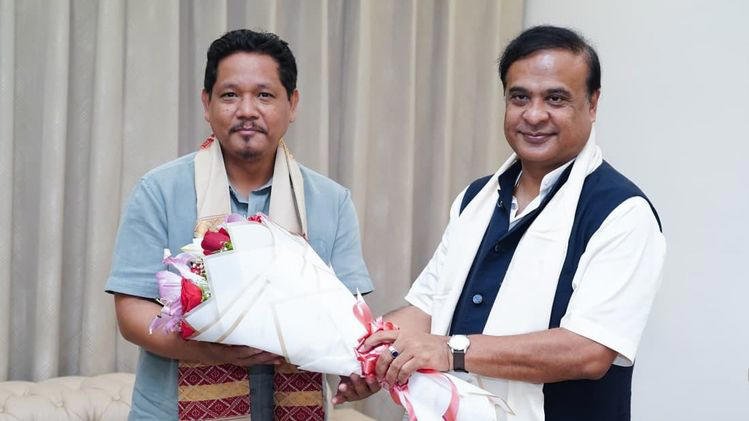
Meghalaya Chief Minister Conrad Sangma has assured that the situation along the inter-state boundary with Assam remains under control. His statement comes after reports of heightened tensions in some border pockets sparked concerns among residents. Sangma stressed that both states remain committed to dialogue, and immediate steps are being taken to prevent any escalation.
Read More: Dhubri SHG Women Get Rs 10,000 Aid for Empowerment
CM Sangma emphasizes joint responsibility
Addressing the media in Shillong, Sangma said the Meghalaya government is in constant touch with Assam counterparts to monitor developments. He noted that peace in the border areas is vital not only for the affected villages but also for maintaining long-term harmony between the two states.
He explained that security forces are on alert and coordination between both states has been strengthened. Sangma reassured citizens that Meghalaya-Assam border tensions will not be allowed to disrupt the progress achieved in previous talks. He called for patience and trust as the administrations continue to handle the matter with sensitivity.
Background of the long-standing issue
The boundary dispute between Meghalaya and Assam dates back to 1972, when Meghalaya was carved out of Assam. Since then, differences over demarcation in 12 disputed areas have frequently led to clashes, protests, and fear among border residents.
Both states agreed in 2022 to resolve six out of the twelve disputed locations, and discussions are ongoing regarding the remaining six. However, fresh tension occasionally flares up in villages where claims overlap, as seen in the recent episode. These situations remind stakeholders of the fragility of peace in border belts and the urgent need for a permanent settlement.
Security measures in place
According to Sangma, security personnel from both Meghalaya and Assam have been deployed to ensure calm. Joint patrolling and quick communication channels between district authorities have also been activated.
Local police have been asked to keep regular contact with community leaders to prevent rumors from spreading. Sangma reiterated that no incident of major violence has been reported, and he expressed confidence that the measures will keep the Meghalaya-Assam border tensions under check.
Dialogue as the primary tool
The Meghalaya CM underlined dialogue as the most effective way forward. He highlighted that both governments have agreed not to take unilateral steps that could fuel mistrust. Regular meetings at ministerial and official levels continue to focus on confidence-building measures.
Sangma also appealed to civil society organizations and local residents to cooperate with authorities. He said peace cannot be achieved through force alone; it must be rooted in trust and a willingness to compromise where possible.
Assam’s response to the situation
While Assam has not released a formal statement, sources confirmed that its government is also prioritizing peace. The Assam administration has directed officials to remain in touch with Meghalaya counterparts and to avoid any action that may appear provocative.
Such cooperation, Sangma observed, shows that both governments have learned lessons from past episodes of unrest. He maintained that this commitment is crucial to resolving Meghalaya-Assam border tensions in the long term.
Impact on border residents
Villagers living in disputed zones often bear the brunt of uncertainty. Reports suggest that people in certain pockets expressed concern about security and livelihoods. Access to schools, healthcare, and markets sometimes gets disrupted when tensions rise.
The Meghalaya government has assured residents that their safety will not be compromised. Compensation and development packages remain part of broader discussions to ensure affected communities are not left behind. Sangma emphasized that both sides recognize the importance of addressing humanitarian issues along with territorial claims.
Long-term solution remains priority
Despite the current calm, Sangma admitted that the root cause of Meghalaya-Assam border tensions lies in the unsettled demarcation. The regional committees formed earlier continue to study land records, maps, and historical claims to recommend solutions.
He said that resolving these disputes will take time but noted progress in recent years as a hopeful sign. The Chief Minister added that New Delhi has been supportive, encouraging both states to reach consensus without confrontation.
Civil society’s role in peace
Community groups, student unions, and church organizations have also called for restraint. Many leaders urged residents not to engage in confrontational behavior that could derail the dialogue process. Sangma welcomed these efforts, saying community participation makes peace-building more effective.
According to him, Meghalaya-Assam border tensions cannot be solved by governments alone. People must contribute to the spirit of cooperation, helping to ensure that small disputes do not escalate into bigger problems.
Looking ahead with cautious optimism
Conrad Sangma concluded his statement by stressing that the government remains optimistic. While challenges persist, the progress made so far proves that solutions are possible when dialogue and trust are prioritized.
He reiterated his government’s stance: violence and unrest will not be tolerated, but peaceful negotiations will continue. Sangma expressed confidence that the Meghalaya-Assam border tensions can eventually be resolved, paving the way for greater stability and development in the region.
For now, the situation remains calm, thanks to prompt coordination and the willingness of both states to keep communication open. Citizens have been assured that governments on both sides are determined to ensure safety, stability, and long-term peace.
Read More: Mizoram Sticks to 1875 Notification for Assam Border: Minister