


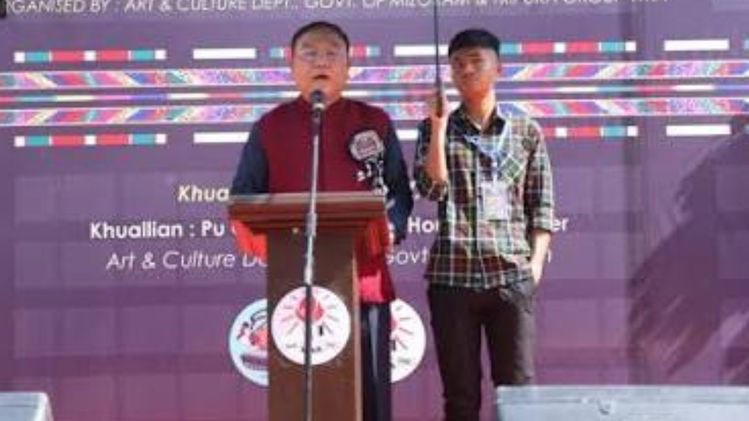
Mizoram Art and Culture Minister C Lalsawivunga has called for a renewed effort to preserve and practise traditional Mizo values in everyday life. He stressed that culture should not remain limited to songs, dances and cultural performances.
The minister made the remarks while addressing a cultural meeting at Bungzung village in Champhai district on September 18. The Art and Culture Department organised the programme in association with a local branch of the Young Mizo Association (YMA).
Lalsawivunga said people, particularly young people, should understand their Mizo identity and take pride in their cultural heritage. He urged communities to use cultural programmes as opportunities to reconnect with traditional values.
Read More: FM Sitharaman Asks Banks to Boost Financial Literacy for MUDRA Beneficiaries
‘Culture Is Not Confined to Songs and Dances’
The minister emphasised that cultural identity involves more than performing traditional songs and dances. He said people should reflect their cultural values through their actions and behaviour.
According to Lalsawivunga, cultural programmes should strengthen the community’s cultural foundation. They should also encourage younger generations to understand the principles that shaped Mizo society.
His comments came amid efforts to preserve Mizoram’s traditional heritage while adapting to social changes. The minister encouraged people to look beyond cultural performances and focus on the values and social responsibilities associated with their heritage.
Focus on Tlawmngaihna
One of the key values highlighted by the minister was Tlawmngaihna. The traditional Mizo concept is associated with selfless service, helping others and putting community interests ahead of personal convenience.
Lalsawivunga called for the revival of this value among younger generations. He said the principle could continue to play an important role in strengthening community life.
Tlawmngaihna has long been associated with Mizo social life. It encourages people to respond to the needs of others without expecting personal rewards. The value therefore connects cultural identity with community responsibility.
The minister’s call seeks to bring greater attention to these principles at a time when younger generations face changing lifestyles and social influences.
Respect for Elders Must Continue
Lalsawivunga also expressed concern about what he described as a decline in respect for elders in contemporary society. He called on families to make greater efforts to pass respect for older people to younger generations.
He said families have an important role in preserving traditional values. Parents and elders can introduce children to cultural principles through everyday behaviour and community participation.
Respect for elders has traditionally formed an important part of social relationships in many Mizo communities. The minister’s message focused on maintaining this value as society changes.
Importance of Honesty and Hard Work
The minister also called for renewed emphasis on honesty, hard work and righteousness. He encouraged people to make these qualities part of their daily lives.
According to Lalsawivunga, cultural preservation should involve more than maintaining traditional performances. It should also include the ethical values that have shaped community life.
He encouraged people to work towards self-reliance and contribute to the development of Mizo society. Such values, he said, can help communities address contemporary challenges while maintaining their cultural identity.
Youth Have a Key Role
Young people remain central to the preservation of cultural identity. The minister specifically encouraged younger generations to learn about their heritage and take pride in being Mizo.
Youth organisations can play an important role in this process. The Young Mizo Association, one of the prominent community organisations in Mizoram, provides a platform for young people to participate in social and community activities.
Cultural programmes can give young people opportunities to learn traditional practices. They can also help them understand the values behind those practices.
Lalsawivunga’s message suggests that cultural education should connect young people with both the visible and less visible aspects of Mizo heritage.
Preserving Mizoram’s Heritage Sites
The cultural meeting also included a focus on the preservation of historical heritage. Lalsawivunga announced that the government had earmarked Rs 1.2 lakh for the preservation and beautification of Sikpui Lung, an important historic Mizo heritage site in Bungzung.
He said the government would provide additional funds if the allocated amount proved insufficient for the planned preservation work.
The announcement adds a heritage-preservation component to the minister’s wider emphasis on cultural identity. Protecting historical sites can help future generations understand the history and traditions of their communities.
Connecting Heritage With Everyday Life
Mizoram has a rich tradition of community-based cultural practices. Traditional festivals, music, dance and other forms of cultural expression remain important parts of Mizo identity.
However, the minister’s remarks highlight another aspect of heritage: the values that guide social behaviour.
From community service to respect for elders and from honesty to hard work, these principles can influence how people interact with one another. Keeping such values alive therefore requires participation in everyday life, not only during cultural celebrations.
Culture and Community Development
The call for cultural revival also connects with the broader development of Mizo society. Lalsawivunga encouraged people to work towards self-reliance and contribute to their communities.
A strong sense of community can support social development by encouraging cooperation and responsibility. Youth participation can further strengthen this process by bringing new ideas while maintaining links with traditional values.
The minister’s message therefore places cultural preservation alongside community development. Both areas can work together when cultural identity encourages people to participate actively in society.
Preserving Identity for Future Generations
The discussion at Bungzung highlights the challenge of preserving cultural identity in a changing society. Traditional songs and dances remain important, but the values behind them also require attention.
Lalsawivunga’s appeal focuses on ensuring that younger generations understand what Mizo identity means beyond cultural performances. He urged people to revive values such as Tlawmngaihna, respect for elders, honesty and hard work.
The preservation of Mizo traditional values will ultimately depend on how families, communities and young people practise them in everyday life.
The minister’s message at Bungzung therefore goes beyond cultural celebrations. It calls for a broader understanding of heritage, where songs and dances remain important expressions of identity while traditional values continue to guide community life.