


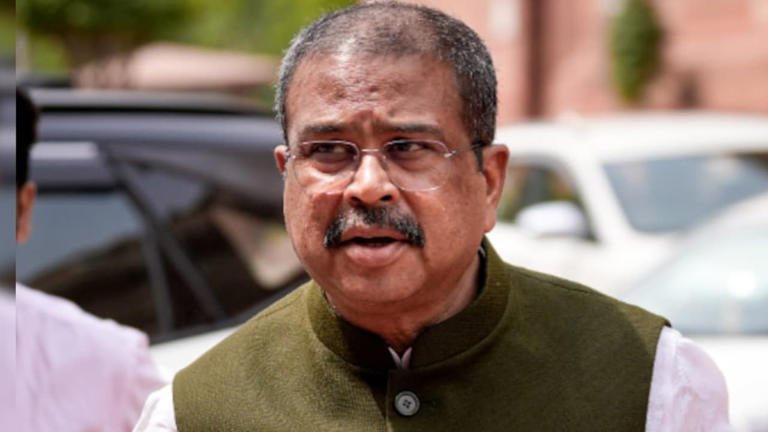
New Delhi, July 25: Union Education Minister Dharmendra Pradhan resigned from the Union Council of Ministers on Saturday amid nationwide student protests and political pressure over alleged irregularities in the NEET-UG 2026 examination. In his resignation letter to Prime Minister Narendra Modi, Pradhan said he stepped down in the larger interest of students.
He said young candidates should not remain caught in confusion or become vulnerable to exploitation during the ongoing protests. Pradhan also highlighted government action following the examination controversy. He outlined several reforms aimed at improving examination security and preventing future paper leaks.
Read More: Embankment Reinforcements Begin as Workers Repair Manu River Bank Breach with Sandbags – Borok Times
Key Facts
- Resignation: Dharmendra Pradhan
- Position: Union Education Minister
- Date: July 25, 2026
- Addressed to: Prime Minister Narendra Modi
- Main issue: NEET-UG 2026 examination irregularities
- Original exam: May 3
- Fresh examination: Conducted after the controversy
- Re-examination results: Declared July 16
- Future reform: NEET to move fully to Computer-Based Test mode
- Proposed measures: Special Fast Track Courts and a Special Task Force
Dharmendra Pradhan Resigns Amid Student Protests
Union Education Minister Dharmendra Pradhan submitted his resignation on Saturday, July 25.
His decision followed growing student protests over alleged irregularities surrounding the NEET-UG 2026 examination.
In his letter to Prime Minister Narendra Modi, Pradhan said he chose to resign in the larger interest of students.
He said the country’s youth should not remain trapped in confusion during the ongoing protests. He also expressed concern about attempts to exploit student unrest.
Government Took Action After Exam Controversy
Pradhan said the Ministry of Education acted quickly after discrepancies emerged during the medical entrance examination held on May 3.
The Union government handed the investigation to the Central Bureau of Investigation (CBI). It also cancelled the examination and conducted a fresh test.
Pradhan said the government focused on protecting the future of more than two million candidates affected by the controversy.
He stressed that authorities wanted to ensure that deserving students did not suffer because of the examination dispute.
Fresh NEET Results Declared on July 16
The re-examination results came out on July 16.
According to Pradhan, the results showed strong performances from many deserving candidates. He also highlighted candidates from economically weaker sections who succeeded in the examination.
However, protests continued at Jantar Mantar in New Delhi and in other parts of the country.
Pradhan said some people in responsible positions had attempted to mislead students and create further obstacles. He said this situation contributed to his decision to step aside.
NEET to Move Fully Online
Pradhan also outlined changes aimed at strengthening the examination system.
From the next academic session, the government plans to conduct NEET completely through the Computer-Based Test (CBT) mode.
The move aims to strengthen examination security and reduce the risk of paper leaks and other forms of malpractice.
Government Plans Tougher Anti-Paper Leak Measures
The Union government is also preparing comprehensive legislation to tackle examination paper leaks.
The proposed framework will include Special Fast Track Courts for quicker trials involving examination-related offences.
The government also plans to establish a dedicated Special Task Force. The force will focus on enforcing measures against examination malpractices.
These reforms are intended to improve transparency and restore confidence among students appearing for major competitive examinations.
Questions and Answers
Why did Dharmendra Pradhan resign?
Pradhan resigned amid nationwide student protests and political pressure over alleged NEET-UG 2026 irregularities.
When did Pradhan submit his resignation?
He submitted his resignation on July 25, 2026.
When was the original NEET examination held?
The examination took place on May 3, 2026.
What happened after the controversy?
The government handed the probe to the CBI, cancelled the examination and conducted a fresh test.
What changes are planned for NEET?
The government plans to shift NEET completely to Computer-Based Test mode from the next academic session.
What other reforms are planned?
The government plans legislation involving Special Fast Track Courts and a dedicated Special Task Force to tackle examination malpractice.
Location Context
New Delhi remains the centre of India’s national education policy and major student protests. The NEET controversy has implications across India, including Northeast states such as Tripura, Assam, Manipur, Mizoram and Meghalaya, where thousands of students compete for medical seats each year.