


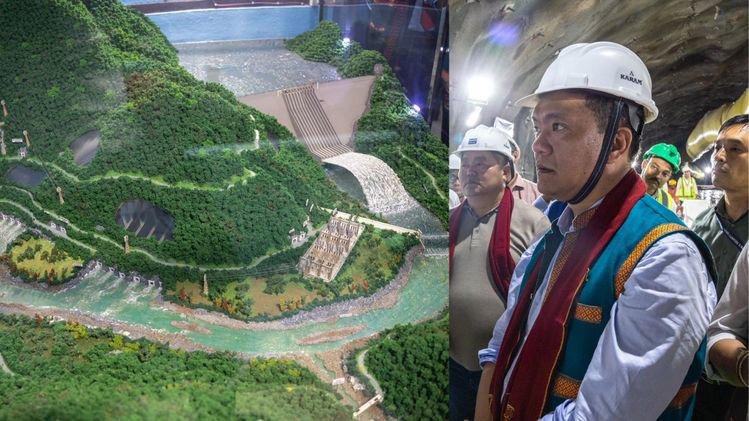
Arunachal Pradesh Chief Minister Pema Khandu has underlined the transformative role of the Dibang Multipurpose Project, describing it as “more than megawatts.” He stressed that the project is not just about hydropower generation but a catalyst for creating jobs, channeling funds, and opening opportunities for local people. His remarks came during a recent address where he spoke about the wider implications of the project on the state’s economy and society.
The Chief Minister explained that while hydropower remains the core of the Dibang project, its contribution will extend much further. According to him, it will create thousands of direct and indirect jobs for residents, particularly in the construction and allied sectors. Local youth, who often migrate to other states for employment, will now have greater chances of working closer to home. This, he said, will reduce out-migration and strengthen the social fabric of the region.
Read More: Tripura tribals face eviction, says Pradyot
The Dibang Multipurpose Project is one of the largest hydropower projects in India, with an installed capacity of 2880 MW. However, Pema Khandu noted that its value cannot be measured only in terms of electricity output. He stated that the scale of the project ensures massive inflows of central funds into Arunachal Pradesh. These funds will boost infrastructure, healthcare, education, and connectivity, ensuring long-term benefits beyond the project site.
The Chief Minister also highlighted that several villages near the project site are already witnessing new roads, better transportation links, and greater accessibility. Improved connectivity is expected to promote small businesses, agriculture, and tourism, thereby diversifying the local economy. He assured that the government will ensure fair rehabilitation and compensation for affected families, along with alternative livelihoods where required.
Khandu’s remarks also focused on Arunachal Pradesh’s commitment to balancing development with environmental protection. Concerns about ecological damage and displacement have been raised repeatedly by activists. Addressing this, he said the project is being executed with strict adherence to environmental guidelines. He assured people that while development is necessary, the government will never compromise on the preservation of forests, rivers, and wildlife.
In addition to energy production, the Dibang project will play a major role in flood moderation in downstream areas. Every year, states in the Northeast face massive damages due to floods. With its multipurpose design, the project will help regulate river flows and protect communities downstream. Khandu stressed that this aspect makes it not just a local project but a regional safeguard.
The Chief Minister also underlined that Arunachal Pradesh holds immense potential in hydropower. He explained that the Dibang project sets a model for how hydropower initiatives can be designed to fuel broader socio-economic growth. By linking energy generation with jobs, funds, and infrastructure development, the project represents an integrated approach to development.
During his address, Khandu called for active cooperation from local communities. He reminded that development projects succeed only when people participate and see themselves as stakeholders. The state government is working to ensure that local entrepreneurs and contractors also benefit from work opportunities in the Dibang project. This will increase local ownership and boost the state’s internal economy.
The Chief Minister further noted that education and skill development will be a major focus in the coming years. Training centres will be set up to prepare local youth for the technical jobs arising from the project. These steps, he said, will not only provide employment but also enhance the state’s technical capacity in the long run.
He acknowledged the challenges ahead, particularly the need to manage environmental concerns and ensure proper compensation. However, he expressed confidence that through transparent policies and inclusive planning, these issues can be addressed effectively. His assurance sought to ease fears of displacement while underlining the project’s larger benefits.
Experts believe that the Dibang Multipurpose Project could become a benchmark for hydropower development in the region. If implemented successfully, it may attract further investment in Arunachal Pradesh and encourage more partnerships between the state and the Centre. This would not only strengthen energy security for India but also accelerate growth in remote regions of the Northeast.
The Dibang project is expected to generate long-term financial returns for Arunachal Pradesh through revenue sharing. The Chief Minister mentioned that these revenues would support social welfare schemes, rural development, and other state initiatives. This financial stability will reduce dependence on external funding and empower the state to design more people-centric policies.
As the project moves forward, Arunachal Pradesh stands at a critical juncture. The Dibang Multipurpose Project is not only an engineering feat but also a social and economic lifeline. By going “beyond megawatts,” it reflects the Chief Minister’s vision of development that is both inclusive and sustainable.
The initiative showcases how infrastructure projects can be designed with a human-centric approach. Jobs, funds, and opportunities form the backbone of this effort, ensuring that the people of Arunachal Pradesh are at the heart of the state’s progress. With effective execution and community participation, the Dibang project could mark a turning point in the state’s journey toward balanced development.
Read More: Amit Shah Inaugurates Brahmaputra Wing Of Raj Bhavan