


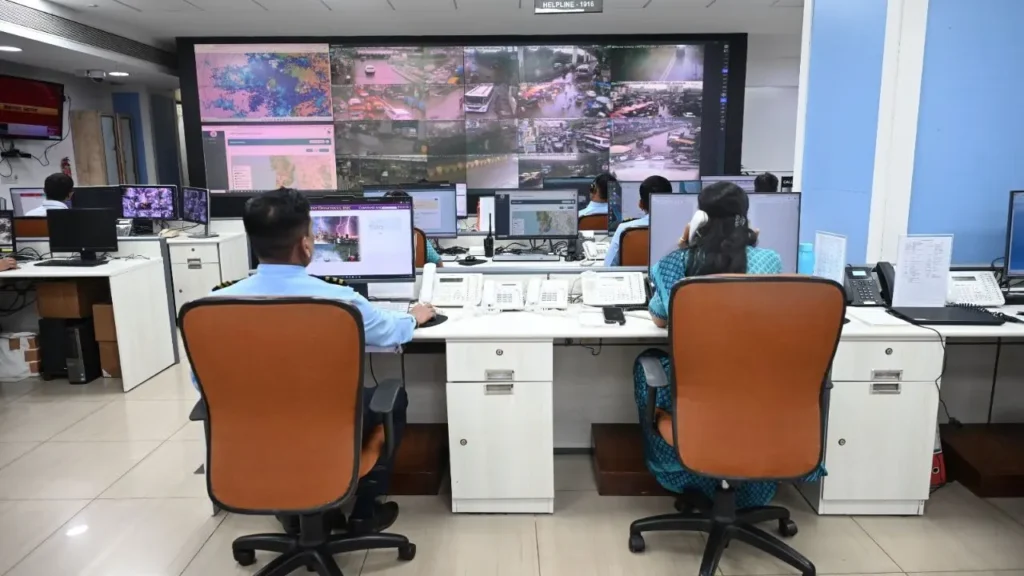
The Disaster Helpline has been activated after authorities opened a 24/7 Emergency Weather Operations Room at the Secretariat. The initiative aims to strengthen emergency coordination, provide round-the-clock assistance, and improve communication during the ongoing monsoon season and other weather-related emergencies.
Vocational IT Training Launched to Support New IT Pavilion Projects Across the State
Disaster Helpline Begins Round-the-Clock Operations at Secretariat
The Helpline became operational after the government established a 24/7 Emergency Weather Operations Room at the Secretariat. According to the available information, the facility will function continuously to monitor weather developments and coordinate emergency responses whenever required.
A dedicated operations room plays a crucial role in disaster management by serving as a central communication hub. Moreover, round-the-clock monitoring allows authorities to receive updates, assess evolving situations, and coordinate with district administrations and emergency response agencies.
Continuous operations become particularly important during the monsoon season when changing weather conditions require timely decision-making. Consequently, the new helpline strengthens the state’s disaster preparedness framework.
Although the operations room has been activated, officials have not released additional details regarding staffing or the helpline’s operational procedures.
Helpline Strengthens Emergency Coordination
The Disaster Helpline is designed to improve coordination among various government departments responsible for disaster response. Emergency operations rooms enable authorities to collect information, monitor weather conditions, and facilitate communication between field teams and administrative officials.
Furthermore, centralized coordination helps streamline response efforts during adverse weather events by ensuring that critical information reaches the appropriate agencies without delay. Effective communication also supports timely deployment of emergency resources.
Disaster management authorities routinely establish dedicated control rooms during periods of heightened weather activity. Therefore, the activation of the Secretariat operations room reflects ongoing preparedness efforts.
The latest initiative demonstrates the administration’s commitment to maintaining continuous emergency oversight throughout the monsoon.
Disaster Helpline Supports Faster Emergency Response
It enhances the state’s ability to respond promptly to weather-related incidents by maintaining uninterrupted communication channels. Quick information sharing allows authorities to monitor developments and coordinate appropriate response measures.
Moreover, the operations room can assist in facilitating communication between local administrations, disaster response agencies, and essential public service departments. Such coordination strengthens the overall effectiveness of emergency management.
Preparedness depends on timely monitoring and efficient communication. Consequently, maintaining a dedicated operations centre contributes significantly to disaster response capabilities.
According to the available information, the emergency weather operations room will remain functional on a 24/7 basis.
Disaster Helpline Reflects Proactive Disaster Preparedness
It also highlights the importance of proactive planning during periods of adverse weather. Continuous monitoring enables authorities to remain informed about evolving conditions while supporting coordinated decision-making.
Furthermore, emergency operations centres improve institutional readiness by providing a centralized platform for managing weather-related information. Close coordination among government departments also enhances public safety during emergencies.
Modern disaster management relies on preparedness, communication, and rapid coordination. Therefore, establishing a permanent round-the-clock operations room represents an important component of effective emergency planning.
The latest development reflects the government’s continued focus on strengthening disaster management infrastructure during the active monsoon season.
Conclusion
The Disaster Helpline has been launched with the opening of a 24/7 Emergency Weather Operations Room at the Secretariat. The initiative reinforces the state’s disaster preparedness by improving emergency coordination and maintaining continuous monitoring of weather-related developments.
Furthermore, centralized communication and round-the-clock operations strengthen the ability of authorities to respond efficiently during adverse weather conditions. Effective coordination also supports timely decision-making and better management of emergency situations.
Overall, the Disaster Helpline demonstrates the government’s commitment to enhancing disaster response capabilities through improved communication and operational readiness. As the monsoon season continues, the operations room is expected to play an important role in coordinating official emergency management efforts.
FAQs
1. What is the Disaster Helpline?
The Disaster Helpline is a 24/7 Emergency Weather Operations Room established at the Secretariat to coordinate weather-related emergency response.
2. Where has the Disaster Helpline been established?
According to the available information, the operations room has been opened at the Secretariat.
3. Why was the Disaster Helpline launched?
The helpline was launched to strengthen emergency coordination, monitor weather developments, and support disaster management during the monsoon season.
4. Will the Disaster Helpline operate throughout the day?
Yes. Based on the available information, the Emergency Weather Operations Room will function 24 hours a day, seven days a week.
5. What role does the Disaster Helpline play during emergencies?
It serves as a central coordination centre that facilitates communication, monitors weather conditions, and supports government agencies in responding to emergencies.