


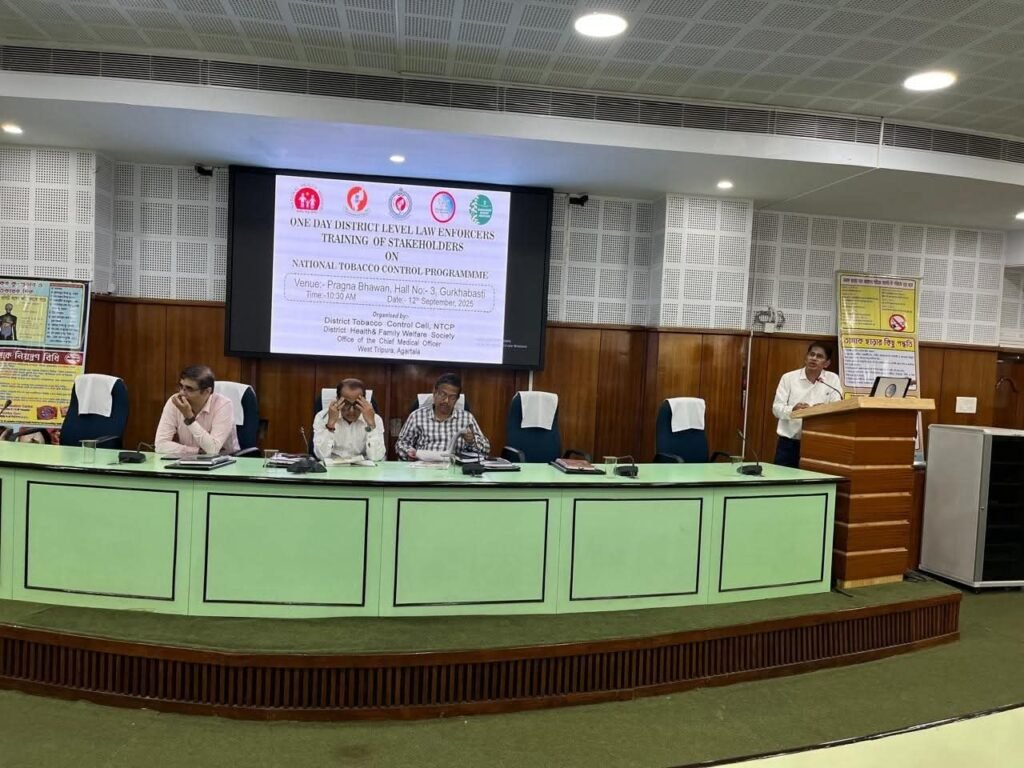
A one-day district-level training programme under the National Tobacco Control Programme (NTCP) was held on Friday at Pragna Bhawan Hall No. 3. The event aimed to enhance the capacity of multiple stakeholders in enforcing tobacco control measures at the district level.
The training brought together representatives from the Home Department, Education Department, Social Education Department, and Civil Administration (AMC). Participants were given detailed insights into tobacco control laws, enforcement mechanisms, and strategies for effective implementation of NTCP guidelines in their respective sectors.
Officials highlighted that the programme was designed to strengthen inter-departmental coordination and ensure stricter enforcement of the Cigarettes and Other Tobacco Products Act (COTPA), 2003. Sessions emphasized the importance of preventing tobacco use among children and youth, curbing sales near educational institutions, and raising public awareness about the health risks of tobacco consumption.
Experts at the event also underlined the growing burden of tobacco-related diseases in Tripura and across India. With a significant percentage of the population exposed to smoking and smokeless tobacco, the training programme focused on practical solutions to reduce accessibility and promote healthier communities.
Stakeholders from the Home Department were briefed on enforcement powers and the need for regular inspection drives to penalize violators. The Education Department was urged to integrate anti-tobacco awareness campaigns in schools and colleges. Similarly, Social Education officers discussed ways to spread awareness at the community level, while the Agartala Municipal Corporation (AMC) explored local-level monitoring and policy enforcement strategies.
The National Tobacco Control Programme, launched by the Government of India, aims to reduce tobacco consumption through coordinated action plans at national, state, and district levels. Workshops such as the one held at Pragna Bhawan play a crucial role in translating policy into practice by equipping frontline stakeholders with the required knowledge and tools.
Participants appreciated the interactive format of the training, which allowed for discussion of field-level challenges and sharing of best practices. Officials expressed confidence that the training would help accelerate implementation of tobacco control measures in the district, especially during awareness campaigns and enforcement drives.
By focusing on both enforcement and education, the training reflected the government’s commitment to achieving long-term goals of reducing tobacco-related morbidity and mortality. With continued collaboration between departments, authorities expect to see improved compliance with tobacco control laws and greater awareness among citizens.
The event concluded with a call for sustained vigilance and community involvement to ensure the success of the National Tobacco Control Programme. Officials stressed that coordinated efforts between law enforcement agencies, educators, and civic authorities will be critical in building a tobacco-free environment in Tripura.