


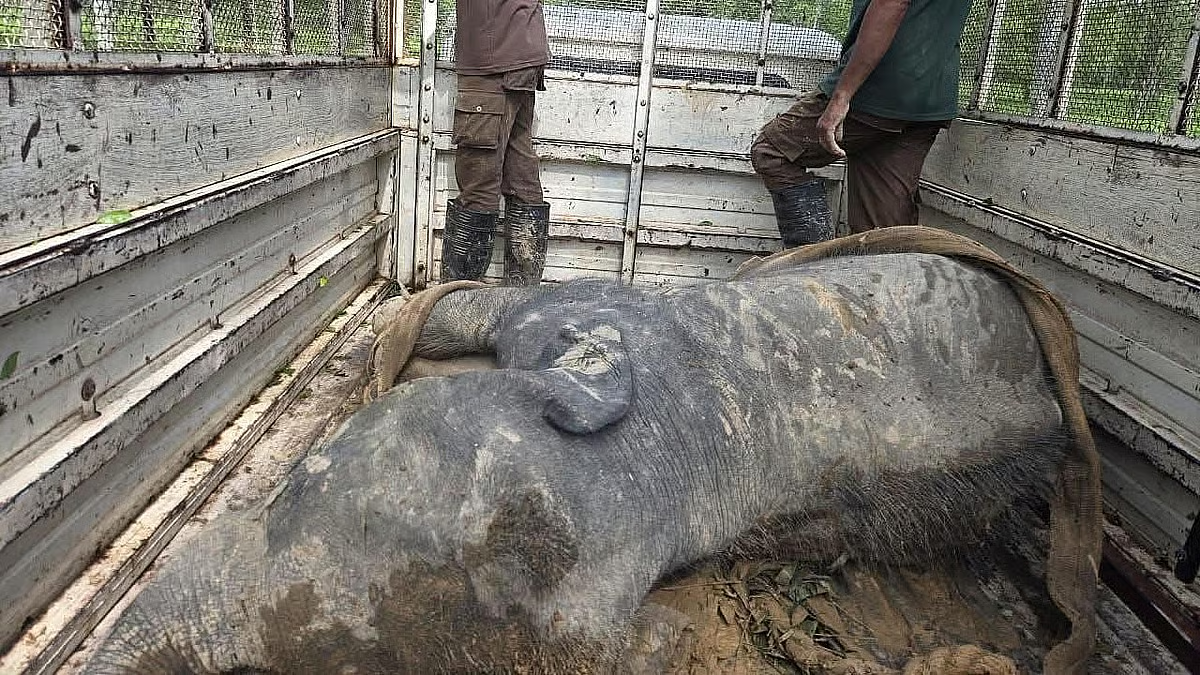
A two-month-old wild elephant calf was found dead in the Torani Reserve Forest under the Khatangpani Forest Range on Monday. Sending shockwaves across the conservation community in Assam. Forest personnel discovered the carcass during a routine patrol and immediately launched an inquiry into the cause of death. Initial assessments by forest officials point toward a possible tiger attack. A conclusion drawn from the injuries found on the calf’s body and the presence of predator tracks at the site.
Routine Patrol Leads to Grim Discovery
According to forest authorities, the patrol team was conducting a standard surveillance exercise in the dense sections of the reserve when they stumbled upon the lifeless calf near a partially dried-up waterbody. Officers reported that the body bore clear external injuries, including deep claw marks and bite wounds. Suggesting a high-intensity predatory encounter. The discovery raised immediate concern among forest staff, as elephant calves are rarely attacked unless isolated or vulnerable.
The site was quickly cordoned off for examination, and a veterinary team from the district was summoned to conduct a preliminary post-mortem. Officials noted that the calf appeared to have been separated from its herd. Increasing its chances of falling prey to a carnivore. Evidence collected from the area supports the suspicion of tiger involvement. Though officials have not ruled out other predators.
Signs Point Toward Tiger Presence
Forest staff confirmed the presence of fresh tiger pugmarks within a close radius of the carcass. The pattern of the injuries and the depth of bite marks also align with the typical attack behaviour of a large cat, strengthening the suspicion. While tiger sightings in the Torani Reserve Forest are not unusual, direct conflict with elephant calves remains relatively rare.
Experts explain that big cats may target young elephants only under specific circumstances, such as when a calf is weak, stranded, or sick. The team investigating the incident is now examining whether the calf had underlying health issues that may have made it an easier target. Officials have begun tracking tiger movement in the surrounding forest zones to understand recent behavioural patterns. And ensure the safety of elephant herds currently moving through the area.
Forest Department Intensifies Monitoring
Following the incident, the Khatangpani Forest Range has increased patrolling frequency and deployed additional staff to monitor wildlife movement. Authorities stated that ensuring herd safety is their top priority. Especially during the winter months when animals are more active near water sources and foraging grounds. Drone surveillance has also been proposed for the coming weeks to keep track of tiger activity in vulnerable pockets of the forest.
Senior officials emphasised that such incidents, though tragic, are part of natural predator-prey dynamics in biodiverse forest areas. They added that intervention is limited in cases where wild animals interact in their natural ecosystem, but preventive measures will be strengthened to avoid similar events.
Impact on Elephant Population and Conservation Efforts
The death of the calf has drawn attention to the ongoing challenges faced by Assam’s elephant populations, especially in regions where habitat fragmentation forces herds to move across risky terrain. Conservationists point out that young elephants are increasingly exposed to threats due to shrinking forest corridors and rising human activity near wildlife zones. Although tiger predation is natural. The vulnerability of calves rises when herds are disturbed or pushed toward fragmented forest patches.
Local wildlife groups have urged authorities to conduct a thorough study of herd movements in the Torani Reserve Forest. They argue that small calves are often the first victims of ecological pressures. And better tracking systems could reduce such risks. The forest department is now considering a proposal to identify high-density tiger zones. And align elephant herd movement data to minimise overlapping routes.
Call for Strengthened Measures in Wildlife Protection
Environmental activists and forest watchers have urged the state government to accelerate plans for creating secure wildlife corridors in upper Assam. They believe that broader conservation frameworks are necessary to protect both predators and prey within their natural habitats. Ensuring balance between species is crucial, especially as human-wildlife conflict continues to rise across the state.
Officials have assured the public that a detailed post-mortem report will be released soon, offering clearer insights into the cause of death. Until then, the forest department will continue to maintain heightened vigil across the reserve.