


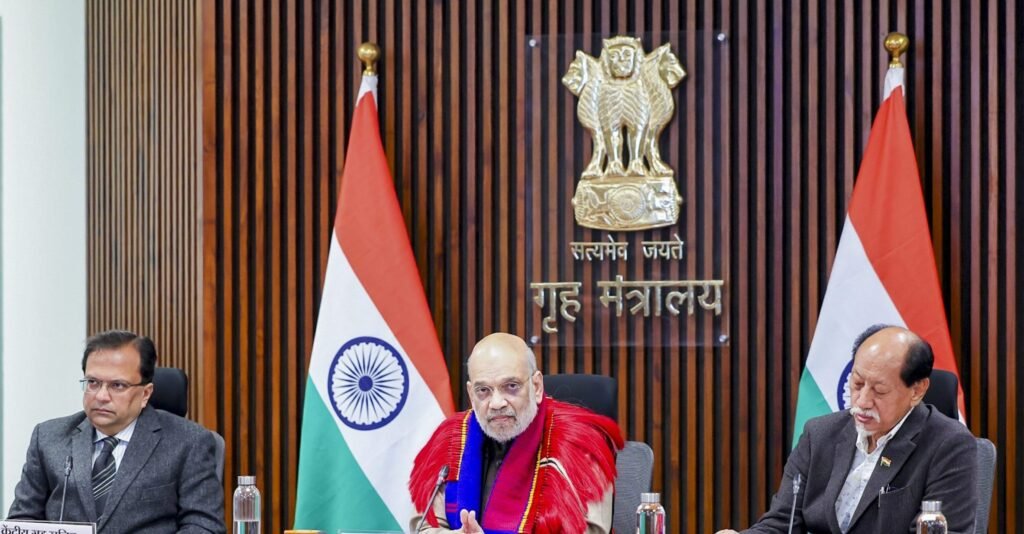
The ENPO agreement dispute has intensified after the Eastern Nagaland Peoples Organisation (ENPO) reaffirmed its unwavering commitment to the February 5 Memorandum of Agreement while accusing the Nagaland government of diluting the proposed Frontier Nagaland framework. The organization has expressed concern that deviations from the original understanding could undermine the objectives of governance reforms and regional development. Moreover, the latest developments have renewed political debate surrounding the future implementation of the agreement.
Amit Shah to Review Border Security
Meghalaya Assam Peace Agreement Reached
ENPO Reaffirms Commitment to February 5 Agreement
The Eastern Nagaland Peoples Organisation has reiterated its commitment to the Memorandum of Agreement signed on February 5. According to the organization, the agreement remains the foundation for addressing long-standing governance and developmental concerns in Eastern Nagaland.
Moreover, ENPO leaders emphasized that all stakeholders should honor the commitments outlined in the original framework. They argued that consistent implementation remains essential for achieving the intended outcomes.
Consequently, the organization has renewed its call for strict adherence to the agreement.
Allegations of Framework Dilution
ENPO has accused the Nagaland government of weakening the proposed Frontier Nagaland framework through actions and interpretations that allegedly differ from the original understanding.
Furthermore, the organization believes that changes to key provisions could affect the effectiveness of the proposed governance structure. ENPO leaders have maintained that preserving the original framework is necessary to fulfill the expectations of the people of Eastern Nagaland.
As a result, the accusations have sparked fresh political discussions across the state.
Understanding the Frontier Nagaland Proposal
The Frontier Nagaland proposal seeks to establish a distinct administrative arrangement aimed at accelerating development and improving governance in Eastern Nagaland.
Additionally, supporters view the framework as a mechanism for ensuring greater participation in decision-making and addressing regional aspirations. The proposal has remained a significant issue in political and public discourse for several years.
Therefore, any debate regarding its implementation attracts widespread attention.
Governance Reforms at the Center of Debate
Governance reforms remain a key objective behind the agreement. Advocates argue that improved administrative mechanisms can help address developmental gaps and enhance public service delivery.
Moreover, effective governance structures often contribute to better infrastructure development, welfare implementation, and institutional responsiveness. Communities in Eastern Nagaland have frequently highlighted these priorities during discussions.
Consequently, governance remains a central aspect of the ongoing dispute.
Importance of Honoring Agreements
Memorandums of Agreement often serve as important instruments for resolving complex issues through dialogue and consensus. Successful implementation typically depends on trust and adherence to agreed commitments.
Furthermore, stakeholders generally expect governments and organizations to follow the provisions outlined during negotiations. Any perceived departure from those commitments can lead to disagreements and renewed tensions.
Therefore, concerns regarding implementation have become a major focus of current discussions.
Political Reactions Continue to Grow
The latest statements from ENPO have generated considerable political interest across Nagaland. Political leaders, civil society groups, and community organizations continue to monitor developments surrounding the issue.
Moreover, differing interpretations of the agreement have contributed to ongoing debates regarding its future direction. Such discussions often influence public opinion and policy considerations.
As a result, the issue remains a prominent topic in regional politics.
Community Expectations Remain Strong
Residents of Eastern Nagaland continue to follow the developments closely. Many people view the agreement as a significant opportunity to address regional concerns and promote balanced growth.
Additionally, communities expect all stakeholders to work cooperatively toward achieving the objectives outlined in the memorandum. Public confidence often depends on visible progress and transparent communication.
Consequently, expectations remain high regarding future actions.
Role of Dialogue in Resolving Differences
Constructive dialogue remains essential for addressing disagreements related to governance and policy implementation. Open communication can help clarify concerns and create pathways toward mutually acceptable solutions.
Furthermore, regular consultations often strengthen trust among stakeholders and reduce the likelihood of misunderstandings. Many observers believe continued engagement is critical to maintaining progress.
Therefore, dialogue is likely to remain central to future negotiations.
Development Aspirations of Eastern Nagaland
Development remains one of the key motivations behind the Frontier Nagaland initiative. Communities have consistently advocated for improved infrastructure, better public services, and enhanced economic opportunities.
Moreover, supporters believe that targeted governance arrangements can help accelerate development projects and improve administrative efficiency. Such expectations continue to shape public discussions.
As a result, development concerns remain closely linked to the agreement.
Looking Ahead
The debate surrounding the implementation of the Frontier Nagaland framework is expected to continue in the coming months. Stakeholders will likely engage in further discussions aimed at resolving differences and ensuring clarity regarding the agreement.
Furthermore, policymakers and community leaders may seek consensus-driven solutions that address concerns while preserving the objectives of the memorandum. Continued cooperation could help maintain stability and public confidence.
Consequently, future developments will play a significant role in shaping the direction of governance reforms in Eastern Nagaland.
Conclusion
The ENPO agreement dispute has brought renewed attention to the future of the Frontier Nagaland framework. While ENPO has reaffirmed its commitment to the February 5 Memorandum of Agreement, it has also accused the Nagaland government of diluting key aspects of the proposed arrangement.
As discussions continue, stakeholders face the challenge of balancing governance reforms, regional aspirations, and implementation commitments. Through dialogue and cooperation, all parties can work toward achieving the objectives envisioned under the agreement while maintaining public trust and stability.
FAQs
What is the ENPO agreement dispute?
The dispute centers on ENPO’s allegation that the Nagaland government is diluting the original Frontier Nagaland framework outlined in the February 5 agreement.
What is ENPO’s position?
ENPO has reaffirmed its commitment to the Memorandum of Agreement and wants its original provisions implemented fully.
What is Frontier Nagaland?
It is a proposed administrative and developmental framework intended to address the aspirations and concerns of Eastern Nagaland.
Why is the issue important?
The framework relates to governance reforms, development initiatives, and regional representation in Eastern Nagaland.
What could happen next?
Stakeholders are expected to continue discussions and consultations regarding the implementation of the agreement.