


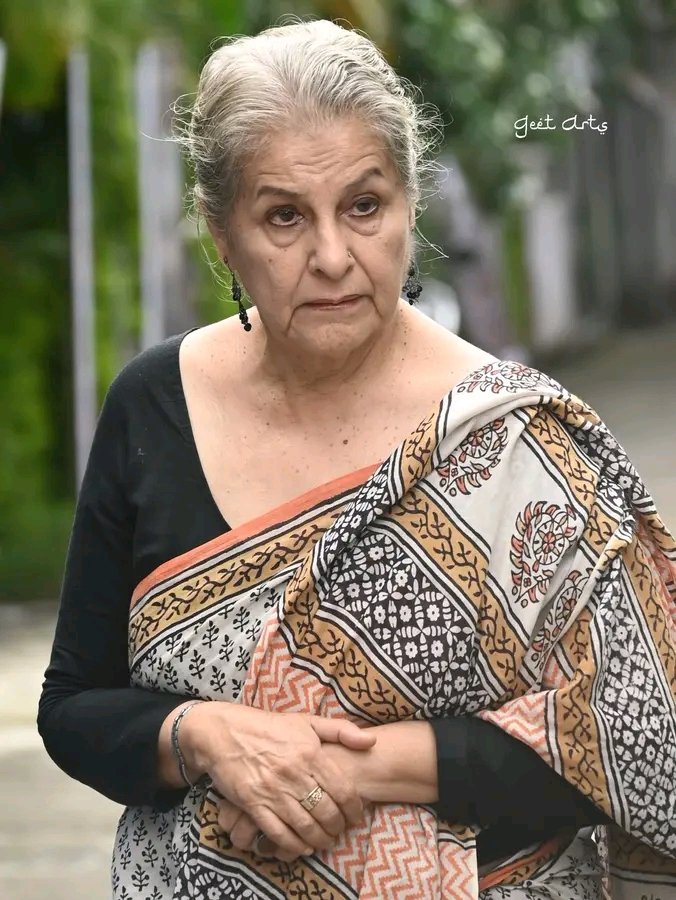
Guwahati : Assam Police have registered 16 First Information Reports (FIRs) against prominent social activist and former Planning Commission member Syeda Saiyidain Hameed.
The cases, filed by members of the regional political party Assam Jatiya Parishad (AJP), accuse her of inciting communal discord and insulting Assamese identity through statements perceived as defending illegal Bangladeshi immigrants.
The controversy has snowballed into statewide protests, sharp rebukes from Assam’s chief minister, and even disruptions at events in the national capital, highlighting the volatile intersection of humanitarian rhetoric and border security concerns.
Hameed, a Padma Shri awardee known for her decades-long advocacy on women’s rights, minority issues, and social justice, has been a fixture in India’s civil society circles. Born in 1944, she served on the Planning Commission from 2004 to 2014 under Prime Minister Manmohan Singh’s government, where she focused on health, education, and minority welfare. She also chaired the National Commission for Women from 2000 to 2003 and has authored books on Muslim women and communal harmony. Her work has often courted controversy for challenging majoritarian narratives, but this latest episode marks one of her most intense backlashes.
The spark ignited on August 24, 2025, during Hameed’s visit to Guwahati as part of a civil society delegation that included notable figures like lawyer Prashant Bhushan, activist Harsh Mander, former bureaucrat Wajahat Habibullah, and Trinamool Congress MP Jawahar Sircar. The group was reportedly assessing the impact of recent eviction drives by the Assam government, which have targeted suspected illegal immigrants predominantly Muslims accused of originating from Bangladesh amid ongoing efforts to enforce the National Register of Citizens (NRC).
These drives, intensified under Chief Minister Himanta Biswa Sarma’s BJP led administration, aim to address what locals and officials describe as a decades old influx threatening Assamese culture, land rights, and demographics.
At a public event in Guwahati, Hameed remarked: “If Bangladeshis live in Assam, what is the problem? Bangladeshis are also humans. The Earth is so large; Bangladeshis can live here.”
Variations reported in media include her invoking religious imagery, stating that “Allah made the Earth for all humans” and questioning why being Bangladeshi is treated as a crime.
She further alleged that the Assam government was “bringing doom upon Muslims by labelling them as Bangladeshis,” framing her comments as a defense against what she sees as discriminatory policies.
The backlash was swift and furious. Assam Chief Minister Himanta Biswa Sarma, a vocal proponent of anti-infiltration measures, condemned the statement as an attempt to “legitimize illegal infiltrators” and realize “Jinnah’s dream of making Assam part of Pakistan.”Drawing on historical Assamese pride, Sarma invoked the 17th-century Ahom general Lachit Borphukan, declaring, “We are the sons and daughters of Lachit Borphukan; we will fight till the last drop of our blood to save our state and identity.”
Union Minister Kiren Rijiju echoed this, accusing Hameed of “misleading in the name of humanity” and undermining India’s sovereignty.Even the Congress party, with which Hameed has past associations, distanced itself, though some opposition voices criticized the evictions as overly harsh.
The AJP, a party rooted in Assamese nationalism and formed amid the 2019 anti-CAA protests, spearheaded the legal offensive. Party spokesperson Ziaur Rahman confirmed to reporters that 16 FIRs had been lodged across districts, with more in process, invoking sections of the Bharatiya Nyaya Sanhita (BNS) including 195 (offences against public peace), 353 (statements conducing to public mischief), and 356 (defamation).023b4d The party launched a statewide campaign demanding Hameed’s arrest, labeling her remarks as “Assam-bashing” and aimed at disturbing social harmony.
This incident unfolds against Assam’s fraught history with immigration. Since the 1970s, the state has grappled with influxes from Bangladesh, fueled by economic desperation and political instability across the border. The 1985 Assam Accord promised to detect and deport post-1971 immigrants, but implementation has been contentious, culminating in the 2019 NRC that excluded nearly 1.9 million people. Critics argue the process disproportionately affects Muslims and Bengalis, while Assamese groups fear cultural erosion and resource strain. Recent evictions have displaced thousands, drawing human rights concerns but also local support for protecting indigenous rights.
Hameed, undeterred, later clarified her stance in Delhi, claiming her words were “twisted” and that she was highlighting the stigmatization of Assam’s Muslim residents as outsiders.In a defiant escalation, she reportedly called Assam a “Frankenstein monster” state, lamenting a shift from its historically inclusive ethos.However, this only amplified the uproar. On August 26, at a Delhi event discussing minority rights, members of the Hindu Sena disrupted proceedings, chanting “Bharat Mata ki Jai,” “Jai Shri Ram,” and “Bangladeshis go back.”
Protesters accused her of betraying national interests, with one video showing heated confrontations at the venue.
As of August 30, no arrest has been made, and Sarma has warned that Hameed would face consequences if she returns to Assam. The episode raises broader questions: Can humanitarian appeals transcend border laws in a region scarred by demographic anxieties? Or do such statements risk inflaming ethnic tensions? With Bangladesh’s own political turmoil spilling over, Assam’s powder keg shows no signs of cooling. Observers from across the spectrum human rights groups decrying overreach, nationalists demanding vigilance agree on one thing: the debate over who belongs in Assam is far from settled.