


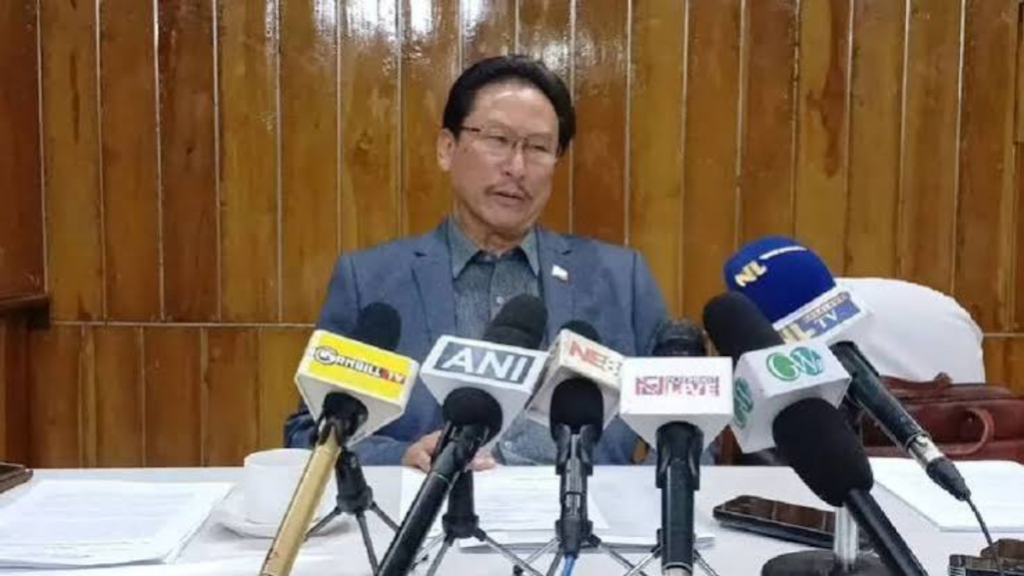
Nagaland Minister K G Kenye has urged people in Eastern Nagaland to use the Frontier Nagaland Territorial Authority (FNTA) arrangement wisely. He stressed that responsible governance, careful spending and a commitment to traditional Naga values will be essential for its success.
Speaking at the silver jubilee celebration of the Eastern Nagaland People’s Union Kohima (ENPUK) on October 20, Kenye said the new administrative framework presents an important opportunity. He encouraged the community to learn from past experiences and focus on development that benefits future generations.
FNTA Offers a Fresh Opportunity for Eastern Nagaland
Kenye described the FNTA arrangement as a significant opportunity for Eastern Nagaland. He said people must approach the new framework with clear goals and a strong sense of responsibility.
The minister urged the community to look beyond past shortcomings and work towards meaningful progress. Moreover, he stressed that development plans must reflect local needs rather than focus only on short-term gains.
The FNTA aims to support the social, economic, educational, cultural and linguistic aspirations of Eastern Nagaland. Its success will depend on how effectively the authority uses its powers and resources to address regional priorities.
Kenye also linked the occasion to ENPUK’s 25-year journey. He said the silver jubilee provided an opportunity to review past achievements, recognise shortcomings and plan for a better future.
FNTA Requires Responsible Use of Funds
The minister placed particular emphasis on financial management. He urged people to ensure that funds allocated under the FNTA framework serve clear development goals.
According to Kenye, public resources must support lasting progress and protect the interests of future generations. Therefore, authorities and community leaders must consider the long-term impact of every major spending decision.
He cautioned against repeating mistakes from earlier development efforts. Money alone, he suggested, cannot guarantee progress unless leaders use it with care, integrity and a clear purpose.
The minister’s message highlighted the need for accountability in the new arrangement. Proper planning and prudent spending can help ensure that development resources deliver meaningful benefits to communities across Eastern Nagaland.
FNTA Must Support Long-Term Development
Kenye urged people to treat the FNTA as more than an administrative change. He stressed the importance of turning the opportunity into practical improvements in people’s lives.
Development planning, he indicated, should focus on sustainable outcomes rather than immediate benefits. Furthermore, investments should reflect the needs of local communities and create a stronger foundation for future growth.
Eastern Nagaland has long sought greater attention to its development needs. The new arrangement is intended to provide a framework for regional self-governance and help address the area’s social and economic aspirations.
However, the availability of an administrative structure does not automatically ensure better outcomes. Effective implementation, sound financial decisions and cooperation among stakeholders will remain important.
FNTA Should Preserve Traditional Naga Values
Kenye also called for a renewed commitment to traditional Naga values. He encouraged people to draw lessons from earlier generations while preparing for the responsibilities that come with the new arrangement.
He connected responsible leadership with honesty, community spirit and concern for future generations. These values, he stressed, should guide decisions about public resources and development priorities.
Meanwhile, ENPUK’s silver jubilee offered a moment for reflection on the organisation’s role in the community. Kenye encouraged its members and the wider public to use the milestone to consider how collective efforts could support future progress.
The minister’s remarks underlined the importance of balancing development ambitions with social responsibility. Economic progress, he suggested, should strengthen communities without weakening the values that hold them together.
FNTA Success Depends on Unity and Purpose
The FNTA arrangement comes after a major agreement involving the Centre, the Nagaland government and the Eastern Nagaland Peoples’ Organisation (ENPO). The parties signed the Memorandum of Agreement on February 5, 2026, in New Delhi.
The Nagaland Legislative Assembly subsequently passed the revised Frontier Nagaland Territorial Authority Bill, 2026, on September 3. The framework is intended to advance regional development while keeping Eastern Nagaland within the state.
Kenye’s appeal places responsibility on the people and leadership to make the most of this opportunity. Ultimately, the arrangement’s value will depend on effective governance, careful use of funds and a shared commitment to progress.
He urged the community to learn from the past and look ahead with purpose. With unity, accountability and long-term planning, the FNTA can help advance Eastern Nagaland’s development aspirations.