


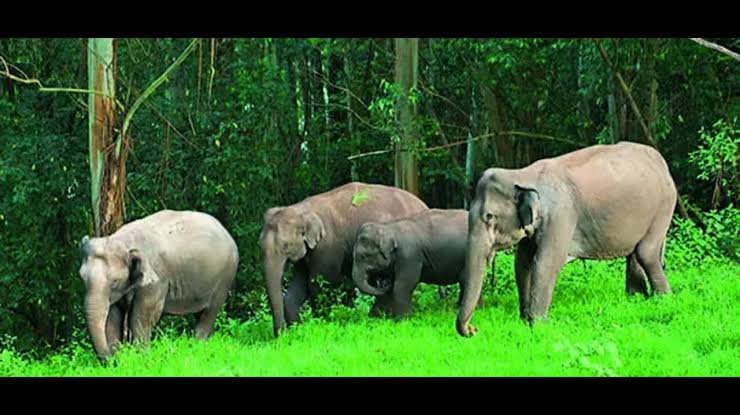
The Forest Department is strengthening Sepahijala wildlife conflict measures as communities living close to protected forest areas continue to face encounters with wild animals. The issue has gained attention after recent incidents involving wildlife movement near human settlements in the district. Authorities are focusing on preventive measures, monitoring, habitat protection and coordination with local communities.
Sepahijala contains the Sepahijala Wildlife Sanctuary and the Clouded Leopard National Park, creating an important conservation landscape close to populated areas. The officially notified eco-sensitive zone around the protected area reflects the close relationship between forest habitats and surrounding settlements.
Sikkim Special Gram Sabha Drives Awareness of Watershed Schemes and SHG Livelihoods
Sepahijala Wildlife Conflict Measures Gain Importance
The need for stronger Sepahijala wildlife conflict measures comes from the district’s combination of protected forests, agricultural areas and human settlements. Wildlife can move beyond forest boundaries when natural habitats, food availability or traditional movement routes change.
Recent reports have highlighted human-wildlife encounters in different parts of Tripura. In June 2026, a bear reportedly injured a resident in the Purba Simna area of Sepahijala district. Local reports also said the animal had been seen repeatedly in nearby areas along the India-Bangladesh border.
The incident underlined the importance of early reporting and coordinated response. Rather than treating individual encounters as isolated events, authorities need to identify locations where wildlife repeatedly approaches settlements.
Moreover, the Forest Department’s role extends beyond responding after an incident. Monitoring animal movement, protecting forest habitats and maintaining appropriate barriers can help reduce opportunities for repeated encounters.
The district administration maintains a dedicated Forest Department structure for Sepahijala. Its official directory lists the Wildlife Warden, the Director of the Zoological Park and Sub-Divisional Forest Officers for Bishalgarh and Sonamura, providing an administrative framework for wildlife-related coordination.
Boundary Protection and Preventive Infrastructure
Physical protection forms an important part of Sepahijala wildlife conflict measures, particularly where protected forest boundaries meet densely populated locations. Government records show that chain-link and wire-mesh fencing works have previously been undertaken within the Sepahijala Wildlife Sanctuary.
The national e-Green Watch database records multiple fencing projects under the Sepahijala Wildlife Range. These include 2-kilometre fencing works in 2020-21, a 3-kilometre project in 2018-19 and earlier fencing projects covering several kilometres.
Such infrastructure can help establish clearer separation between sensitive wildlife areas and human activity. However, fencing alone cannot resolve the wider causes of conflict. Poorly planned barriers can also affect animal movement if they block established routes.
For that reason, preventive planning must consider the ecology of individual species and the characteristics of each conflict-prone location. The objective should remain reducing dangerous encounters while allowing wildlife to retain access to suitable habitat.
Tripura has also been considering other preventive measures in response to elephant-related conflict. In 2026, the state began installing solar fencing near settlements identified as vulnerable to elephant movement, while elephant-proof trenches had already shown encouraging results in some Khowai locations.
These developments are relevant to the wider approach toward Sepahijala wildlife conflict measures, although the elephant-focused projects reported in 2026 are not limited to Sepahijala district. They demonstrate the state’s increasing reliance on preventive infrastructure instead of depending only on emergency responses.
Habitat Protection and Wildlife Movement
Habitat protection remains another central component of Sepahijala wildlife conflict measures. Forest officials and conservation planners increasingly recognise that wildlife movement often reflects changes in habitat conditions rather than deliberate movement toward people.
Tripura’s Forest Minister said in March 2026 that habitat disruption and blocked traditional movement corridors were major reasons for elephants entering human settlements. He also highlighted the need to preserve natural corridors and restore habitats.
Although those comments focused particularly on elephant conflict, the principle applies more broadly. When forests lose connectivity, animals can face greater pressure to move through agricultural land or populated areas in search of food and suitable habitat.
The Sepahijala protected landscape supports several species, including clouded leopards, wild boar, barking deer, primates and other wildlife. Government environmental documentation also records human-wildlife conflict involving species such as the Himalayan black bear around Sepahijala Wildlife Sanctuary.
Consequently, conservation measures need to account for different species rather than applying one solution across every location. Monitoring, habitat management and community awareness can complement physical barriers.
The eco-sensitive zone around the Sepahijala Wildlife Sanctuary and Clouded Leopard National Park also reflects the need to balance conservation with local development. The notified zone extends from 10 metres to 50 metres around different portions of the protected area’s boundary, depending on the surrounding landscape.
Community Coordination and Rapid Response
Effective Sepahijala wildlife conflict measures also depend on cooperation between forest officials, local administration and residents. Communities living near forest boundaries are often the first to notice unusual animal movement. Timely information can therefore help officials respond before an encounter escalates.
The Union Environment Ministry’s human-wildlife conflict framework recommends coordinated action among departments, identification of conflict hotspots and standard operating procedures. It also recommends rapid response teams and mechanisms for reviewing and expediting compensation for people affected by wildlife incidents.
Such coordination becomes especially important in districts where settlements and forest landscapes remain closely connected. Forest officials can use local reports to identify recurring routes, crop-raiding locations and areas where animals frequently approach homes.
Meanwhile, residents need clear information about how to report wildlife sightings and whom to contact during emergencies. Awareness programmes can reduce the likelihood of people approaching or disturbing wild animals.
The approach also needs regular assessment. A barrier or monitoring arrangement that works in one location may prove ineffective elsewhere because wildlife behaviour, terrain and settlement patterns differ.
Tripura’s wider policy discussion has already moved toward scientific monitoring. The Forest Minister has raised radio collaring as one possible way to understand elephant movement and has called for research-based interventions.
Conclusion
The strengthening of Sepahijala wildlife conflict measures reflects the growing need to protect both residents and wildlife along sensitive forest boundaries. Fencing, habitat conservation, monitoring and coordinated response can each contribute to reducing avoidable encounters.
However, long-term success will depend on combining these measures rather than relying on a single intervention. Protecting wildlife corridors, improving local reporting systems and maintaining regular communication with communities can help create a more sustainable approach.
Sepahijala’s protected forests remain important for Tripura’s biodiversity. Therefore, conflict prevention should focus not only on keeping animals away from settlements but also on maintaining the ecological conditions that allow wildlife to move safely through suitable habitats.
FAQs
What are Sepahijala wildlife conflict measures?
Sepahijala wildlife conflict measures include preventive fencing, wildlife monitoring, habitat protection, community coordination and rapid response arrangements designed to reduce dangerous encounters between people and wild animals.
Why is wildlife conflict a concern in Sepahijala?
Sepahijala contains protected forest landscapes that exist close to populated areas. This proximity can create opportunities for wildlife to enter agricultural fields or settlements, particularly when animals move outside their usual habitats.
Has fencing been used around Sepahijala’s protected areas?
Yes. Government records show that several chain-link and wire-mesh fencing projects have been undertaken within the Sepahijala Wildlife Range over different financial years.
How can communities help reduce wildlife conflict?
Residents can report wildlife sightings promptly, avoid approaching wild animals and follow instructions issued by forest officials. Community awareness can also help prevent situations from escalating.
What is the long-term goal of Sepahijala wildlife conflict measures?
The long-term goal is to reduce harmful encounters while protecting wildlife habitats. This requires a combination of habitat conservation, safe movement corridors, monitoring, preventive infrastructure and coordinated action.