


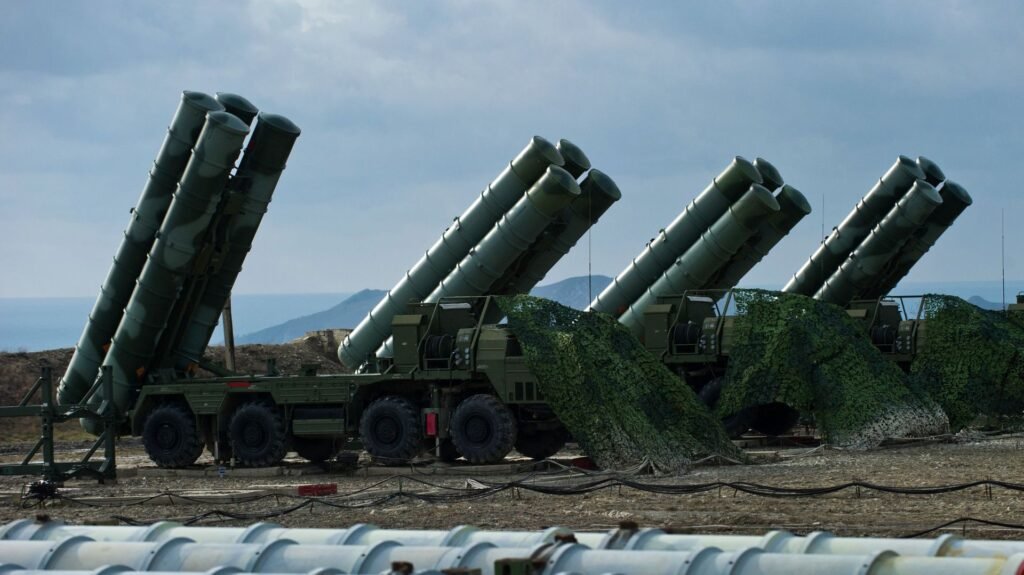
India is preparing to receive its fifth Russian-made S-400 air defence system by the end of 2026, completing its original procurement order. Meanwhile, the fourth system, deployed near Assam, has strengthened air defence coverage in the Northeast. The fifth system is expected to become operational by February 2027.
Meghalaya High Court Questions Police Over Violence Probe
Fourth S-400 System Strengthens Air Defence in Northeast India
India’s air defence network has received an additional layer of protection in the Northeast following the deployment of its fourth S-400 system near Assam.
The system arrived in India in May 2026 and was subsequently assembled and deployed. Its position near Assam strengthens coverage across a strategically important region, particularly along the border areas facing China.
The deployment also supports air defence coverage near the Line of Actual Control (LAC) in Arunachal Pradesh. This region has strategic importance because of its proximity to the international border.
The S-400 system is designed to detect and engage different types of aerial threats. Its deployment in the Northeast adds another component to India’s wider air defence network.
India Expects Fifth S-400 System by the End of 2026
India is now preparing to receive the fifth and final S-400 system under its original agreement with Russia.
According to reports citing defence officials, the fifth system is expected to begin arriving by the end of 2026. The equipment will reach India in multiple shipments before undergoing assembly and operational preparation.
The Indian Air Force is also expected to conduct a pre-dispatch inspection in Russia. The complete system is projected to become operational by February 2027.
Its arrival will complete India’s original order of five S-400 squadrons, signed with Russia in 2018.
Fifth S-400 System Expected to Strengthen Western Border
Although the fourth S-400 system has strengthened air defence coverage near Assam, reports indicate that India plans to deploy the fifth system along the western border.
According to Hindustan Times, the fifth system is expected to strengthen protection along the Line of Control (LoC) in Jammu and Kashmir. The deployment could provide additional coverage along the approximately 740-kilometre border stretch.
Therefore, the fifth system’s expected deployment should not be confused with the fourth system’s role in the Northeast. The fourth S-400 is the unit reported to be positioned near Assam, while the fifth is expected to serve the western sector.
The government has not publicly confirmed every detail of the fifth system’s final deployment plan.
India’s Original S-400 Deal with Russia
India signed an agreement with Russia in 2018 to acquire five S-400 air defence systems. The deal was valued at approximately ₹35,000 crore.
The procurement forms part of India’s effort to strengthen its long-range air defence capabilities. The systems provide protection against a range of aerial threats, including aircraft, cruise missiles, ballistic missiles and drones.
The fifth system will complete the original five-unit procurement programme. However, India is also considering further expansion of its air defence capabilities.
Reports have indicated that the Defence Acquisition Council approved additional procurement proposals in March 2026. These proposals formed part of a wider defence procurement package worth approximately ₹2.38 lakh crore.
How the S-400 Air Defence System Works
The Russian-made S-400 Triumf is a long-range surface-to-air missile system. It combines radar units, missile launchers, command centres and supporting vehicles to identify and respond to aerial threats.
Its radar network can track multiple targets and provide information to the system’s command and control units. Depending on the missile used, the system can engage targets at ranges of up to 400 kilometres.
The S-400 is designed to respond to several categories of aerial threats, including:
- Fighter aircraft
- Cruise missiles
- Ballistic missiles
- Unmanned aerial vehicles and drones
- Other hostile airborne targets
Its different missile options allow operators to respond to threats at varying distances. This makes the system an important part of a layered air defence network.
Strategic Importance of the S-400 Deployment Near Assam
The fourth S-400 system’s deployment near Assam has particular significance for Northeast India.
The region shares sensitive international borders and includes strategically important locations. Arunachal Pradesh, in particular, has a long border with China along the LAC.
The Northeast also includes the Siliguri Corridor, a narrow stretch connecting the region with the rest of India. Its strategic importance makes air defence coverage in the surrounding areas an important part of national security planning.
The S-400 deployment near Assam adds to India’s existing defence arrangements in the eastern sector. It also reflects the importance of maintaining air defence coverage across different geographical regions.
However, the exact operational coverage and deployment details remain subject to national security considerations.
India Looks Beyond the Original Five-System Agreement
The expected arrival of the fifth S-400 will complete India’s original procurement agreement with Russia. Nevertheless, the country continues to examine options for expanding its air defence capabilities.
Modern aerial threats include increasingly advanced aircraft, drones, cruise missiles and other weapons. Consequently, countries are investing in systems that can detect and respond to multiple types of threats.
India’s reported consideration of additional S-400 systems reflects this wider focus on strengthening air defence. Any future procurement, however, will depend on official approvals, negotiations and delivery arrangements.
Conclusion
India’s S-400 air defence network is set for another major development with the expected arrival of its fifth system by the end of 2026. Meanwhile, the fourth system deployed near Assam has strengthened air defence coverage in Northeast India.
The fifth system is expected to become operational by February 2027, with reports indicating a planned deployment along the western border near Jammu and Kashmir. Its arrival will complete India’s original agreement with Russia for five S-400 systems.
Together, these developments highlight India’s continuing efforts to strengthen air defence coverage across strategically important regions.
Frequently Asked Questions (FAQs)
1. How many S-400 systems has India received?
India has received four S-400 systems from Russia under its original agreement.
2. When will India receive its fifth S-400 system?
The fifth system is expected to begin arriving by the end of 2026, according to reports citing defence officials.
3. When will the fifth S-400 system become operational?
The fifth system is expected to be assembled and made operational by February 2027.
4. Where is India’s fourth S-400 system deployed?
The fourth S-400 system has been deployed near Assam to strengthen air defence coverage in the Northeast.
5. Where is the fifth S-400 system expected to be deployed?
Reports indicate that the fifth system is expected to strengthen India’s western border, particularly the Line of Control in Jammu and Kashmir.
6. When did India sign the S-400 agreement with Russia?
India signed its original agreement with Russia in 2018 to acquire five S-400 systems.
7. What threats can the S-400 system intercept?
The S-400 is designed to engage aerial threats such as fighter aircraft, cruise missiles, ballistic missiles and drones, depending on the missile used.