


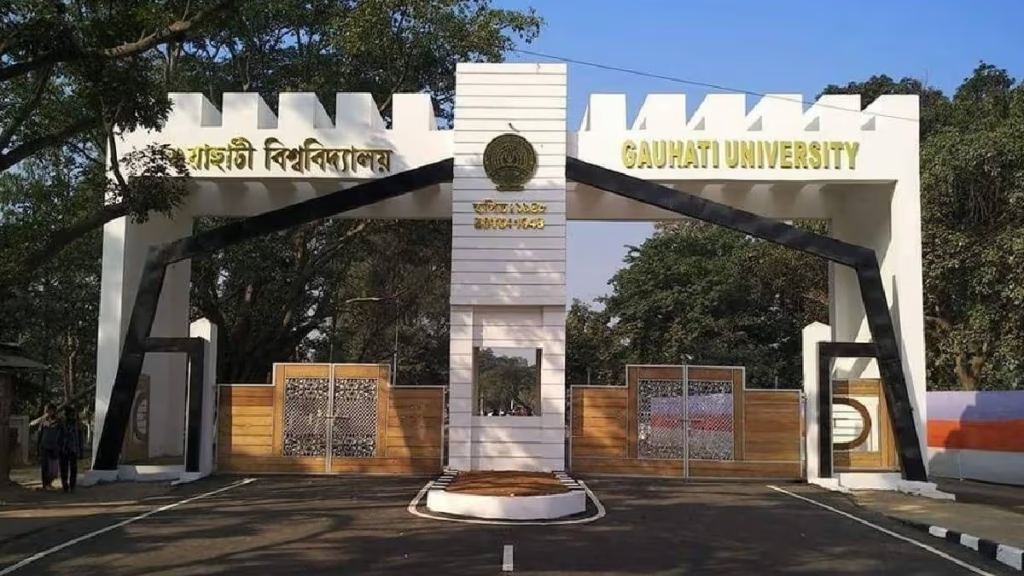
Guwahati, September 18, 2025, Gauhati University celebrated the legacy of Prof Maheswar Neog, one of Assam’s most influential literary figures, with a memorial lecture and an exhibition dedicated to his life and work. The event drew academics, writers, and students who gathered to reflect on his monumental contribution to Assamese literature, history, and cultural studies.
University officials described Neog’s scholarship as a guiding light for generations. They emphasised the need to revive his vision at a time when regional traditions are under threat from growing cultural homogenisation.
Click here: Matak Community Plans Massive Rally in Tinsukia for ST Status
A towering figure in Assamese literature
Prof Maheswar Neog was not only a prolific writer but also a cultural historian, folklorist, and linguist. His extensive works on Assamese literature, Vaishnavite traditions, and folklore remain vital resources for scholars.
Speakers at the memorial lecture recalled how Neog dedicated his life to documenting Assam’s literary and cultural heritage. His research on Srimanta Sankardeva, medieval manuscripts, and folk traditions continues to influence studies in literature and history across India.
The exhibition showcased rare manuscripts, personal notes, and photographs of Neog, offering visitors a glimpse into the scholar’s lifelong passion for preserving Assamese identity.
Call to preserve regional traditions
The tribute also served as a platform to raise concerns about the erosion of regional literary traditions in the face of rapid cultural change. Scholars argued that younger generations are increasingly disconnected from their linguistic and cultural roots.
Speakers noted that while globalisation has expanded opportunities, it has also endangered indigenous knowledge systems. They urged universities, writers, and policymakers to work together to preserve and promote Assamese literature.
Role of universities in cultural preservation
Gauhati University officials stressed their commitment to preserving the region’s cultural heritage. The Vice-Chancellor highlighted how academic institutions must take the lead in promoting regional languages and literature.
He announced plans to digitise rare manuscripts, strengthen the university’s archives, and encourage research on Assamese traditions. Faculty members also emphasised the importance of introducing younger students to local writers like Neog to keep cultural memory alive.
Exhibition highlights Neog’s legacy
The memorial exhibition drew significant attention from both students and scholars. Displayed items included unpublished notes, letters, and photographs from Neog’s personal and professional life.
Visitors were particularly drawn to his handwritten manuscripts, which revealed his meticulous approach to research. The exhibition also featured first editions of his books and newspaper clippings from the mid-20th century documenting his public engagements.
Organisers said the exhibition was designed to inspire the next generation of researchers and highlight the continued relevance of Neog’s works.
Assam’s cultural identity at stake
Speakers warned that the decline of regional traditions poses a risk to Assam’s unique cultural identity. They argued that preserving local literature and folklore is not just about heritage but also about protecting social cohesion and pride.
Many pointed out that the younger generation is shifting towards mainstream global content, often at the cost of losing touch with their mother tongue. Events like the Neog memorial lecture, they argued, are critical to reversing this trend.
Linking past to future
The discussions at the event highlighted how Neog’s scholarship can serve as a bridge between Assam’s past and future. His studies on Assamese manuscripts and folklore have laid a foundation for understanding cultural continuity.
Panelists urged young writers to take inspiration from Neog’s dedication and to innovate while staying rooted in tradition. They emphasised that regional literature can thrive alongside global narratives if given proper institutional support.
National recognition for Assamese scholarship
Participants also called for national-level recognition of Assamese scholars like Neog. They argued that his contributions deserve a wider platform in India’s academic and literary circles.
Calls were made for translations of his works into multiple languages so that his scholarship can reach audiences beyond Assam. This, they said, would ensure that the richness of Assamese traditions finds a place in India’s mainstream literary discourse.
A renewed cultural movement
The Gauhati University tribute was more than a memorial—it was a call to action. By honouring Maheswar Neog, the event sought to ignite a renewed cultural movement in Assam.
Scholars, writers, and students agreed that protecting regional traditions requires collective effort. They urged the government, academic institutions, and civil society to work together to keep Assam’s literary and cultural legacy alive.
As the memorial lecture concluded, participants left with a shared conviction: that the best tribute to Maheswar Neog would be to carry forward his mission of preserving Assamese identity for generations to come.