


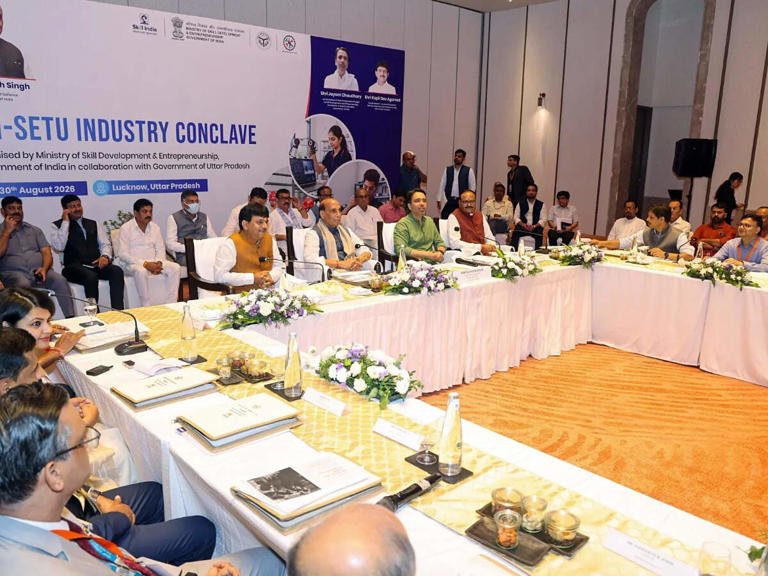
The government has urged industry leaders to take a leading role in the implementation of the ₹60,000 crore PM-SETU plan, stressing the importance of stronger industry participation in India’s evolving energy and skills ecosystem.
The ambitious initiative aims to strengthen institutions, improve technical capabilities and prepare India’s workforce for emerging opportunities. As the country moves towards cleaner and more technology-driven energy systems, the government has highlighted the need for close cooperation between industry, educational institutions and policymakers.
The call for industry leadership reflects the scale of the transformation required in the coming years. India’s energy transition will require new technologies, specialised skills and a workforce capable of meeting the demands of rapidly changing industries.
The PM-SETU plan is expected to play an important role in supporting this transformation by strengthening technical education and skill development.
Government Calls for Stronger Industry Participation
The government has emphasised that industry must play an active role in shaping the success of the PM-SETU plan.
Companies understand the changing requirements of the workplace and the technologies that are likely to influence future industries.
Their participation can help educational and training institutions align courses with real-world requirements.
Industry leaders can contribute by supporting curriculum development, providing technical expertise and creating opportunities for practical training.
Apprenticeships and internships can also help students gain experience before entering the workforce.
The government’s approach seeks to create stronger links between education and employment.
Under this model, industries would not remain limited to recruiting trained workers. They would also contribute to developing the skills required by future sectors.
PM-SETU Plan Focuses on Institutional Transformation
The ₹60,000 crore PM-SETU plan aims to strengthen India’s technical and vocational education ecosystem.
The initiative focuses on improving institutions and preparing students for changing employment requirements.
Technological change is reshaping industries across the world.
Automation, artificial intelligence, digital systems and clean energy technologies are creating new types of jobs.
At the same time, some traditional job roles are changing.
Training institutions need to respond to these developments.
The PM-SETU plan could help modernise infrastructure and improve the quality of technical education.
Updated laboratories and training facilities may give students greater exposure to modern technology.
The programme could also encourage institutions to develop courses that meet emerging industry requirements.
Energy Transformation Creates New Skill Requirements
India’s energy sector is undergoing a major transformation.
The expansion of renewable energy is creating demand for new technologies and specialised workers.
Solar power, wind energy, battery storage and electric mobility require skills that differ from those needed in traditional energy sectors.
The transition towards cleaner energy also requires expertise in areas such as grid management, power electronics and energy efficiency.
Workers will need opportunities to acquire new skills.
Students entering technical education will also need training that prepares them for future industries.
The government has therefore highlighted the importance of aligning skills development with the country’s energy transformation.
The PM-SETU plan could support this process by strengthening training institutions and creating stronger partnerships with industry.
Industry Can Help Shape Future Curriculum
One of the major ways industry can contribute is through curriculum development.
Technologies evolve quickly.
Educational institutions can find it difficult to update courses at the same pace.
Industry participation can help identify the skills that employers need.
Companies can provide information about new technologies and workplace requirements.
Training institutions can then use this knowledge to update their programmes.
This process can help reduce the gap between education and employment.
Students may graduate with skills that are more relevant to available jobs.
Industry-led curriculum development can also help institutions introduce specialised courses in emerging sectors.
These may include renewable energy, battery technology, artificial intelligence and advanced manufacturing.
Apprenticeships and Practical Training Remain Crucial
The government has also stressed the importance of practical learning.
Technical education requires more than classroom instruction.
Students need opportunities to work with equipment and understand real workplace environments.
Industry partnerships can provide internships and apprenticeships.
These programmes allow students to apply theoretical knowledge in practical situations.
They can also help students develop professional skills.
Employers may benefit from apprenticeships as well.
Companies can identify and train potential employees at an early stage.
The PM-SETU plan could encourage greater collaboration between institutions and industries in this area.
A stronger apprenticeship ecosystem could help prepare students for employment and reduce the gap between education and workplace expectations.
Technology Will Drive India’s Future Workforce
The rapid growth of new technologies will continue to reshape India’s workforce.
Artificial intelligence and automation are changing manufacturing and service industries.
Digital technologies are also transforming how companies manage operations.
The energy sector is experiencing similar changes.
Smart grids and advanced battery systems require specialised technical knowledge.
Workers will need to adapt throughout their careers.
The government has highlighted the importance of continuous learning.
Education and training should not end after students receive their first qualification.
Workers may need to upgrade their skills as technologies evolve.
The PM-SETU plan could support flexible learning pathways that allow people to return to education and training.
₹60,000 Crore Investment Signals Major Push
The ₹60,000 crore scale of the PM-SETU plan signals the government’s focus on strengthening India’s technical and skills infrastructure.
Large-scale investment could support the modernisation of institutions across the country.
Training facilities may receive improved equipment and technology.
Teachers and trainers may also receive opportunities to upgrade their knowledge.
The plan could help create a more connected skills ecosystem.
Educational institutions may work more closely with companies, research organisations and government agencies.
The government’s call for industry leadership suggests that public funding alone will not achieve the desired transformation.
Private-sector participation will remain essential.
Energy Transition Needs Collaboration
India’s energy transformation will require cooperation across different sectors.
Government agencies will create policies and support infrastructure.
Industries will develop and deploy technologies.
Educational institutions will train the workforce.
Research organisations will support innovation.
The PM-SETU plan aims to bring these different parts of the ecosystem closer together.
Industry participation can help ensure that training remains connected to practical needs.
Educational institutions can prepare students with strong technical foundations.
Together, they can create a workforce capable of supporting India’s clean energy ambitions.
Preparing Young People for Future Opportunities
The plan also aims to create better opportunities for young people.
India has a large and growing workforce.
Providing relevant skills will be essential for creating employment opportunities.
Young people will increasingly need expertise in technology-driven sectors.
The clean energy transition could create new jobs in manufacturing, installation, maintenance and research.
However, workers will need appropriate training to access these opportunities.
The PM-SETU plan could help institutions prepare students for these emerging roles.
Industry involvement can further improve the connection between training and employment.
Government Seeks Industry-Led Transformation
The government’s appeal places industry at the centre of the proposed transformation.
Companies can help identify future skills and provide practical learning opportunities.
They can also support training institutions with technology and expertise.
The success of the ₹60,000 crore PM-SETU plan will depend on how effectively these partnerships develop.
A strong collaboration between government, industry and educational institutions could create a more responsive skills ecosystem.
It could also help India prepare for major changes in the energy sector and the wider economy.
PM-SETU Could Shape India’s Future Skills Ecosystem
The ₹60,000 crore PM-SETU plan represents a significant effort to align education and skills development with India’s future economic needs.
The government wants industry to take a leading role in this process.
As the energy sector undergoes rapid transformation, the demand for skilled workers will continue to grow.
Modern technical institutions and industry-linked training could help meet this demand.
The plan could support students, workers and industries as they adapt to emerging technologies.
Its success will depend on sustained cooperation and effective implementation.
With industry playing a central role, the PM-SETU plan could help create a stronger workforce and support India’s long-term energy transformation.