


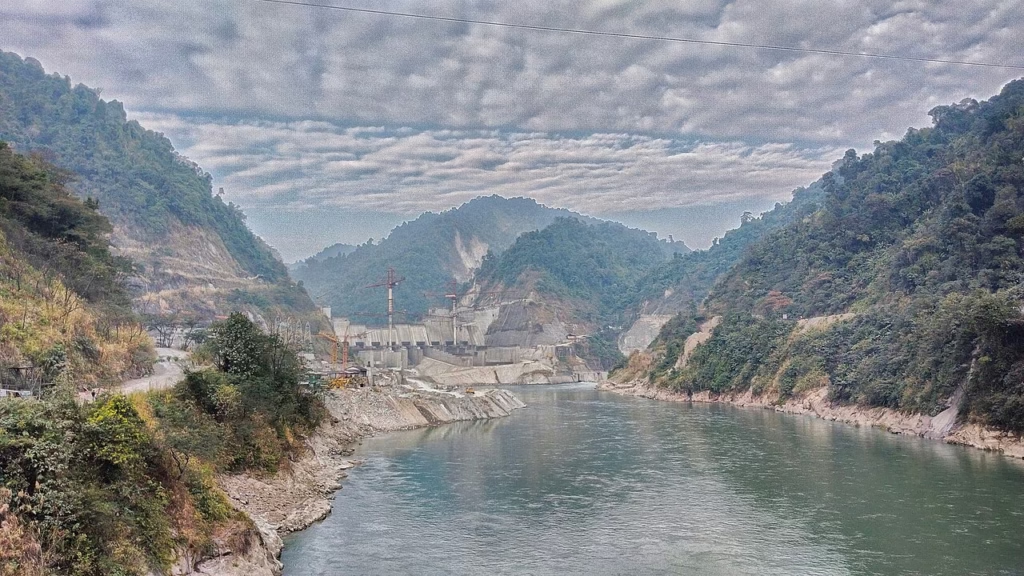
The Green Transition is gaining momentum in Northeast India as work accelerates on the 2,880 MW Dibang and 2,000 MW Subansiri hydro projects. Together, the projects represent 4,880 MW of planned hydropower capacity and could significantly expand the region’s renewable electricity generation. Moreover, large-scale hydropower can provide dependable electricity while supporting the wider shift toward lower-carbon energy. The developments also underline Arunachal Pradesh’s growing importance in India’s clean-energy landscape.
Nagaland Heritage Conservation: State Takes Over Preservation of WWII Remnants in Kohima
Green Transition Gains Momentum Through Hydropower
The Dibang and Subansiri projects represent major investments in Northeast India’s power infrastructure. Their combined planned capacity of 4,880 MW highlights the scale of the region’s hydropower potential.
Furthermore, hydropower can generate electricity without directly burning fossil fuels during operation. This makes it an important component of India’s broader renewable-energy strategy.
The Dibang project in Arunachal Pradesh is expected to become one of India’s largest hydropower developments. Meanwhile, the Subansiri project has also remained a major component of the region’s power-generation plans.
Therefore, faster progress on both projects could increase Northeast India’s contribution to India’s renewable electricity capacity.
Green Transition Strengthens Northeast Energy Security
Reliable electricity generation remains essential for economic development. Industries, businesses, households and public services all require dependable power supplies.
Moreover, hydropower can provide electricity across different demand periods and complement variable renewable sources such as solar and wind. This flexibility can become increasingly valuable as India expands its renewable-energy mix.
The Northeast possesses substantial river systems and elevation differences that provide significant hydropower potential. Consequently, carefully developed projects can contribute to regional electricity generation while supporting national energy requirements.
Additionally, expanded generation capacity can improve the availability of electricity for industrial and infrastructure development.
However, large hydropower projects also require careful consideration of environmental impacts, local communities, land use and downstream ecosystems. Sustainable development therefore requires strong environmental safeguards and meaningful stakeholder engagement.
Green Transition Creates Economic Opportunities
Large infrastructure projects can generate economic activity during construction and operation. The Dibang and Subansiri projects can create demand for engineering, construction, transportation and supporting services.
Furthermore, improved electricity availability can support businesses and industries that require reliable power. This can contribute to broader economic development across the Northeast.
Infrastructure associated with major hydropower projects can also improve connectivity in remote areas. Roads and other supporting facilities built for project requirements may provide additional benefits when authorities manage them effectively.
Meanwhile, local communities can gain opportunities through employment, services and associated economic activities. Authorities and project developers need to ensure that these benefits reach affected communities fairly.
Consequently, hydropower development can influence the region’s economy beyond electricity generation.
Green Transition Requires Sustainable Hydropower Development
The scale of the Dibang and Subansiri projects makes responsible implementation particularly important. Large dams and reservoirs can affect river ecosystems, forests and communities, so environmental planning must remain central throughout development.
Moreover, climate conditions can influence hydropower operations. Changes in rainfall patterns and extreme weather events require careful planning to maintain infrastructure resilience.
Therefore, the Green Transition cannot rely only on increasing generating capacity. It also requires responsible project design, environmental monitoring and long-term management.
If construction progresses as planned, the two projects could strengthen India’s renewable electricity portfolio while increasing the Northeast’s role in the country’s energy transition.
The combined 4,880 MW capacity represents a substantial addition to planned hydropower generation. At the same time, balancing development goals with ecological protection and community interests will remain essential for achieving sustainable results.
Conclusion
The Green Transition is gaining momentum as work advances on the 2,880 MW Dibang and 2,000 MW Subansiri hydro projects. Their combined 4,880 MW capacity could strengthen renewable electricity generation and support Northeast India’s economic development. Moreover, responsible implementation, environmental safeguards and community participation will remain crucial to ensuring that major hydropower projects deliver long-term benefits.
FAQs
1. What are the capacities of the Dibang and Subansiri projects?
The Dibang project has a planned capacity of 2,880 MW, while the Subansiri project has a planned capacity of 2,000 MW.
2. What is their combined capacity?
Together, the two projects represent 4,880 MW of planned hydropower capacity.
3. How can hydropower support the Green Transition?
Hydropower can generate electricity without directly burning fossil fuels during operation and can complement other renewable energy sources.
4. Where are these major hydropower projects located?
Both projects are associated with Arunachal Pradesh and the wider Northeast Indian hydropower network.
5. What challenges can large hydropower projects face?
They can involve environmental, ecological, social and resettlement concerns, making careful planning, monitoring and stakeholder engagement important.