


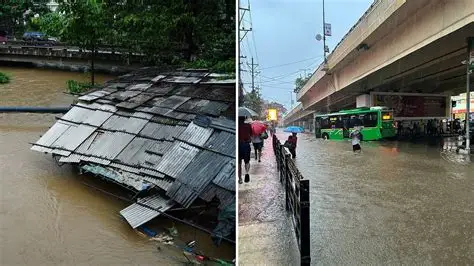
Assam minister Pijush Hazarika has stated that floodwaters in Guwahati now recede within hours, marking a significant improvement in urban flood management. The remark comes amid ongoing efforts by the state government to address waterlogging issues in the city.
Speaking at a public event, Hazarika said that earlier, floodwaters would remain stagnant for long periods. However, recent infrastructure upgrades have helped reduce the duration of waterlogging. As a result, residents are experiencing quicker relief during heavy rainfall.
Read More: Subansiri Lower Hydroelectric Project Reaches Milestone with Unit-4 Commissioning
Improved drainage system brings visible change
According to Pijush Hazarika, the government has focused on strengthening the drainage system across Guwahati. Several projects have been implemented to clear clogged drains and improve water flow.
He explained that desiltation drives and expansion of drainage networks have played a key role. Moreover, authorities have identified critical areas prone to waterlogging and taken targeted measures. Consequently, the efficiency of water discharge has improved.
The minister added that technology is also being used to monitor flood-prone zones. This helps officials respond quickly during heavy rains. Therefore, the overall situation has improved compared to previous years.
Long-standing flood issues in Guwahati
Urban flooding has been a major concern for residents of Guwahati. Heavy rainfall often leads to waterlogging, disrupting daily life. Roads become inaccessible, and businesses face losses.
Experts have attributed the problem to rapid urbanisation and inadequate drainage infrastructure. Encroachment on natural water channels has also worsened the situation. As a result, floodwaters used to take longer to recede.
However, the government’s recent initiatives aim to address these challenges. By focusing on both infrastructure and maintenance, authorities are working to create a more resilient urban environment.
Government’s strategy to tackle urban flooding
The Assam government has adopted a multi-pronged approach to deal with flooding in Guwahati. This includes upgrading drainage systems, removing encroachments, and improving waste management.
Pijush Hazarika highlighted that coordination between different departments has been strengthened. This ensures that projects are implemented efficiently.
In addition, the government is focusing on long-term planning. New infrastructure projects are being designed to handle increased rainfall. Therefore, the aim is not only to manage current issues but also to prevent future problems.
Public response to improved conditions
Residents have noted some improvement in recent times. Many have observed that water now drains faster after heavy rainfall. This has reduced inconvenience and allowed normal activities to resume quickly.
However, some citizens remain cautious. They believe that consistent efforts are needed to maintain the progress. In certain areas, waterlogging still occurs, though for shorter durations.
Despite these concerns, the general sentiment is positive. People acknowledge that the situation has improved compared to the past. As a result, there is growing confidence in the government’s initiatives.
Challenges that still remain
While the claim that Guwahati floods recede within hours is encouraging, challenges remain. Rapid urban growth continues to put pressure on infrastructure. Therefore, maintaining efficiency will require continuous upgrades.
Climate change is another factor that could impact the situation. Increased rainfall intensity may test the capacity of existing systems. Consequently, authorities must remain prepared for extreme weather events.
Experts also stress the importance of public participation. Proper waste disposal and awareness can help prevent drainage blockages. Hence, community involvement is essential for long-term success.
Focus on sustainable urban development
The government has emphasised the need for sustainable development in Guwahati. Efforts are being made to balance urban expansion with environmental protection.
Pijush Hazarika stated that preserving natural water bodies is crucial. These bodies act as natural drainage systems and help reduce flooding.
Additionally, green infrastructure solutions are being explored. These include rainwater harvesting and improved land-use planning. Such measures can enhance the city’s resilience to flooding.
Future plans and expectations
Looking ahead, the Assam government plans to continue its efforts to improve flood management. More projects are expected to be launched to strengthen infrastructure.
Pijush Hazarika expressed confidence that Guwahati will become better equipped to handle heavy rainfall. He also assured that the government will address remaining issues.
Observers believe that sustained investment and monitoring will be key. The success of current initiatives must be maintained and expanded. Therefore, consistent efforts will determine long-term outcomes.
The road ahead for Guwahati
The statement that Guwahati floods recede within hours reflects a positive shift in urban management. It indicates that targeted measures can yield tangible results.
However, ensuring lasting improvement will require ongoing commitment. Authorities must continue to adapt to changing conditions. At the same time, public cooperation will remain crucial.
In conclusion, the progress in managing floods in Guwahati offers hope for the future. With continued efforts, the city can overcome its long-standing challenges and move towards sustainable development.
Read More: Manik Saha Accuses Pradyot of Delhi Visit to ‘Ally, Loot’ Tribal Funds