


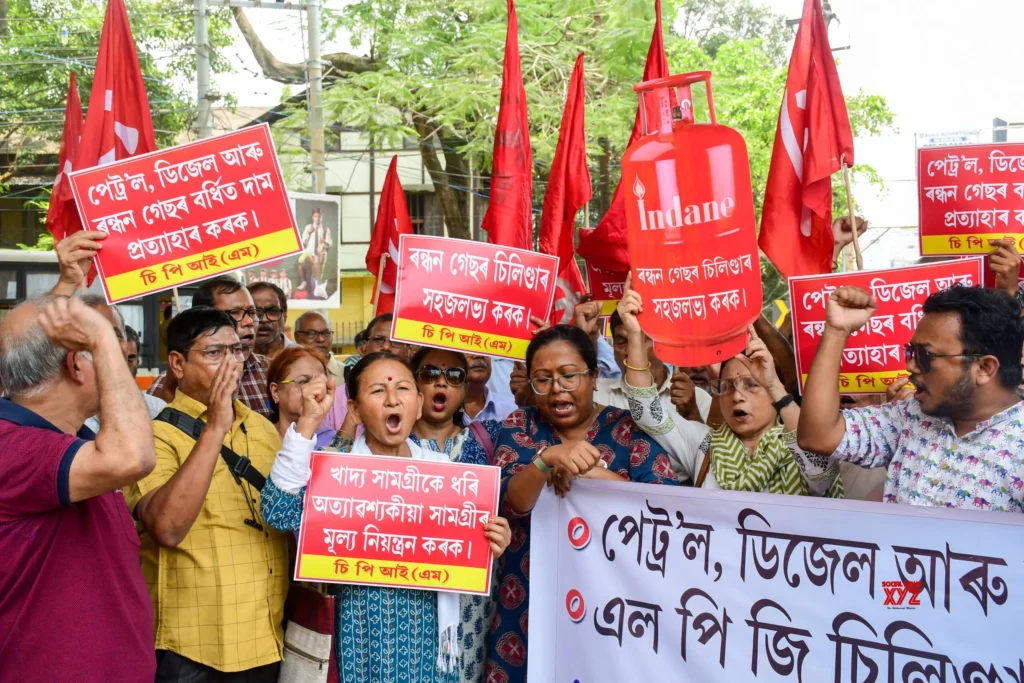
Guwahati fuel price protest organized by workers of Communist Party of India (Marxist) drew significant public attention after demonstrators staged rallies against rising fuel prices and alleged shortages of LPG cylinders in Guwahati. Meanwhile, protesters accused authorities of failing to control increasing household energy costs and ensure uninterrupted LPG supply for consumers. Demonstrators gathered at key locations across the city while raising slogans demanding immediate government intervention. Additionally, party representatives claimed that inflation and fuel-related issues continue affecting low-income and middle-class families across Assam.
Assam Joha rice gains global recognition
Park Circus Violence Arrest Sparks Investigation
CPI(M) Workers Organize Demonstrations
Party workers and supporters assembled in Guwahati carrying banners and placards highlighting concerns related to petrol, diesel, and LPG price increases. Consequently, protest organizers criticized what they described as inadequate measures to address the economic burden on ordinary consumers.
Leaders from the Communist Party of India (Marxist) stated that rising fuel prices have contributed to higher transportation and household expenses. However, officials from the administration have not publicly responded in detail to all allegations raised during the protest. At the same time, demonstrators urged authorities to improve LPG distribution and stabilize essential commodity prices.
The Guwahati fuel price protest also reflected broader political criticism surrounding inflation and public utility costs. Furthermore, protest leaders warned that continued price hikes could worsen financial pressure on economically vulnerable communities.
Alleged LPG Shortages Trigger Public Concern
Protesters claimed that many residents have recently faced delays and difficulties in accessing LPG cylinder supplies in several localities. Meanwhile, party representatives alleged that shortages have disrupted daily household activities and increased public frustration.
Residents attending the protest stated that cooking gas availability remains a critical issue for urban and semi-urban families. Specifically, demonstrators argued that irregular LPG distribution creates additional hardship amid rising living expenses. Earlier, consumer groups in different states had also raised concerns regarding fuel pricing and domestic gas supply challenges.
The Guwahati fuel price protest therefore gained momentum because of growing dissatisfaction linked to household fuel costs and availability. Consequently, organizers demanded immediate corrective measures from both government agencies and distribution authorities.
Rising Fuel Costs Become Political Issue
Political observers noted that fuel price increases often become major public and political concerns because of their direct impact on daily expenses. Meanwhile, economists explained that higher fuel costs can influence transportation charges, food prices, and broader inflation trends.
Opposition leaders participating in the protest accused authorities of failing to protect consumers from economic pressure. In addition, demonstrators argued that frequent fuel price increases disproportionately affect lower-income families and small businesses. Analysts also observed that energy-related issues frequently become central themes during political mobilization campaigns.
The Guwahati fuel price protest further intensified debate regarding economic management and public welfare policies. Moreover, experts highlighted the importance of stable supply systems for essential household commodities such as LPG.
Traffic And Security Measures Implemented
Police and traffic authorities reportedly increased security arrangements in parts of Guwahati during the protest activities. Meanwhile, officers monitored rally locations and public gathering points to maintain law and order throughout the demonstrations.
Officials stated that traffic diversions were introduced in some areas to manage congestion caused by protest marches. However, authorities indicated that the demonstrations remained largely peaceful during the event. At the same time, security personnel continued observing crowd movement and coordinating with local administrative teams.
The Guwahati fuel price protest also attracted attention from commuters and business owners affected by temporary traffic disruptions. Consequently, residents discussed both the protest demands and the impact of public demonstrations on city movement.
Public Reactions Remain Divided
Citizens across Guwahati expressed mixed reactions regarding the protest and the issues raised by demonstrators. Meanwhile, some residents supported the demand for better fuel affordability and reliable LPG supply systems. Others, however, questioned whether protests alone could effectively address pricing concerns linked to national and international market factors.
Economic analysts explained that fuel pricing often depends on multiple variables including taxation, global crude oil rates, and supply chain conditions. In addition, consumer rights groups encouraged transparent communication regarding LPG distribution and pricing mechanisms. Observers also noted that inflation-related concerns continue influencing public opinion in many urban areas.
The Guwahati fuel price protest generated extensive discussion on social and political platforms across Assam. Specifically, debates intensified regarding fuel affordability, inflation control, and energy distribution management.
Opposition Signals Continued Agitation
CPI(M) representatives indicated that additional protest programs may be organized if authorities fail to address the concerns raised during the demonstration. Furthermore, party leaders urged the government to introduce relief measures aimed at reducing the burden on ordinary consumers.
Political analysts suggested that economic issues such as fuel pricing and inflation are likely to remain central topics in future public debates. Consequently, observers expect opposition groups to continue focusing on household affordability concerns in upcoming campaigns and demonstrations. Experts also emphasized the importance of balancing economic policy with consumer welfare.
The Guwahati fuel price protest may therefore influence broader political discussions surrounding inflation and public utility management in Assam. Ultimately, protest organizers stated that affordable fuel access and stable LPG supply remain essential public concerns requiring immediate attention.
Conclusion
The Guwahati fuel price protest organized by CPI(M) workers highlighted growing public concern regarding rising fuel prices and alleged LPG cylinder shortages in Assam. Meanwhile, protesters demanded stronger government intervention to address increasing household energy costs and supply disruptions. Authorities maintained security and traffic arrangements during the demonstrations across Guwahati. Ultimately, the protest reflected broader economic and political debates surrounding inflation, fuel affordability, and public welfare concerns in the state.
FAQs
Q1. Why did CPI(M) workers protest in Guwahati? The protest was organized against rising fuel prices and alleged shortages of LPG cylinders affecting consumers.
Q2. Where did the protest take place? The demonstrations were held in Guwahati.
Q3. What is the Guwahati fuel price protest about? The Guwahati fuel price protest focuses on opposition to increasing petrol, diesel, and LPG costs along with concerns about cooking gas availability.
Q4. What concerns did protesters raise regarding LPG cylinders? Demonstrators alleged that consumers were facing supply shortages and delays in receiving LPG cylinders.
Q5. Did authorities implement security measures during the protest? Yes, police and traffic officials arranged security deployment and traffic diversions in affected areas.
Q6. Could more protests take place in the future? CPI(M) leaders indicated that additional demonstrations may occur if the issues remain unresolved.