


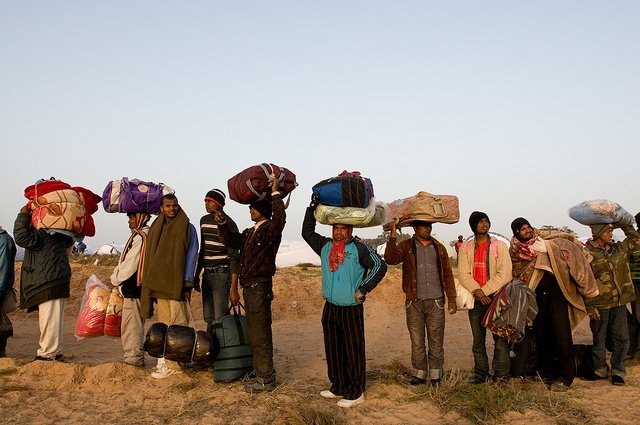
Syeda Hameed’s controversial Assam comments—claiming “Bangladeshis can live here”—have sparked a political and social outcry in the state. As a former Planning Commission member, her statement carried weight, but the reaction it triggered reflects Assam’s deep sensitivities around migration, land rights, and identity.
Chief Minister Himanta Biswa Sarma responded firmly. He warned that such remarks threaten Assam’s cultural fabric and fuel tensions around illegal immigration. Hameed’s comments have since gone viral, igniting heated public debates.
What Did the Hameed Assam Comments Say?
While speaking at a forum on eviction in Guwahati, Syeda Hameed said:
“Bangladeshis are also human beings. The earth is vast; they can live here too. Evicting them is a kind of ‘qayamat’.”
She was referring to ongoing eviction drives across Assam. These drives target settlers the state identifies as illegal occupants—mostly from areas with mixed or undocumented migration histories.
The platform, Asom Nagarik Sanmilan, where Hameed made these comments, later distanced itself from her views. Organizers clarified that the forum supported the Assam Accord and did not condone illegal migration.
Strong Reactions to Hameed Assam Comments
Assam CM Himanta Biswa Sarma immediately condemned the remarks. Taking to social media, he said:
“These are not humanitarian statements—they legitimize illegal infiltrators. This is Jinnah’s dream of making Assam part of Pakistan East.”
Sarma emphasized that Assam is not up for grabs. He reiterated his government’s commitment to protecting native rights and continuing eviction campaigns.
Union Minister Kiren Rijiju joined the criticism. He accused Hameed of misleading the public under the guise of humanitarianism and ignoring the complex realities of border states like Assam.
Political and Civil Society Responses
The All Assam Students’ Union (AASU) issued a scathing response. They called Hameed’s words “anti-Assamese” and “insulting to the sacrifices made during the Assam Agitation.” Other groups echoed similar sentiments.
Opposition parties offered more nuanced critiques. Some agreed the remarks were ill-timed but criticized the Sarma government’s eviction drives as selectively targeting minorities. A few called for both compassion and lawful procedures.
The Axom Nagarik Sanmilan, which hosted the event, quickly clarified that her comments were personal, not institutional. They reaffirmed their stance against illegal immigration post-1971 as defined in the Assam Accord.
Assam’s Complex History With Immigration
The backlash against the Hameed Assam comments cannot be separated from the region’s long, complex history with migration. The 1979–85 Assam Agitation was a landmark movement demanding the detection and deportation of illegal immigrants.
This led to the signing of the Assam Accord in 1985, which defined 1971 as the cut-off year for Indian citizenship in Assam. The issue remains politically charged, especially in the context of recent NRC updates and the implementation of the Citizenship Amendment Act (CAA).
Ongoing Evictions and Rising Tensions
The Assam government has intensified eviction drives in districts such as Barpeta, Goalpara, and Nagaon. Authorities claim these actions target illegal settlers occupying forest and government land.
Rights groups, however, argue that the government has not always provided alternative housing, and many of those evicted have lived on these lands for decades. This context made Hameed’s statement—though likely meant to evoke empathy—especially incendiary.
Some critics argue her words undermined legal frameworks and Assamese emotional trauma associated with demographic changes.
Social Media Reactions to the Hameed Assam Comments
The internet lit up following the incident. Hashtags like #ProtectAssam and #AssamForAssamese trended for hours on X (formerly Twitter). Memes, editorial cartoons, and videos analyzing her comments flooded social media platforms.
Hameed herself has not issued a direct clarification or apology. However, members of her team later stated she meant to highlight the humanitarian impact of evictions and was not calling for open borders.
What Happens Next in Assam?
The Assam government plans to double down on its eviction policy. Chief Minister Sarma has also directed officials to review land records and accelerate NRC updates. Tensions may rise as upcoming municipal elections approach, with immigration expected to remain a hot-button issue.
On the civil society front, a growing number of activists are calling for balanced action: humanitarian relief for displaced families, but strict enforcement against illegal land grabbing.
Balance Humanity and Sovereignty
The Hameed Assam comments episode highlights a crucial question for India: how can the country balance human rights with national sovereignty? While compassion is key in any democratic society, it must not come at the cost of disregarding local identities, laws, or historical trauma.
In regions like Assam, where ethnic and linguistic identity remains deeply tied to land, care must be taken when discussing migration. Public figures—especially those with influence—must weigh their words responsibly.
READ MORE: Laitumkhrah Hawker Relocation Plan Aims to Ease Congestion