


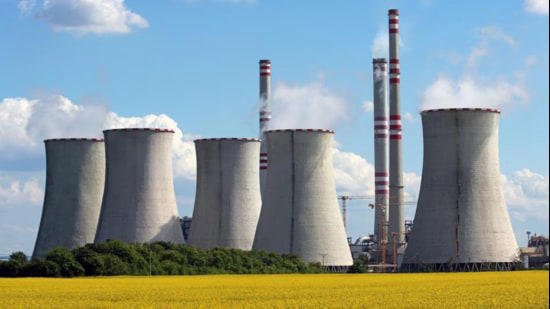
A thermal power plant in Haryana’s Yamuna Nagar district recorded particulate matter (PM) emissions nearly 38.8 times above the prescribed limit, according to monitoring data from the Central Pollution Control Board (CPCB). The board has assessed interim environmental compensation of ₹31.46 crore against the facility for its non-compliant operations.
The Deenbandhu Chhotu Ram Thermal Power Project, operated by the Haryana Power Generation Corporation Limited (HPGCL), came under scrutiny after CPCB monitoring revealed excessive emissions from its two generating units.
Read More: Tripura to Open Ambedkar Hostel for SC Male College Students Within Two Months
The findings emerged through a Right to Information (RTI) response dated September 18. Noida-based environmental activist Amit Gupta had filed the application on August 20, seeking details of emission studies at thermal power plants located within 300 kilometres of the Delhi-National Capital Region (NCR).
Unit 2 Recorded 38.8 Times the Permitted PM Limit
CPCB monitoring recorded PM emissions of 1,939 milligrams per normal cubic metre (mg/Nm³) from Unit 2 on February 10, 2026.
The prescribed emission limit stands at 50 mg/Nm³. Therefore, Unit 2 recorded a concentration approximately 38.8 times the permitted level.
Unit 1 also exceeded the standard. It recorded PM emissions of 63.9 mg/Nm³ on February 11, which was around 27.8% above the prescribed limit.
The CPCB confirmed that both units operated during the inspection and monitoring process. The findings established that the plant failed to meet the applicable particulate matter emission standards during the assessed period.
CPCB Assesses ₹31.46 Crore Environmental Compensation
The CPCB calculated interim environmental compensation of ₹31.46 crore for the period from February 10 to June 15, 2026.
The calculation follows a rate of ₹0.40 per unit of electricity generated during non-compliant operation.
According to figures from the National Power Portal, the two units generated a combined 786.61 million units during the relevant period.
Unit 1 accounts for ₹21.64 crore of the assessed amount. It generated 541.03 million units between February 11 and June 15.
Unit 2 accounts for ₹9.82 crore, based on generation of 245.58 million units from February 10 to June 15.
Interestingly, Unit 1 contributes a larger share of the compensation despite recording a lower PM emission concentration than Unit 2. Its higher electricity generation during the assessed period explains the difference.
The CPCB has clarified that the amount remains interim. The final calculation may change depending on the plant’s compliance status and subsequent monitoring results.
Plant Must Explain Non-Compliance Within 15 Days
The CPCB has issued a show-cause notice under Section 5 of the Environment (Protection) Act, 1986.
The notice directs the plant to explain within 15 days why authorities should not impose the environmental compensation.
The company must also submit an action-taken and compliance report. It must support the report with documentary evidence, including day-wise electricity generation figures from February 10.
The CPCB said the compensation period would continue until another stack emission test and a compliance report establish the plant’s status.
The RTI response does not confirm whether the plant has replied to the notice, paid the compensation or achieved compliance since the monitoring exercise.
Inspection Finds Additional Environmental Lapses
CPCB officials also identified several other shortcomings during their inspection of the facility.
The plant’s online emission monitoring system, which tracks particulate matter, sulphur dioxide and nitrogen oxides, failed to display PM values. The system showed readings for the other two pollutants, although those values varied.
Inspectors also found inadequate dust-control arrangements in several locations, including the coal-crushing area.
The report noted that water sprinklers and anti-smog guns could not adequately control dust. Officials also observed coal particles around the site.
The inspection further found missing water flow meters at several locations. These included the canal intake, cooling tower blowdown and boiler blowdown points.
The CPCB also flagged shortcomings in hazardous waste management. The plant generates waste across several categories but holds authorisation for only one category, identified as 34.2.
Officials also found that the facility did not maintain records for three hazardous waste categories.
Consent Documents Also Show Gaps
The plant’s Consolidated Consent and Authorisation, issued by the Haryana State Pollution Control Board, remained valid until September 30, 2026.
However, the CPCB found that the document did not mention two boilers, three diesel generator sets or the use of light diesel oil (LDO).
These observations add to the environmental compliance concerns surrounding the facility.
The CPCB classified the plant under Category C in its thermal power plant classification. The deadline for complying with emission standards other than sulphur dioxide, including particulate matter, expired on December 31, 2024.
Thermal power plants also fall within the 17 categories of highly polluting industries identified for regulatory oversight.
Environmental Compliance Under Scrutiny
The findings have renewed attention on pollution control at coal-based power plants in Haryana, particularly those operating near the Delhi-NCR region.
Excessive particulate matter emissions can worsen air quality and increase exposure to airborne pollution. The CPCB’s assessment highlights the financial consequences that may follow when plants fail to meet prescribed standards.
The ₹31.46 crore figure remains an interim assessment, and the final liability will depend on the plant’s compliance and further regulatory action.
The CPCB has sought an explanation and documentary evidence from the operator. The plant’s response and subsequent monitoring will determine the next steps in the case.