


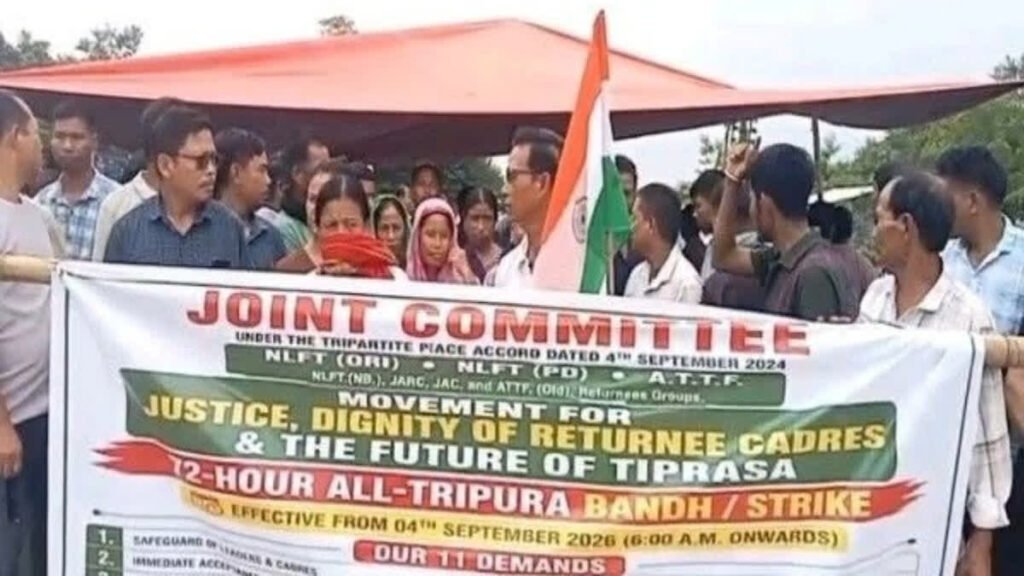
The Hathai Kothar Blockade Controversy has triggered a political debate in Tripura after a brief road and railway blockade reportedly stranded a woman BSF jawan who needed to reach the airport for her father’s last rites. The incident quickly drew attention to the humanitarian impact of public agitations. Moreover, opposition and ruling-party leaders traded criticism over whether protesters should provide exemptions in urgent personal emergencies. The episode has therefore placed the balance between public protest and humanitarian considerations at the centre of political discussion.
Tripura Land Rights Draft Expected Within 15 Days After New Delhi Deliberations
Hathai Kothar Blockade Controversy Draws Political Attention
The Hathai Kothar Blockade Controversy emerged after protesters briefly blocked road and railway movement at Hathai Kothar. The disruption affected movement through the area and created difficulties for people attempting to travel during the agitation.
Among those reportedly affected, a woman BSF jawan faced particular difficulties while trying to reach the airport. She needed to travel to attend her father’s last rites, making the situation especially sensitive.
However, the incident quickly moved beyond the immediate disruption. Political parties began debating whether protesters should have allowed people facing urgent humanitarian circumstances to pass through the blockade.
Furthermore, the episode raised questions about how public demonstrations can accommodate emergencies without undermining the purpose of an agitation.
A road or railway blockade can significantly affect ordinary movement. Therefore, organisers often face pressure to consider medical emergencies, funerals and other unavoidable situations when deciding how to enforce a protest.
Woman BSF Jawan Stranded During Agitation
The reported experience of the woman BSF jawan became the central point of the political debate. She was attempting to reach the airport so she could attend her father’s last rites.
Meanwhile, the blockade created an immediate obstacle to her journey. The circumstances generated criticism because the journey involved a family bereavement rather than routine travel.
Moreover, the incident highlighted the difference between ordinary commuters and people facing exceptional emergencies. While public agitations can disrupt transportation, humanitarian situations can require special consideration.
The matter also sparked discussion about whether protest organisers should establish clear exemptions during blockades. Such arrangements could potentially allow emergency travellers to pass while protesters continue their demonstration.
However, political reactions to the incident reflected broader disagreements between ruling and opposition parties. Each side sought to use the episode to question the approach taken by the other.
Consequently, the incident became a political flashpoint rather than remaining only a local transportation dispute.
Political Parties Trade Barbs Over Humanitarian Exemptions
The Hathai Kothar Blockade Controversy intensified as ruling and opposition parties exchanged criticism over the handling of the blockade.
Opposition leaders questioned the treatment of the woman BSF jawan and highlighted the humanitarian circumstances surrounding her journey. They argued that public protests should take exceptional situations into account.
On the other hand, the ruling side responded by defending its position and criticising the opposition’s approach to the incident. The competing reactions added a political dimension to an event that initially centred on transportation disruption.
Furthermore, the debate raises a broader question about the limits and responsibilities associated with public agitation. Demonstrations allow groups to express grievances and attract public attention. However, prolonged or strict blockades can affect people who have no connection with the issue being protested.
Therefore, humanitarian exemptions can become an important consideration during major public agitations.
Meanwhile, the controversy also shows how individual incidents can quickly become politically significant. When an emergency traveller becomes stranded during a protest, political parties can use the episode to debate governance, public responsibility and protest practices.
The Hathai Kothar incident has consequently become part of a wider discussion about balancing democratic protest with compassion for people facing genuine emergencies.
Hathai Kothar Blockade Raises Wider Questions
The Hathai Kothar Blockade Controversy has brought renewed attention to the consequences of road and railway blockades. Such actions can pressure authorities to respond to public grievances, but they can also interrupt essential movement.
In this case, the reported situation involving the BSF jawan placed humanitarian concerns at the forefront. Her need to attend her father’s last rites created circumstances that differed significantly from ordinary travel requirements.
Moreover, the incident highlights the importance of communication between protest organisers, authorities and affected residents. If organisers receive information about genuine emergencies, they may be able to create practical arrangements without completely abandoning their demands.
Additionally, authorities can play a role in maintaining communication routes during public agitations. Clear coordination can help reduce unnecessary hardship while allowing lawful demonstrations to continue.
However, political parties also face a responsibility to avoid turning sensitive personal circumstances into unnecessary political confrontation. The death of a family member represents a deeply personal situation, and public discussion should maintain appropriate sensitivity.
Therefore, the controversy could encourage a broader conversation about humanitarian safeguards during public protests in Tripura.
The incident also demonstrates how transportation blockades can produce consequences beyond the immediate location. A disruption at one point can affect passengers, workers, families and emergency travellers who depend on uninterrupted connectivity.
Ultimately, the Hathai Kothar episode has highlighted the need to balance the right to protest with reasonable humanitarian considerations.
Conclusion
The Hathai Kothar Blockade Controversy has become a political flashpoint after a brief road and railway blockade reportedly stranded a woman BSF jawan travelling to the airport for her father’s last rites. Moreover, the incident prompted ruling and opposition parties to exchange criticism over humanitarian exemptions during public agitations. The episode has consequently raised wider questions about balancing the right to protest with compassion and practical safeguards for people facing genuine emergencies.
FAQs
1. What happened at Hathai Kothar?
A brief road and railway blockade at Hathai Kothar disrupted movement and triggered a political debate.
2. Why did the incident involving the BSF jawan attract attention?
The woman BSF jawan reportedly faced difficulties while travelling to the airport to attend her father’s last rites.
3. What is the main issue behind the Hathai Kothar Blockade Controversy?
The controversy centres on whether public agitations and blockades should provide humanitarian exemptions for people facing genuine emergencies.
4. Did political parties react to the incident?
Yes. Opposition and ruling parties exchanged criticism over the handling of the situation and the broader issue of humanitarian considerations during protests.
5. What wider issue has the blockade raised?
The incident has raised questions about balancing democratic protest and public grievances with the need to protect essential and emergency movement.