


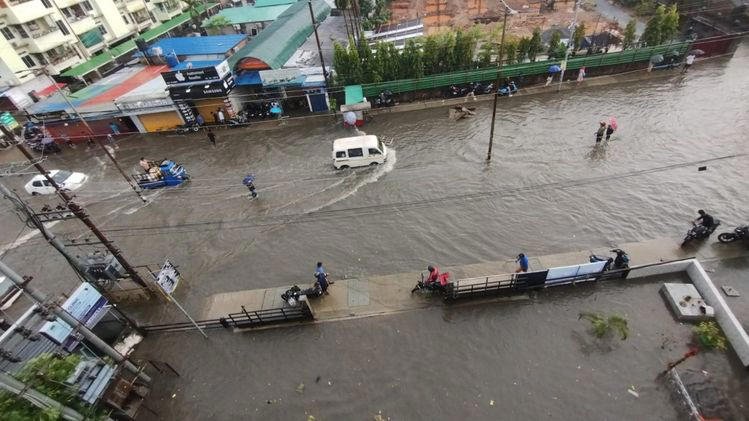
Heavy rain in Guwahati has once again brought the city to a standstill. On Thursday, continuous downpour submerged several areas, leaving residents struggling with flooded roads, waterlogged homes, and long traffic snarls. The situation has highlighted once more the city’s fragile drainage system and the urgent need for infrastructure upgrades. The heavy rain in Guwahati disrupted daily life, forcing many to remain indoors while emergency services tried to respond to multiple calls.
Read More: India’s First and Largest Bio-Refinery in Assam’s Golaghat
City roads under water
The heavy rain in Guwahati quickly turned most major roads into temporary rivers. Commuters waded through knee-deep water as vehicles broke down on main stretches such as GS Road, RG Baruah Road, and areas near Paltan Bazar. Despite several drainage projects in recent years, the water failed to clear quickly, which worsened the chaos. Many shopkeepers had to shut down their businesses halfway through the day as rainwater entered their shops.
In several residential colonies, people faced immense hardship. Homes in areas such as Anil Nagar, Nabin Nagar, and Tarun Nagar remained submerged for hours. Residents used buckets to bail water out of their homes, while many families shifted their belongings to higher levels. The heavy rain in Guwahati also forced some families to spend the night with relatives as their houses became unlivable.
Traffic snarls worsen problems
The waterlogging created massive traffic jams across the city. Vehicles moved at a snail’s pace on National Highway 37 and in central parts of Guwahati. School buses struggled to reach on time, while office-goers remained stuck for hours. Traffic police diverted vehicles at several points, but long queues remained unavoidable. The heavy rain in Guwahati turned even short commutes into exhausting journeys.
Autorickshaw and cab drivers refused to take passengers in waterlogged zones. Many residents complained of walking long distances due to the unavailability of transport. The chaos on roads further highlighted the poor preparedness of the city during monsoon showers.
Drainage failure and civic issues
The recurring problem of waterlogging in Guwahati has been linked to poor drainage. Although the state government has invested in drainage expansion projects, many pipelines remain clogged with garbage. Experts point out that encroachment on wetlands and natural water channels has worsened the issue. Heavy rain in Guwahati often exposes these weak points, leaving thousands affected.
The Guwahati Municipal Corporation (GMC) deployed pumps in some localities to clear water, but the measures provided only temporary relief. Civic teams collected complaints through helplines, yet many residents felt neglected. Citizens voiced their frustration, saying that despite repeated assurances, long-term solutions remain missing.
Impact on daily life
Markets, schools, and offices all felt the impact of the downpour. Many educational institutions declared early closure, and several private offices allowed employees to work from home. Markets in Fancy Bazar and Uzan Bazar witnessed fewer customers due to flooded entry points. Street vendors faced severe losses as their carts remained submerged.
In hospitals, patients and visitors struggled to reach facilities as ambulances got stuck in traffic. Emergency medical teams faced hurdles in reaching some flooded homes. The heavy rain in Guwahati added extra pressure on essential services, making life even harder for the city’s residents.
Health and safety concerns
Stagnant water from heavy rain in Guwahati raised concerns over the possible spread of waterborne diseases. Doctors warned of a rise in cases of diarrhoea, dengue, and malaria in the coming weeks. Civic officials sprayed disinfectants in heavily affected colonies, but residents remain worried. Many families rushed to store clean drinking water, fearing contamination.
Safety concerns also grew as electrocution risks increased. Power supply was cut off in some areas to prevent accidents, leaving families in darkness for hours. The disruption of electricity added to the hardship during the rain-soaked day.
Voices from residents
Several residents expressed anger over repeated waterlogging despite tall promises from the authorities. A resident of Anil Nagar said, “Every year, we face the same problem. Authorities come, take photos, and then nothing changes.” Many others urged the government to fast-track drainage projects and protect wetlands from encroachment. The heavy rain in Guwahati has become a symbol of both climate pressure and civic neglect.
Government response
Chief Minister Himanta Biswa Sarma acknowledged the crisis and instructed departments to remain on high alert. He directed the GMC and district administration to speed up relief work and deploy more pumps in affected areas. Officials promised to conduct a detailed review of drainage systems. However, residents remain sceptical, as similar reviews in the past brought little improvement.
The heavy rain in Guwahati also caught the attention of disaster management teams. The State Disaster Response Force (SDRF) deployed boats in low-lying colonies, assisting residents in moving to safer places. Relief materials, including food packets, reached some areas late in the evening.
The need for long-term solutions
Experts stress that only long-term planning can address the issue. Heavy rain in Guwahati will remain a yearly occurrence, but better infrastructure can reduce its impact. Urban planners recommend widening drains, desilting existing pipelines, and protecting natural wetlands. They also suggest stricter enforcement against illegal construction that blocks water channels.
The government has announced new urban infrastructure projects, yet residents demand faster action. Without timely implementation, Guwahati may continue to face paralyzed roads and submerged homes every monsoon season.
The heavy rain in Guwahati has once again reminded everyone of the city’s fragile infrastructure. From flooded homes to massive traffic jams, the challenges touched nearly every aspect of urban life. Although the government has promised immediate relief and long-term solutions, only action on the ground will rebuild trust among citizens. Until then, every spell of heavy rain in Guwahati will remain a dreaded experience for its people.
Read More: Himanta, Amit Shah review Bhupen Hazarika centenary, polls