


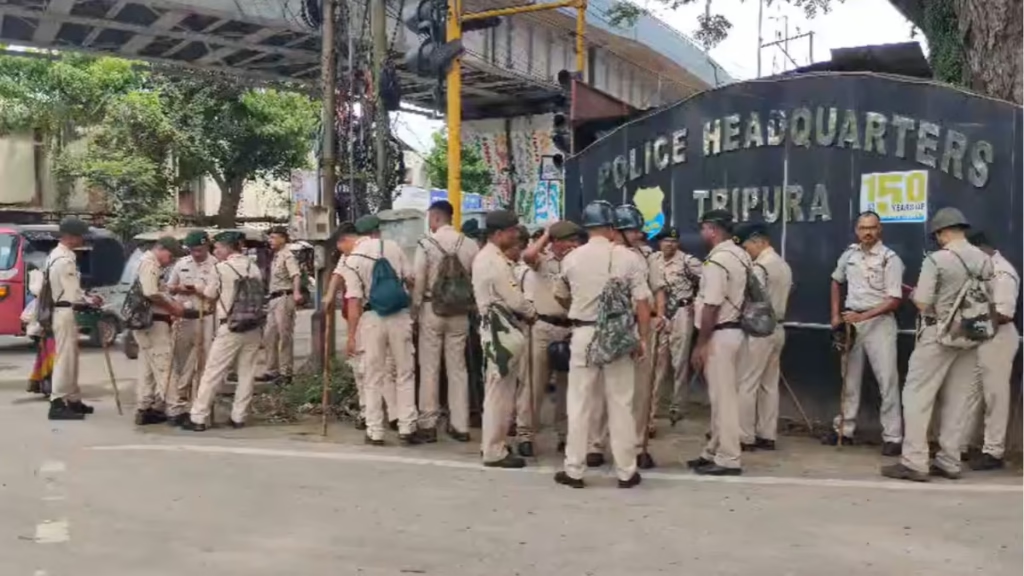
The High Court Order has brought a significant legal development after the Tripura High Court commuted the sentences of nine Bangladeshi nationals and directed their prompt repatriation. The ruling concludes the criminal sentence while initiating the legal process for their return in accordance with applicable procedures.
Strict Punitive Terms Proposed with Up to 10-Year Jail for Examination Leak Cartels
High Court Order Commutes Sentences of Nine Bangladeshi Nationals
The High Court Order was issued after the Tripura High Court commuted the sentences of nine Bangladeshi nationals. According to the available information, the court also directed that the individuals be repatriated at the earliest in accordance with the applicable legal process.
A commutation of sentence changes the punishment imposed by a court without overturning the underlying judicial proceedings. Moreover, courts may issue such directions after considering the facts and legal provisions applicable to a particular case.
The latest ruling represents an important judicial decision involving foreign nationals. Consequently, the order also sets the stage for the administrative process required for repatriation.
Although the court has directed quick repatriation, officials have not released additional details regarding the implementation timeline.
High Court Order Initiates Legal Repatriation Process
The High Court Order also initiates the administrative steps required for the repatriation of the individuals concerned. Court directives involving foreign nationals generally require coordination among the relevant civil and law enforcement authorities before implementation.
Furthermore, repatriation procedures are typically carried out in accordance with established legal and diplomatic protocols. Effective coordination helps ensure that judicial directions are implemented in an orderly manner.
Judicial decisions remain subject to the legal framework governing their execution. Therefore, the repatriation process will proceed through the appropriate administrative channels following the court’s ruling.
The latest order highlights the role of the judiciary in resolving matters involving criminal sentences and subsequent legal procedures.
High Court Order Highlights Judicial Oversight
The High Court Order reflects the judiciary’s role in examining legal matters and issuing directions within the framework of the law. Court decisions contribute to the administration of justice by interpreting legal provisions and determining appropriate outcomes in individual cases.
Furthermore, judicial orders provide guidance to the authorities responsible for implementing court directives. Clear legal instructions also support transparency and accountability throughout the execution process.
The functioning of the judicial system depends on adherence to established legal procedures. Consequently, administrative agencies are expected to act in accordance with the court’s directions.
According to the available information, the Tripura High Court ordered the commutation of sentences and the prompt repatriation of the nine individuals.
High Court Order Reflects Due Legal Process
The High Court Order underscores the importance of resolving legal matters through established judicial procedures. Decisions issued by constitutional courts form an essential part of the justice system and guide the implementation of subsequent administrative actions.
Furthermore, cooperation between judicial institutions and administrative authorities helps ensure that court orders are carried out efficiently and lawfully. Such coordination also supports the orderly functioning of legal processes involving foreign nationals.
The rule of law relies on effective implementation of judicial decisions. Therefore, the latest ruling represents an important legal development within the judicial system.
The decision demonstrates the continued role of the High Court in adjudicating cases and issuing directions in accordance with applicable law.
Conclusion
The High Court Order issued by the Tripura High Court commuted the sentences of nine Bangladeshi nationals and directed their prompt repatriation through the appropriate legal process. The ruling marks a significant judicial development while initiating the next administrative stage of the case.
Furthermore, the order reinforces the importance of following established legal procedures in matters involving criminal sentences and repatriation. Coordination among the relevant authorities will be necessary to implement the court’s directions.
Overall, the High Court Order highlights the judiciary’s role in delivering legal decisions and ensuring that subsequent actions proceed within the framework of the law. As the implementation process moves forward, authorities may provide further official updates regarding the repatriation proceedings.
FAQs
1. What is the High Court Order about?
The High Court Order concerns the Tripura High Court’s decision to commute the sentences of nine Bangladeshi nationals and direct their prompt repatriation.
2. How many individuals are covered by the order?
According to the available information, the order applies to nine Bangladeshi nationals.
3. What did the Tripura High Court direct?
The court commuted the sentences of the nine individuals and ordered their quick repatriation through the appropriate legal process.
4. Does the order immediately complete the repatriation process?
No. Based on the available information, the court has issued the direction, and the repatriation process will proceed through the relevant administrative procedures.
5. Have authorities announced a repatriation timeline?
According to the available information, officials have not released a specific timeline for implementing the court’s direction.