


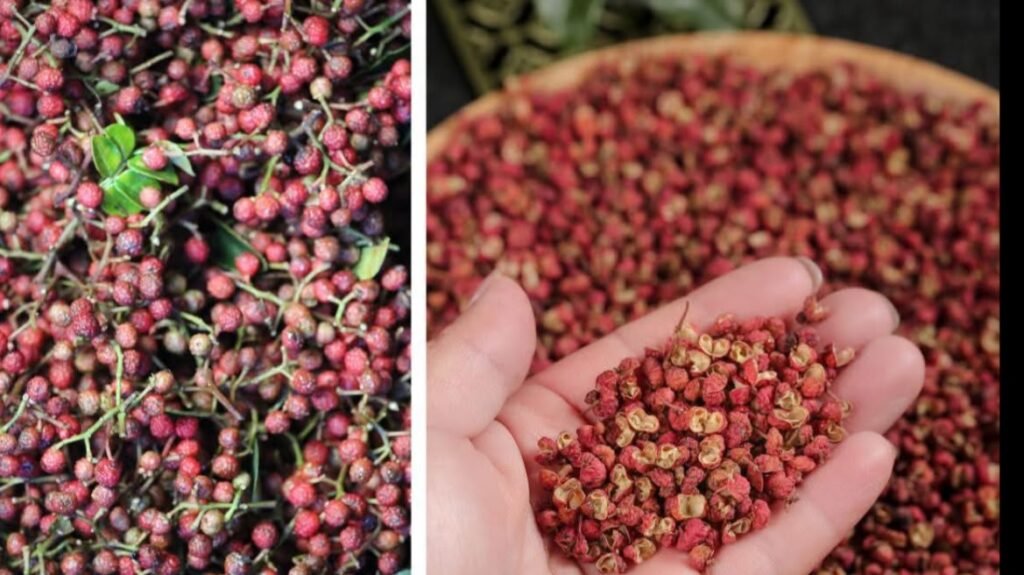
Arunachal Pradesh’s wild Khagi spice has reportedly achieved its first major commercial breakthrough, with local farmers earning ₹39 lakh from a 10-tonne harvest. The development highlights the economic potential of the state’s lesser-known indigenous agricultural and forest products.
The reported transaction gives Khagi greater commercial visibility while demonstrating how traditional crops can create new income opportunities for rural communities. Moreover, organised marketing of distinctive Himalayan spices could help farmers move beyond local markets and reach higher-value buyers.
The achievement also points toward the potential for sustainable value chains around Arunachal Pradesh’s unique agricultural resources. However, the available information does not identify the buyers, the exact Khagi species, or the specific communities that produced the reported harvest.
Mizoram Celebrates First Arjuna Awardee: Lalremsiami Makes State Sports History
Khagi Spice Records Major Commercial Success
The reported Khagi spice commercial success involves a 10-tonne harvest valued at ₹39 lakh.
The transaction represents a significant commercial milestone for a spice that has traditionally received limited attention outside its local context. Furthermore, successful market sales can encourage farmers to explore organised cultivation, collection, processing, and marketing.
The development could therefore open a new avenue for rural agricultural income.
However, the available information does not provide details about the precise commercial agreement.
Farmers Receive ₹39 Lakh for Harvest
Local farmers reportedly earned a combined ₹39 lakh from the 10-tonne harvest.
That figure translates to an average reported value of approximately ₹390 per kilogram across the harvest. Moreover, a commercially successful sale can demonstrate the potential value of indigenous agricultural products when buyers recognise their unique qualities.
Higher-value markets could encourage further investment in production and processing.
However, the actual amount received by individual farmers may vary depending on their contribution and the structure of the transaction.
Arunachal’s Indigenous Products Gain Attention
Arunachal Pradesh contains a wide range of distinctive agricultural and forest-based products.
Many local communities have long relied on plants, spices, fruits, and other resources adapted to the region’s mountainous environment. Additionally, commercial recognition can create opportunities to document, preserve, and develop these traditional products.
Khagi’s reported breakthrough adds another example to this emerging agricultural landscape.
However, the available information does not indicate whether Khagi already has established markets outside Arunachal Pradesh.
Commercialization Could Strengthen Rural Incomes
A successful market can provide farmers with an additional source of income.
Organised value chains can create opportunities not only for growers and collectors but also for people involved in sorting, drying, packaging, transportation, and marketing. Furthermore, local processing can retain more economic value within producing communities.
This could make Khagi commercially relevant beyond the initial harvest.
However, long-term income gains will depend on consistent demand and sustainable production.
Himalayan Geography Adds Market Value
Products associated with distinctive geographical regions can attract consumer interest because of their origin and traditional production methods.
Arunachal Pradesh’s Himalayan environment provides unique conditions for numerous agricultural products. Moreover, regional identity can become an important part of branding when producers enter premium markets.
Khagi could potentially benefit from similar positioning if its commercial market expands.
However, no geographical indication or formal branding status has been identified in the information provided.
Sustainable Harvesting Will Be Important
If Khagi grows naturally in the wild, increased demand could create pressure on its availability.
Commercial success can encourage greater harvesting, making sustainable management important. Additionally, communities and authorities may need to monitor collection practices to protect natural populations and maintain long-term supply.
Responsible commercialisation can therefore balance income generation with conservation.
However, the available information does not specify whether the reported 10-tonne harvest came from cultivated farms, managed collection areas, or wild harvesting.
Value Addition Could Increase Returns
Farmers may gain additional value by processing Khagi before selling it.
Cleaning, drying, grading, packaging, and developing finished spice products can potentially increase market value. Furthermore, branded products can help producers connect directly with consumers rather than relying entirely on bulk sales.
Such measures could strengthen the economic potential of Khagi.
However, no specific processing or branding initiative has been announced.
Local Processing Could Create Jobs
Commercialisation can generate employment beyond farming.
Processing facilities can create opportunities in sorting, drying, packaging, storage, transportation, and quality control. Moreover, these activities can provide additional income opportunities within rural communities.
Developing a complete local value chain could therefore increase the broader economic impact.
However, the current scale of Khagi processing infrastructure remains unclear.
Farmers Could Gain Stronger Market Access
Connecting producers with reliable buyers remains important for the long-term success of indigenous crops.
Organised procurement can provide farmers with clearer market channels and potentially reduce uncertainty around sales. Additionally, predictable demand can help producers plan production and investment.
The reported ₹39 lakh transaction could encourage further market development.
However, no information has been provided about future procurement commitments.
Research Could Support Khagi Development
Scientific research can help determine how best to cultivate, process, preserve, and market emerging agricultural products.
Researchers can study the plant’s growing conditions, yield potential, nutritional or culinary properties, and post-harvest requirements. Furthermore, research can help establish sustainable production methods as commercial demand grows.
Such work could strengthen the foundation for future expansion.
However, no specific research programme has been identified in the information provided.
Arunachal’s Spice Economy Could Expand
The reported success could encourage greater attention toward other traditional spices and agricultural products from Arunachal Pradesh.
Diversifying the state’s agricultural economy can create additional income opportunities for rural communities. Moreover, distinctive regional products can help Arunachal Pradesh develop stronger connections with national and international specialty markets.
Khagi could become part of a wider strategy for promoting Himalayan products.
However, the long-term commercial potential remains dependent on market demand and supply sustainability.
What Happens Next?
The next stage for Khagi could involve expanding production while establishing reliable procurement and processing networks.
Farmers, local organisations, researchers, and government agencies could work together to develop sustainable supply chains. Furthermore, improved packaging and market promotion could help introduce the spice to consumers beyond Arunachal Pradesh.
Maintaining quality and supply consistency will remain essential as commercial interest grows.
Conclusion
The reported Khagi spice commercial success in Arunachal Pradesh marks a significant milestone for an indigenous Himalayan product. Local farmers reportedly earned ₹39 lakh from a 10-tonne harvest, demonstrating the potential for traditional agricultural resources to generate substantial rural income.
Moreover, successful commercialization could encourage value addition, local processing, improved market access, and greater recognition of Arunachal Pradesh’s distinctive products. At the same time, sustainable harvesting and responsible resource management will remain essential if demand increases.
Overall, the Khagi spice commercial breakthrough offers a promising example of how indigenous Himalayan products can develop new economic opportunities for rural communities.
FAQs
1. What is Khagi?
Khagi is described as a wild spice associated with Arunachal Pradesh’s Himalayan agricultural landscape.
2. How much did the reported harvest earn?
Local farmers reportedly received ₹39 lakh for a 10-tonne harvest.
3. What was the approximate value per kilogram?
Based on the reported figures, ₹39 lakh for 10 tonnes equals an average of approximately ₹390 per kilogram.
4. Why is the sale significant?
It represents a major commercial breakthrough for Khagi and demonstrates potential for creating new income opportunities for local farmers.
5. Could Khagi become a larger commercial crop?
It could have further potential if producers establish sustainable production, reliable markets, processing facilities, and consistent quality standards.