


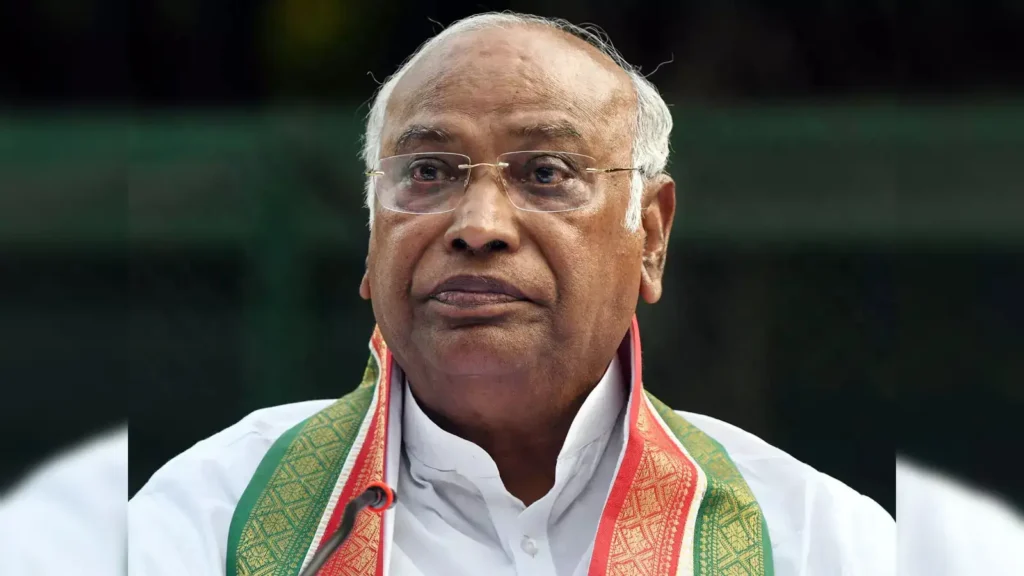
In a sharp political attack, Assam Chief Minister Himanta Biswa Sarma accused Congress President Mallikarjun Kharge and his son Priyank Kharge of disrespecting Assam and its youth. Speaking at a public event on October 28, Sarma claimed that both leaders have “a history of insulting Assam’s pride,” referring to an earlier controversy involving Bharat Ratna Dr. Bhupen Hazarika.
Sarma said, “Mallikarjun Kharge once insulted our legend Bhupen Hazarika, and now his son has insulted the hardworking youth of Assam.” His comments quickly drew political attention, intensifying the ongoing verbal battle between the BJP and the Congress.
The chief minister’s remarks come at a time when Assam’s political atmosphere is heating up ahead of local elections, with both parties trading sharp accusations.
The Bhupen Hazarika Controversy Reignited
The mention of Bhupen Hazarika, one of Assam’s most revered cultural icons, added a strong emotional element to Sarma’s remarks. The CM alleged that Mallikarjun Kharge had once made dismissive comments about Hazarika’s legacy during a national political debate.
Sarma said that “Assam never forgets its icons,” and anyone who disrespects them “disrespects the spirit of Assamese identity.” He added that Hazarika was not only a singer and lyricist but also “a voice of unity who represented the soul of India.”
This renewed reference to Bhupen Hazarika has once again put the Congress leadership under scrutiny in Assam, a state where Hazarika’s name continues to hold immense emotional weight.
For context, Dr. Bhupen Hazarika’s songs played a major role in shaping Assam’s cultural and political consciousness. By linking the Kharges’ remarks to him, Sarma aimed to portray Congress as disconnected from the state’s sentiments.
“Priyank Kharge Has Insulted Assam’s Youth”
The controversy began when Priyank Kharge, a Karnataka minister and the son of Congress president Mallikarjun Kharge, allegedly made remarks that Sarma interpreted as belittling the youth of Assam.
According to Sarma, such comments show the Congress’s “consistent disrespect” toward the people of the Northeast. He stated that “Assam’s youth are the future of India, and any insult to them is an insult to the entire nation.”
The chief minister added that Assam has produced some of the most dynamic young professionals, entrepreneurs, and artists in the country. “Instead of mocking them, leaders from Delhi and Bengaluru should learn from their resilience and hard work,” he said.
Sarma’s comments were received with applause from the audience, many of whom see him as a vocal defender of Assam’s cultural pride.
Congress Reacts Cautiously
While Sarma’s remarks have stirred strong reactions, the Congress party has so far chosen a cautious approach. A senior Congress leader from Assam stated that the BJP was trying to divert attention from pressing issues such as unemployment and inflation by attacking their leadership.
The Congress also claimed that Sarma was using emotional politics to distract from the government’s “failures” in handling youth employment and price rise. However, the chief minister’s camp dismissed these allegations, saying that the Congress’s history of “disrespecting Assam” speaks for itself.
This exchange is expected to further polarize political discourse in the state as both parties prepare for an intense campaign season.
Assam’s Youth and Political Sensitivities
Youth politics in Assam has always been deeply intertwined with identity and culture. By framing his comments around Assamese pride, Sarma has tapped into a recurring political sentiment — that national parties often fail to understand or respect Assam’s distinct identity.
Over the years, issues of cultural preservation and regional representation have played a central role in the state’s politics. The reference to Bhupen Hazarika amplifies these emotions, especially among older voters who view him as the embodiment of Assamese heritage.
For young voters, Sarma’s defense of Assam’s dignity serves as a rallying point. It connects cultural reverence with contemporary concerns like job creation and recognition at the national level.
Himanta’s Strategy and Broader Political Implications
Political observers see Sarma’s remarks as a deliberate move to strengthen the BJP’s position among Assamese voters by portraying Congress leaders as “outsiders” disconnected from local values.
By combining cultural symbolism with youth-centric rhetoric. Sarma seeks to reinforce the BJP’s image as the guardian of Assam’s identity and pride. His use of Bhupen Hazarika’s name was particularly strategic, evoking nostalgia and unity at a time of political friction.
The BJP has often credited itself for promoting Assamese culture nationally including renaming roads after Hazarika. Organizing cultural festivals, and funding preservation projects. Sarma’s statement aligns with that broader political narrative.
A Call for Respect and Recognition
Concluding his remarks, Sarma urged all national political leaders to “speak about Assam with respect and empathy.” He said, “We are not a small state to be ignored or mocked. Assam is an integral part of India’s heart, and its people deserve respect.”
His comments, though politically charged, reflect a broader demand for recognition of Assam’s contribution to India’s culture and development.
As the debate continues, one thing is certain the legacy of Bhupen Hazarika and the aspirations of Assam’s youth remain central to the state’s political narrative.