


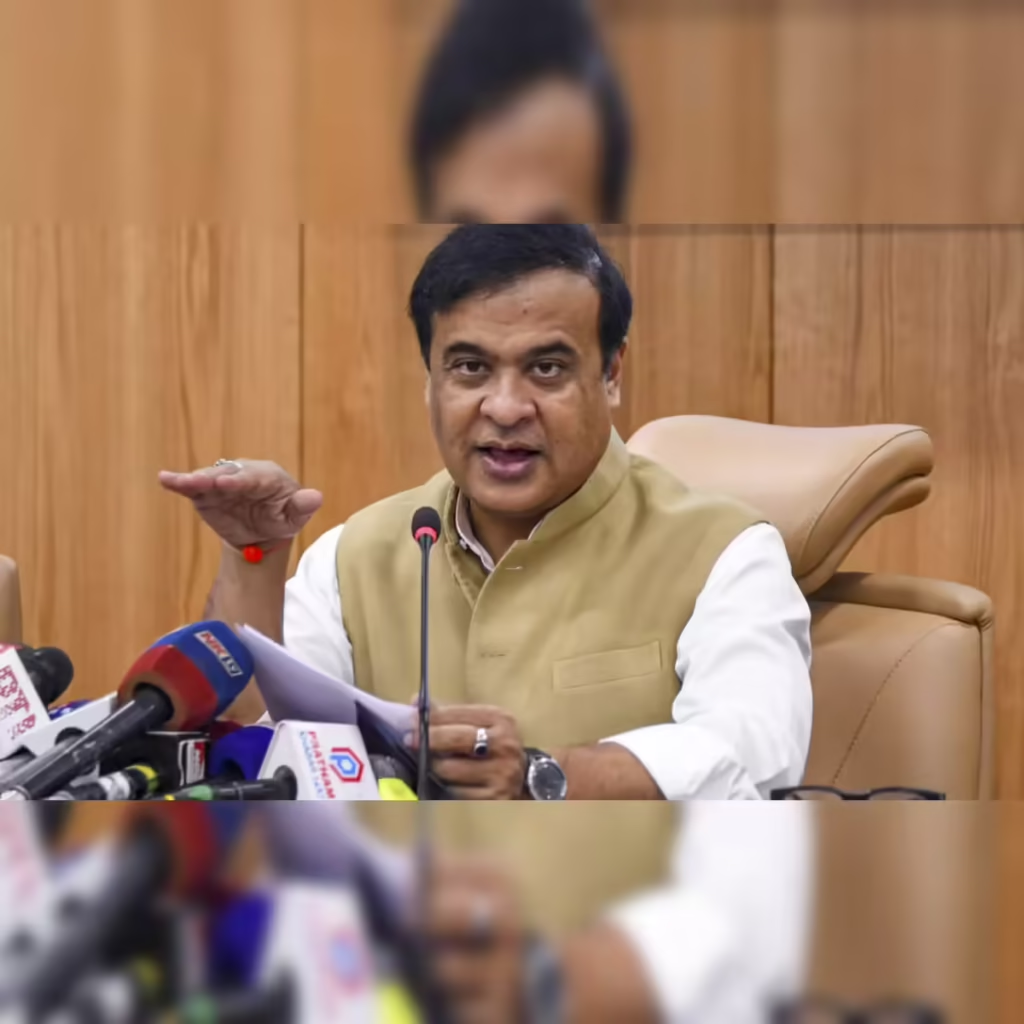
Assam Chief Minister Himanta Biswa Sarma on November 23 launched a strong political attack on the Congress party. Claiming it has been reduced to relying solely on what he termed “Miya-dominated seats” ahead of the 2026 Assembly elections. Speaking at a public event, Sarma said the party’s strength has shrunk so drastically that it is now focusing on barely 22 constituencies across the state. He argued that this narrowing of political influence reflects the collapse of grassroots support for Congress in Assam. According to him, the party’s current electoral strategy signals desperation rather than confidence. His remarks immediately stirred fresh political debate across Assam’s political landscape.
Allegations of money-for-tickets controversy
Sarma further escalated his criticism by alleging that Congress leaders are demanding large sums of money from those seeking party tickets for the upcoming polls. He claimed potential candidates have been asked to pay what he described as “substantial amounts” to secure nominations. These allegations, though not independently verified, have already sparked discussions among political observers who say such charges often surface during election cycles. Sarma said this practice, if true, reflects the declining ethical standards within the opposition party. His remarks drew strong reactions on social media, where supporters and critics engaged in heated exchanges over the accusations.
Narrative of political consolidation in lower Assam
The Chief Minister argued that Congress has shifted its political priorities to communities of East Bengal-origin Muslims, commonly referred to as Miya Muslims, who hold significant electoral influence in several constituencies. He said the party’s leadership now depends on these areas for political survival, claiming that it has lost touch with tribal, indigenous, and tea garden communities. According to Sarma, this shift is one of the key reasons Congress has struggled to regain momentum in the state. He also insisted that the BJP remains the preferred choice among diverse groups due to what he described as “inclusive governance.” The narrative is expected to shape campaign strategies in the months ahead.
BJP frames 2026 polls as ideological battle
The Chief Minister reiterated that the upcoming election will be shaped by ideological differences. Furthermore, the question of identity politics. He said the BJP will seek votes on development, nationalism, and protection of indigenous rights. Sarma claimed Congress, by contrast, is focusing on what he described as vote-bank politics in a limited set of constituencies. He argued that the people of Assam will reject political parties that rely on divisive strategies. The BJP leadership has already begun framing the 2026 election as a battle over Assam’s cultural and demographic future.
Congress yet to issue detailed clarification
As Sarma’s remarks gained traction, Congress leaders were quick to dismiss the accusations as politically motivated. They said the Chief Minister is attempting to divert attention from issues such as unemployment, inflation. And rising concerns over land rights. Congress functionaries argued that their party enjoys widespread support across districts and is preparing to challenge the BJP on governance failures. However, a full and detailed official response from the state unit had not been released at the time of writing. Political analysts expect both parties to intensify their messaging as the election approaches.
Sarma’s comments spark new round of political polarization
The Chief Minister’s comments are likely to deepen the ongoing political polarization in Assam. His remarks about Miya-dominated constituencies immediately drew attention. Given the longstanding debates surrounding identity, migration, and cultural preservation in the state. Critics accused him of furthering division, while supporters said he merely addressed electoral realities. Political commentators said such narratives often resonate strongly in Assam’s electoral politics, which has historically been shaped by ethnic and demographic concerns. With months to go before the polls, these issues are expected to dominate political rallies and public discussions.
Election strategies begin taking shape
Both BJP and Congress have already begun laying the groundwork for candidate selection, campaign messaging, and booth-level organization. Sarma’s comments indicate that the BJP will continue emphasizing youth leadership, indigenous rights, and development projects, which have been central themes throughout his tenure. Congress, meanwhile, is focusing on issues such as restoring the Old Pension Scheme, addressing price rise. And strengthening public welfare. Political analysts believe the 2026 election will be intensely competitive in several districts, with voter turnout playing a crucial role. The coming months will likely reveal more about the alliances, narratives, and battleground seats shaping this high-stakes political contest.
Call to action for voters
As political temperatures rise, citizens across Assam are being urged to examine manifestos, track performance records, and participate actively in the democratic process. With multiple narratives unfolding from identity politics to governance priorities the 2026 Assembly election is expected to be one of the most closely watched in recent years. Political observers say voters will play a decisive role in determining whether the state embraces continuity or opts for a new direction.