


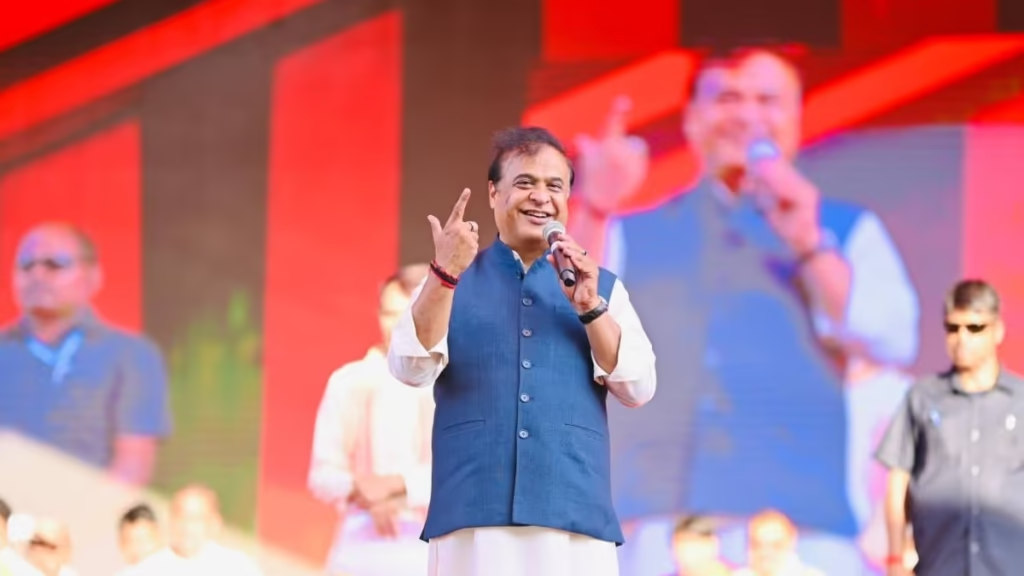
The Himanta Biswa Sarma Second Term is now certain after a massive electoral victory in Assam. The NDA secured 102 out of 126 seats, with the Bharatiya Janata Party alone winning 82 seats. Moreover, Himanta Biswa Sarma is set to continue as Chief Minister for a second consecutive term. The Himanta Biswa Sarma Second Term reflects a strong mandate for continuity and governance.
NSF Flags Backdoor Recruitment in Nagaland Government Departments
Biplab Deb Slams TMC, Calls Party “Finished” in Tripura
Massive NDA Victory in Assam
The Himanta Biswa Sarma Second Term follows a decisive win by the NDA in Assam. Notably, the alliance crossed the majority mark comfortably, securing 102 seats.
As a result, the Second Term has been firmly established.
BJP’s Dominant Performance
A key factor behind the Second Term is the impressive performance of the Bharatiya Janata Party. Furthermore, the party alone secured 82 seats, showcasing strong voter support.
Therefore, the Second Term highlights BJP’s dominance.
Leadership Continuity
With the Second Term, Himanta Biswa Sarma will continue to lead the state. Moreover, continuity in leadership is expected to ensure stability in governance.
In addition, the Second Term reflects public confidence.
Political Significance of the Mandate
The Second Term carries significant political implications. Furthermore, such a large mandate strengthens the government’s position in policymaking.
Consequently, the Second Term could influence regional politics.
Impact on Development Agenda
The Second Term is expected to continue the state’s development agenda. Moreover, focus areas may include infrastructure, investment, and social welfare.
Thus, the Second Term could accelerate growth.
Conclusion
The Second Term marks a major political milestone in Assam. With this in mind, the NDA’s sweeping victory underscores strong public support.
In conclusion, the Second Term signals continuity, stability, and a renewed mandate for governance.
FAQs
1. Who is set for a second term as Chief Minister of Assam?
Himanta Biswa Sarma.
2. How many seats did the NDA win?
102 out of 126 seats.
3. How many seats did BJP secure?
82 seats.
4. Where did this election take place?
In Assam.
5. Why is this significant?
It reflects a strong mandate for the ruling alliance.
6. What does this mean for governance?
Continuity and stability in leadership.