


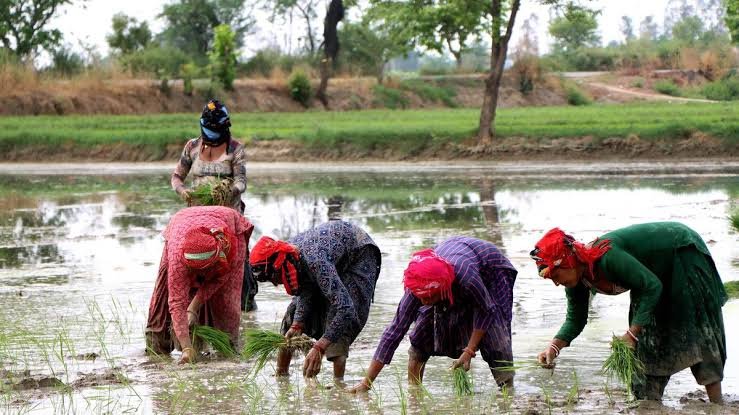
The ICAR climate resilient agriculture Manipur initiative has been launched to address increasing agricultural disruptions caused by erratic monsoon patterns. The programme, led by the Indian Council of Agricultural Research (ICAR), focuses on promoting adaptive farming practices and strengthening rural livelihoods through climate-smart techniques.
Tripura Sanctions ₹4 Lakh Ex-Gratia Relief for Drowning Victims Under Disaster Fund
Women Farmers at the Centre of the Initiative
The ICAR climate resilient agriculture Manipur programme places women farmers at the centre of its implementation. Consequently, the Indian Council of Agricultural Research (ICAR) has organized training and capacity-building programmes to help them adopt improved farming practices.
Meanwhile, participants are learning water-efficient cultivation methods, resilient crop varieties, and modern agricultural techniques. Moreover, agricultural experts stressed that empowering women farmers strengthens long-term sustainability and food security.
Therefore, the initiative aims to build stronger grassroots leadership in agriculture.
Focus on Climate-Resilient Techniques
The ICAR climate resilient agriculture Manipur programme promotes farming methods that can withstand irregular rainfall, soil degradation, and rising temperatures. Furthermore, the programme encourages farmers to adopt drought-tolerant crops, improved irrigation systems, soil health management, and diversified cropping patterns.
Additionally, experts are conducting field demonstrations and practical training sessions across rural areas. As a result, farmers can apply climate-smart techniques more effectively.
The programme focuses on building resilient and sustainable agricultural systems.
Addressing Monsoon-Driven Agricultural Disruptions
The ICAR climate resilient agriculture Manipur initiative responds to recurring challenges caused by unpredictable monsoon conditions. Meanwhile, erratic rainfall, soil erosion, crop losses, and water scarcity continue to affect agricultural productivity in many parts of the state.
Furthermore, officials highlighted the importance of scientific interventions and community participation. Therefore, they aim to reduce climate-related risks while improving crop yields and farm resilience.
Strengthening Sustainable Rural Livelihoods
The ICAR climate resilient agriculture Manipur programme also supports long-term rural development. Moreover, climate-smart farming practices help farmers improve productivity while protecting natural resources.
Additionally, stronger community participation encourages the wider adoption of sustainable agricultural techniques. Consequently, the initiative will help create resilient farming systems and strengthen rural livelihoods across Manipur.
Conclusion
The ICAR climate resilient agriculture Manipur programme represents an important step toward strengthening agriculture in the face of climate change. Moreover, the initiative empowers women farmers by promoting climate-smart cultivation methods and sustainable farming practices.
Furthermore, continued training, scientific support, and community participation will improve agricultural resilience and food security. Consequently, the programme will help build stronger rural livelihoods and support sustainable agricultural growth in Manipur.
FAQs
1. What is the ICAR climate-resilient agriculture programme?
It is an initiative that promotes climate-smart farming practices to improve agricultural resilience in Manipur.
2. Who is leading the initiative?
The Indian Council of Agricultural Research (ICAR) is leading the programme.
3. Who are the main participants?
Women farmers from rural communities across Manipur are the primary participants.
4. What farming techniques does the programme promote?
The programme promotes drought-tolerant crops, water-efficient irrigation, soil health management, and diversified farming systems.
5. Why is this initiative important?
It helps farmers adapt to erratic monsoon conditions, reduce climate-related risks, and improve agricultural productivity.
6. What is the main goal of the programme?
The programme aims to build climate-resilient farming systems and strengthen sustainable rural livelihoods.