


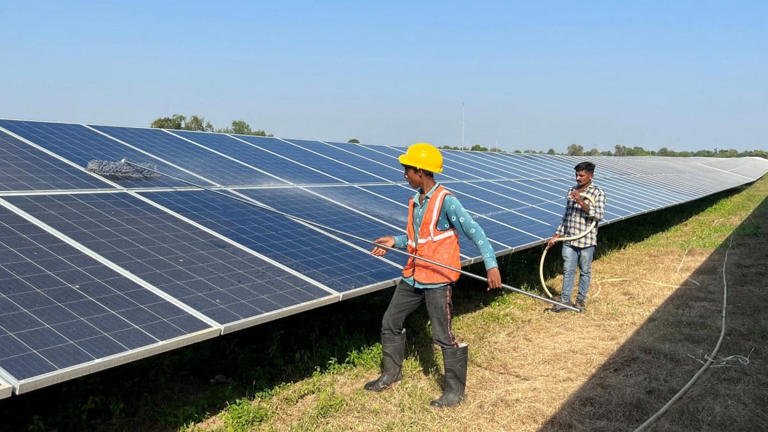
India is planning to introduce a two-hour battery energy storage requirement for new solar and wind power projects, a move aimed at improving the reliability and integration of renewable energy into the country’s electricity system.
The proposed measure would require developers of new renewable energy projects to provide battery storage capable of supplying electricity for at least two hours.
The plan reflects India’s growing focus on energy storage as solar and wind power become a larger part of the country’s electricity mix.
Solar and wind energy depend on weather conditions and natural cycles. Battery storage can help address this challenge by storing electricity when renewable generation is high and supplying it when generation falls.
Proposed Mandate Targets New Renewable Projects
The proposed battery storage requirement would apply to new solar and wind power projects.
Developers would need to incorporate energy storage systems into their project planning.
The two-hour requirement could help renewable projects provide electricity for a longer period, including when sunlight or wind availability declines.
The move would mark an important shift in India’s approach towards renewable energy development.
Earlier, solar and wind projects mainly focused on generating the maximum possible amount of electricity.
However, the rapid growth of renewable capacity has increased the need for systems that can store and manage electricity.
Battery energy storage can help developers and grid operators address fluctuations in renewable generation.
The proposed mandate could therefore encourage developers to consider generation and storage as part of a single energy solution.
Why Battery Storage Is Becoming Important
Battery storage has become increasingly important as countries expand their renewable energy capacity.
Solar power generation increases during daylight hours but declines after sunset.
Wind generation can also fluctuate depending on weather conditions.
Electricity demand, however, continues throughout the day and night.
Battery systems can store surplus electricity and release it when demand increases or renewable generation falls.
This process can help improve the reliability of renewable power.
Energy storage can also help reduce pressure on conventional power plants that often need to increase or decrease output to balance the grid.
For India, the development of battery storage could support the continued expansion of solar and wind energy.
Two-Hour Storage Could Improve Grid Stability
The proposed two-hour battery storage requirement could provide greater flexibility to India’s power grid.
Grid operators must continuously balance electricity generation and consumption.
Large amounts of variable renewable energy can make this process more challenging.
Battery systems can respond quickly to changes in electricity supply and demand.
They can store power during periods of excess generation.
They can then release the stored electricity when the grid needs additional supply.
A two-hour storage requirement could therefore help reduce some of the challenges associated with integrating solar and wind power.
It could also help provide more predictable electricity from renewable energy projects.
India Expands Renewable Energy Capacity
India has continued to expand its renewable energy sector as part of its wider clean energy transition.
Solar and wind power have become major components of the country’s energy strategy.
The government has set ambitious targets for expanding non-fossil fuel electricity capacity.
However, higher renewable capacity also creates new challenges.
The electricity system must manage periods when solar and wind generation changes rapidly.
Energy storage has emerged as one of the important solutions.
The proposed mandate could encourage greater investment in battery technology.
It could also increase demand for energy storage systems across the renewable energy sector.
Policy Could Drive Investment in Battery Manufacturing
A large-scale storage requirement could create new opportunities for India’s battery industry.
Renewable energy developers would need access to large battery energy storage systems.
This demand could encourage companies to invest in battery manufacturing and related supply chains.
India has already taken steps to promote domestic manufacturing in several clean energy sectors.
A battery storage mandate could support this broader industrial strategy.
Companies involved in battery production, energy storage systems and power management technology could benefit from increased demand.
The policy could also encourage research and innovation in battery technology.
India may need a large number of energy storage systems as renewable capacity continues to grow.
Challenges for Renewable Energy Developers
While battery storage offers several benefits, the proposed mandate could also increase project costs.
Developers would need to invest in batteries and related infrastructure.
The cost of storage could affect the financial viability of some renewable projects.
Battery prices have declined over time, but large-scale energy storage remains a significant investment.
Developers will also need to consider battery life, maintenance and replacement costs.
The government may need to create supportive policies to ensure that the requirement does not slow renewable energy development.
Financial incentives, competitive procurement and improved market mechanisms could help reduce the cost burden.
The final design of the policy will therefore play an important role.
Storage Can Support India’s Clean Energy Transition
The proposed battery storage mandate aligns with India’s broader transition towards cleaner energy.
The country aims to reduce its dependence on fossil fuels while expanding renewable electricity.
Solar and wind power can play a major role in this transition.
However, renewable energy systems need additional flexibility to provide reliable power at different times of the day.
Battery storage can help create that flexibility.
Stored renewable energy could reduce the need to rely on fossil fuel-based generation during periods when solar or wind output falls.
This could support India’s efforts to reduce emissions from the power sector.
Impact on Electricity Consumers and the Grid
Greater battery storage capacity could eventually benefit electricity consumers.
A more flexible grid can help manage fluctuations in supply and demand.
It may also reduce the risk of renewable electricity being wasted during periods of excess generation.
However, the short-term costs of adding storage could affect project economics.
Policymakers will need to balance the need for reliable clean power with the need to keep electricity affordable.
The success of the proposed mandate will depend on battery costs, grid infrastructure and the overall design of the policy.
A well-planned approach could help India build a more reliable renewable energy system.
A Major Step Towards Round-the-Clock Renewable Power
The proposed two-hour battery storage requirement represents a major step towards making renewable energy more dependable.
Solar and wind projects could increasingly provide electricity beyond periods of peak generation.
Battery systems can store clean energy for later use.
This capability could become increasingly valuable as renewable power forms a larger share of India’s electricity system.
The proposed mandate also signals that energy storage may become a central part of future renewable energy projects.
Instead of treating batteries as an optional addition, developers may need to include storage from the beginning.
India Moves Towards a More Reliable Renewable Energy System
India’s plan to introduce a two-hour battery storage mandate for new solar and wind projects reflects the changing needs of its energy sector.
The rapid growth of renewable energy has created a need for better storage and grid management.
Battery systems can help address these challenges by storing electricity and supplying it when renewable generation declines.
The proposed policy could drive investment in energy storage, battery manufacturing and clean energy technology.
It could also help India move closer to a more reliable and flexible renewable electricity system.
The government is expected to provide further details on the proposed mandate and its implementation.
As India continues to expand its solar and wind capacity, battery storage is likely to play an increasingly important role in ensuring that clean electricity remains available when consumers need it.