


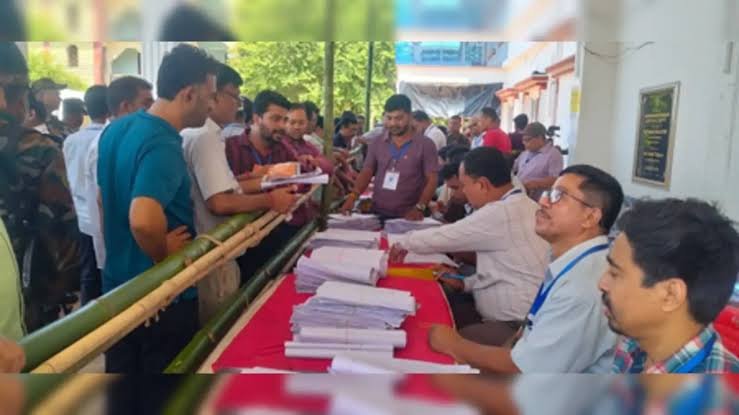
The Indigenous People’s Front of Tripura (IPFT) is facing renewed pressure to strengthen its grassroots organisation after securing a limited number of seats in the 2026 TTAADC Village Committee elections. The IPFT grassroots regrouping comes after the party won 33 of the 4,594 seats for which final results were declared. The outcome leaves IPFT far behind its NDA partners, Tipra Motha and the BJP, in the village-level contest. The party’s organisational strategy is therefore expected to receive greater attention as Tripura’s tribal politics enters a new phase.
Biplab Kumar Deb Calls for Coordinated Global Action Against Terrorism at UN
IPFT Grassroots Regrouping Follows Weak Village Poll Performance
The IPFT grassroots regrouping follows a difficult result for the party in the Village Committee elections. Final figures released after counting showed IPFT winning 33 seats, compared with 3,428 for Tipra Motha and 859 for the BJP. Independents secured 173 seats, while CPI(M) won 87 and Congress secured 14.
The figures underline the gap between IPFT and its two major alliance partners. Tipra Motha emerged as the largest individual party, while the BJP finished second. IPFT’s 33 seats placed it well behind both parties despite being part of the same NDA arrangement.
The election covered 587 Village Committees and 4,597 seats. However, 1,644 seats were declared uncontested and three seats remained vacant. Consequently, the final results covered 4,594 seats.
More importantly, IPFT won all 33 of its seats in direct contests. The final State Election Commission figures show that 2,950 seats went to polling across 420 Village Committees, with IPFT securing 33 of those contested seats.
The result gives the party a limited but identifiable presence in the new Village Committee structure. Nevertheless, the scale of Tipra Motha’s victory means IPFT will need to reassess how effectively it can compete for tribal voters at the grassroots level.
IPFT Grassroots Regrouping Highlights Organisational Challenges
The IPFT grassroots regrouping also reflects organisational difficulties that the party has acknowledged in earlier electoral cycles. In 2025, IPFT leaders had already spoken about organisational weaknesses while preparing for the broader TTAADC elections. Party leaders said they wanted to address those weaknesses and rebuild the organisation after setbacks in previous polls.
That earlier concern has gained fresh relevance after the Village Committee results. Grassroots elections require a large network of local workers, candidates and booth-level organisers. IPFT’s comparatively small tally suggests that the party still faces difficulties translating its alliance position into widespread electoral support.
At the same time, the party entered the Village Committee contest as an NDA partner alongside the BJP and Tipra Motha. The three parties had announced an electoral understanding before polling, although overlapping contests remained in a substantial number of seats.
The arrangement gave IPFT an opportunity to maintain a political presence alongside its larger allies. However, the final figures show that the alliance structure did not translate into comparable individual party performance.
Earlier discussions also revealed differences in organisational participation among the alliance partners. IPFT representatives were absent from at least one major BJP-Tipra Motha seat-sharing meeting in September, although leaders said discussions with IPFT had taken place separately.
Such developments highlight the importance of coordination within the alliance. For IPFT, rebuilding its own organisational machinery will remain necessary even while it continues to operate as part of the ruling coalition.
IPFT Grassroots Regrouping Comes After Alliance Coordination
The IPFT grassroots regrouping must also be viewed against the changing relationship among Tripura’s ruling alliance partners. BJP, Tipra Motha and IPFT agreed before the election to contest the Village Committee polls together under the NDA framework.
The agreement represented a significant change from the April 2026 TTAADC elections. In those elections, Tipra Motha and BJP contested separately, with Tipra Motha winning 24 of the 28 elected seats and the BJP securing four. IPFT failed to win a seat in that council election.
The subsequent Village Committee arrangement was intended to improve coordination at the grassroots level. However, the parties still faced overlapping contests in many constituencies, showing that alliance-level coordination did not completely eliminate local competition.
IPFT’s final tally consequently needs to be understood within this complicated political arrangement. The party was part of an alliance that collectively performed strongly, but its own seat count remained modest.
The final alliance tally reached 4,320 seats when Tipra Motha, BJP and IPFT results were combined. Tipra Motha accounted for 3,428 of those seats, BJP for 859 and IPFT for 33.
Therefore, IPFT’s immediate challenge is not simply to maintain its alliance relationship. The party also needs to demonstrate that it can build an independent grassroots base capable of producing stronger results in future elections.
IPFT Grassroots Regrouping Could Shape Future Tribal Politics
The IPFT grassroots regrouping could become significant as Tripura’s political parties look beyond the Village Committee election. Village Committees form an important layer of local administration in the TTAADC areas, making their composition relevant to wider tribal politics.
The latest election produced a particularly strong mandate for Tipra Motha. Its 3,428-seat tally represented about 74.62 percent of the declared seats, while the BJP secured about 18.70 percent. IPFT’s 33 seats represented less than one percent of the declared total.
Those figures create a difficult political environment for IPFT. The party remains part of the ruling alliance, yet Tipra Motha has demonstrated much greater electoral reach across the tribal areas.
Consequently, IPFT’s organisational rebuilding could focus on reconnecting with local workers, strengthening village-level structures and improving candidate mobilisation. Any such strategy would need to address the gap between the party’s formal position within the government and its comparatively limited electoral footprint.
The party’s earlier organisational discussions already pointed towards this challenge. In 2025, IPFT leaders said they wanted to correct organisational weaknesses and improve their performance in the coming TTAADC elections.
The latest Village Committee result suggests that the problem remains relevant. A stronger local organisation could help the party convert its political identity and alliance position into greater electoral support.
At the same time, IPFT will have to balance organisational independence with alliance coordination. Its future strategy could therefore influence not only its own political standing but also the internal balance among the BJP, Tipra Motha and IPFT.
IPFT Grassroots Regrouping Faces a New Political Test
The IPFT grassroots regrouping comes at a time when Tripura’s tribal political landscape has undergone substantial change. Tipra Motha’s dominance in both the TTAADC and Village Committee elections has strengthened its position as the principal regional force in the tribal areas.
The BJP, meanwhile, has retained a sizeable organisational presence and secured 859 Village Committee seats. Its partnership with Tipra Motha and IPFT gives the ruling alliance a broad combined base across the council areas.
IPFT’s position is therefore unusual. It remains an important coalition partner, but its electoral strength is considerably smaller than that of its allies. The party must now determine how to preserve its relevance within the alliance while rebuilding its own support network.
The result may also encourage the party to focus more strongly on local issues. Village-level political work often depends on sustained engagement with communities rather than campaign activity concentrated around major elections.
Moreover, the next political contests will provide a test of whether the party can turn organisational restructuring into measurable electoral gains. For IPFT, the immediate objective is likely to prevent further erosion of its grassroots base.
The process will require time and sustained organisation. However, the latest result provides a clear electoral signal that the party cannot rely solely on its alliance position to maintain influence in Tripura’s tribal politics.
Conclusion
The IPFT grassroots regrouping has become an important political issue after the Indigenous People’s Front of Tripura secured only 33 of the 4,594 declared Village Committee seats. The result stands in sharp contrast to the performances of Tipra Motha and the BJP, which won 3,428 and 859 seats respectively.
IPFT remains part of the BJP-led alliance, and the combined NDA tally reached 4,320 seats. However, the party’s own result highlights the need for stronger grassroots organisation and a clearer electoral strategy.
The coming period will show whether IPFT can convert its organisational review into a broader political recovery. Its ability to strengthen village-level structures could determine how much influence it retains within Tripura’s changing tribal political landscape.
FAQs
Why is IPFT planning grassroots regrouping?
The IPFT grassroots regrouping follows the party’s limited performance in the Village Committee elections, where it won 33 of the 4,594 declared seats. The result has renewed attention on its organisational strength in tribal areas.
How many Village Committee seats did IPFT win?
IPFT won 33 seats in the final TTAADC Village Committee results. All 33 came from seats that went to direct contests.
How did IPFT’s result compare with Tipra Motha and BJP?
Tipra Motha won 3,428 seats and the BJP secured 859, while IPFT won 33. The figures show a substantial difference between IPFT and its larger alliance partners.
Is IPFT still part of the NDA alliance in Tripura?
Yes. IPFT contested the Village Committee elections as an alliance partner alongside the BJP and Tipra Motha. The three parties had agreed to contest the polls together under the NDA framework.
What is the main challenge for IPFT after the Village Committee results?
The main challenge is to strengthen its grassroots organisation while maintaining coordination with its larger alliance partners. The latest results indicate that the party needs a broader local electoral base to increase its future representation.