


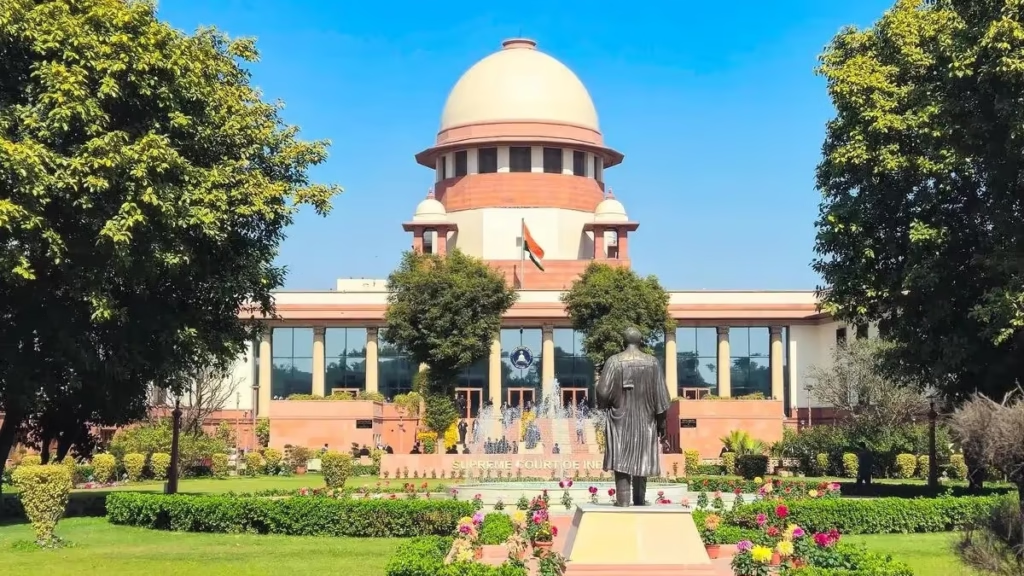
The Jamatia Customary Law PIL has brought the constitutional validity of a provision in Tripura’s customary legislation before the Supreme Court of India. On October 26, 2026, the Court sought responses from the Tripura government and the Tripura Tribal Areas Autonomous District Council (TTAADC). The petition challenges Section 143 of the Jamatia Customary Laws Act, 2017, which deals with financial penalties in cases involving the enticement and rape of women. The case raises questions about the relationship between customary justice, constitutional protections and India’s criminal justice system.
West Tripura DM Sets November 30 Deadline for Pending Pre-Puja Ration Distribution
Jamatia Customary Law PIL Challenges Section 143 of 2017 Act
The Jamatia Customary Law PIL centres on Section 143 of the Jamatia Customary Laws Act, 2017. The provision addresses punishment for the enticement and rape of women within the customary legal framework. The petitioner argues that its financial penalty mechanism raises serious constitutional concerns, particularly when allegations involve rape.
The petition was filed by Madhumita Bhattacharya. Advocate Shoumendu Mukherji represented her before the Supreme Court. The plea seeks a declaration that Section 143 violates the Constitution and should no longer remain in force. It also asks the Court to obtain official records concerning the enactment of the legislation.
The main concern involves the relationship between a customary adjudication process and the criminal justice system. According to the petitioner, the disputed provision could allow people accused of rape-related offences to face financial penalties through customary proceedings instead of the full consequences of criminal law.
Legal reporting on the case states that the petition challenges a possible fine of up to ₹1 lakh when Section 143 operates alongside other provisions of the Act. However, this interpretation remains part of the petitioner’s challenge. The Supreme Court has not yet ruled on the provision’s meaning or constitutional validity.
Moreover, the case raises a distinction between customary dispute resolution and criminal accountability. Community-based mechanisms can address disputes within their recognised scope. Nevertheless, the petitioner questions whether such mechanisms can lawfully determine the consequences of allegations involving serious sexual offences.
The Court must examine the statutory wording, the council’s legislative authority and the constitutional framework before reaching a conclusion. Therefore, the issuance of notice marks a step in the judicial process rather than a final judgment against the disputed provision.
Jamatia Customary Law PIL Examines Tribal Council Powers
The Jamatia Customary Law PIL also brings the legislative powers of the TTAADC into focus. The council enacted the Jamatia Customary Laws Act, 2017, under the framework of the Sixth Schedule to the Constitution. The legislation seeks to codify the Jamatia community’s traditional customs and dispute-resolution practices.
The Sixth Schedule provides a framework for autonomous administration in certain tribal areas. It grants specified legislative and administrative powers to autonomous district and regional councils. These powers help communities manage recognised local matters while operating within the wider constitutional structure.
However, the extent of those powers remains central to the present dispute. The petitioner argues that Section 143 exceeds the authority available to the council because it concerns financial punishment in cases involving rape. The plea questions whether the provision conflicts with the national criminal justice framework.
This argument does not itself establish that the entire customary legal system is unconstitutional. Instead, the case focuses on the validity of a particular provision. The Court must assess Section 143 within the context of the Act and the constitutional limits governing autonomous councils.
Furthermore, the legislation’s traditional purpose and the legal effect of the disputed provision are separate questions. Codifying community customs may preserve established practices, but the council’s laws must remain consistent with the Constitution and applicable legal requirements.
The petition also seeks the production and transmission of records relating to the 2017 law’s enactment. Those documents could help the Court examine the legislative background and the authority under which the council introduced the provision.
The proceedings may consequently clarify how courts should assess a customary provision when it intersects with individual rights and serious criminal allegations. Still, the eventual outcome will depend on the parties’ submissions, the relevant legal materials and the Court’s interpretation of the constitutional framework.
Jamatia Customary Law PIL Raises Questions About Women’s Rights
The Jamatia Customary Law PIL places women’s rights and access to criminal justice at the centre of the legal dispute. The petitioner argues that a system relying on financial penalties in rape-related cases could undermine the protection that criminal law provides to women.
The plea also raises concerns about equal protection under the law. It questions whether tribal women could receive different treatment in serious criminal matters because a customary mechanism applies to their community. These arguments remain allegations advanced by the petitioner, not findings made by the Court.
Rape is a serious criminal offence under India’s legal framework. The petition argues that such allegations should not be treated as ordinary private disputes that parties can resolve simply through monetary compensation. It relies on the principle that serious offences raise concerns beyond the interests of the individuals directly involved.
Consequently, the Court may need to consider the relationship between customary decisions and formal criminal proceedings. It must also assess whether the disputed provision falls within the council’s constitutionally permitted powers.
The issue requires careful legal scrutiny because it concerns both community autonomy and individual protections. Tribal customs and institutions form part of India’s diverse social and cultural landscape. At the same time, constitutional safeguards establish legal boundaries for public authorities and lawmaking institutions.
The petition does not, by itself, establish how Section 143 operates in every case or whether any accused person has avoided criminal prosecution under it. Those questions require evidence and legal examination. Therefore, reports should distinguish the petitioner’s claims from established facts.
Moreover, the Supreme Court’s response will determine the next stage of the legal process, not the final outcome. The state government and the TTAADC now have an opportunity to explain their positions on the challenged provision.
The case could also draw attention to the practical operation of customary adjudication where allegations involve violence against women. Any broader implications, however, will depend on the Court’s eventual reasoning and the scope of its final order.
Jamatia Customary Law PIL Moves Forward in Supreme Court
A three-judge Supreme Court bench considered the petition on October 26, 2026. The bench comprised Chief Justice of India Surya Kant and Justices Joymalya Bagchi and V. Mohana. It sought responses from the Tripura government and the TTAADC and directed that the petition be tagged with an existing matter.
The petition bears the case title Madhumita Bhattacharya v. State of Tripura and Another. It seeks a declaration that Section 143 is unconstitutional, along with directions for the submission of relevant records concerning the Act.
According to legal reporting, the Court made the notice returnable on November 27, 2026, and linked the petition with Writ Petition (Civil) No. 88 of 2026. This provides a reported procedural milestone, although the parties’ responses and subsequent orders will determine how the challenge progresses.
The next stage requires the respondents to address the issues raised in the petition. Their submissions may explain the council’s understanding of Section 143, the legal basis for its enactment and its relationship with applicable criminal law.
Meanwhile, the Supreme Court will have to consider the arguments and relevant records before deciding the constitutional questions. The notice does not mean that the judges have accepted the petitioner’s allegations or declared the provision invalid.
The distinction matters because constitutional litigation can involve competing interpretations of statutory powers and legal safeguards. A final ruling must follow the Court’s examination of those arguments rather than assumptions based on the filing of a petition.
The proceedings also place the TTAADC’s lawmaking authority under judicial scrutiny in relation to this specific provision. However, readers should not interpret the challenge as a ruling against all customary laws or traditional institutions in Tripura.
Conclusion
The Jamatia Customary Law PIL has brought Section 143 of the Jamatia Customary Laws Act, 2017, before the Supreme Court for constitutional scrutiny. The petition challenges the provision’s approach to financial penalties in cases involving the enticement and rape of women. The Court has sought responses from the Tripura government and the TTAADC, but it has not yet decided the merits of the challenge.
The case raises important questions about the limits of autonomous council legislation, the role of customary justice and the protection of women’s rights. Moreover, the petition asks the Court to examine whether the disputed provision falls within the TTAADC’s legislative authority under the Sixth Schedule. The outcome will depend on the legal arguments, statutory provisions and constitutional principles presented during the proceedings.
The next steps will involve responses from the two respondents and further judicial consideration. The reported November 27, 2026, return date provides a procedural milestone in the case. Until the Supreme Court issues a ruling, Section 143’s constitutional validity remains unresolved. The proceedings will determine how the Court addresses the specific provision and its relationship with India’s criminal justice framework.
FAQs
1. Why has the Supreme Court sought responses on the Jamatia Customary Law PIL?
The Court seeks responses to a petition challenging the constitutional validity of Section 143 of the Jamatia Customary Laws Act, 2017.
2. What does Section 143 of the Jamatia Customary Laws Act address?
Section 143 addresses punishment for the enticement and rape of women within the customary legal framework. The petitioner challenges its financial penalty mechanism.
3. Who filed the petition against the Jamatia Customary Law provision?
Madhumita Bhattacharya filed the public interest litigation through advocate Shoumendu Mukherji.
4. What is the role of the TTAADC in this case?
The TTAADC enacted the 2017 legislation under the Sixth Schedule framework. The petition questions whether the disputed provision falls within the council’s constitutional lawmaking powers.
5. Has the Supreme Court declared Section 143 unconstitutional?
No. The Court has sought responses from the respondents. It has not yet delivered a final ruling on the provision’s constitutional validity.