


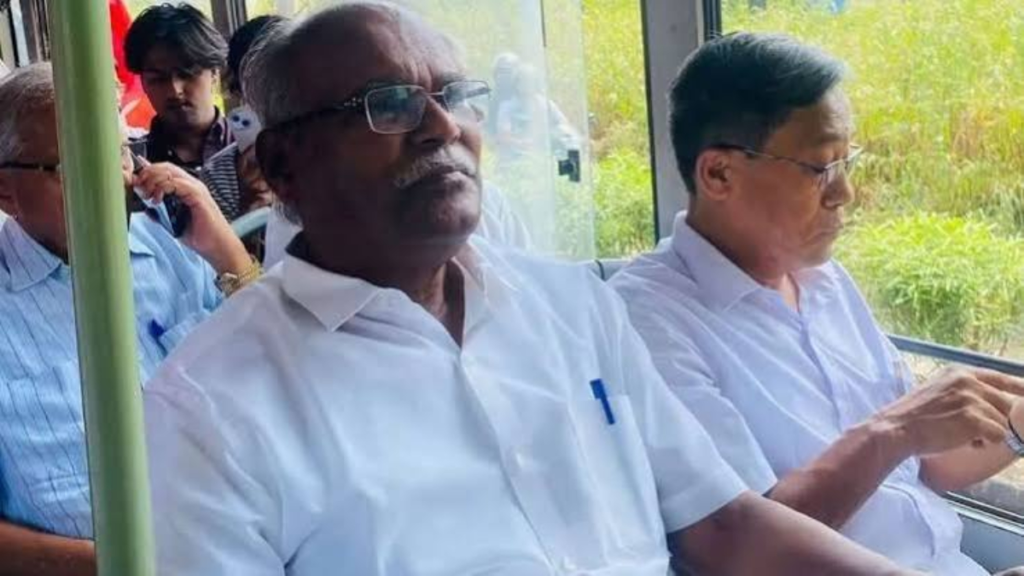
Jitendra Chaudhury, Tripura’s Leader of the Opposition, declared that the downfall of the Narendra Modi government had begun after Delhi Police detained him during an opposition protest on Saturday, October 10. The CPI(M) leader accused the Centre of suppressing dissent and protecting Chief Election Commissioner Gyanesh Kumar amid allegations concerning electoral rolls.
Chaudhury made the remarks while heading towards Jantar Mantar in New Delhi to participate in a demonstration demanding the Chief Election Commissioner’s resignation. Former Tripura Chief Minister Manik Sarkar and other CPI(M) leaders were also detained, according to media reports.
Jitendra Chaudhury criticises Centre over Delhi protest
Jitendra Chaudhury said the authorities’ response to the planned demonstration raised serious questions about democratic freedoms. He alleged that the government was trying to prevent citizens from challenging concerns about the country’s electoral process.
The protest focused on alleged irregularities in electoral rolls and demands for accountability from the Election Commission. Chaudhury argued that citizens must have the freedom to question institutions and express their concerns peacefully.
However, the allegations raised by the opposition leader have not, by themselves, established wrongdoing by the Centre or the Election Commission. The dispute highlights the political tensions surrounding electoral integrity and the right to protest.
According to reports, Chaudhury was accompanied by Sarkar when police detained them as they approached the protest venue. The incident added to the confrontation between opposition leaders and the authorities over the planned demonstration.
Jitendra Chaudhury raises concerns over democratic rights
Chaudhury questioned the restrictions reportedly imposed in Delhi ahead of the demonstration. He claimed that disruptions or restrictions involving transport, accommodation and internet services had made it difficult for protesters to reach the venue.
He also questioned why authorities would impose such measures when, according to him, the organisers had indicated their intention to conduct the protest within the law.
Moreover, the CPI(M) leader argued that students and young people should be able to raise concerns about electoral issues without facing unnecessary restrictions. He presented the demonstration as an effort to defend constitutional rights and democratic participation.
These claims formed a central part of his criticism of the Union government. However, the reported restrictions and their reasons require independent verification before they can be treated as established facts.
The episode has renewed attention on the balance between maintaining public order and protecting peaceful political expression. Authorities must enforce applicable laws, while demonstrators retain the right to raise lawful objections.
Jitendra Chaudhury targets Modi and Amit Shah
The Tripura opposition leader also criticised Prime Minister Narendra Modi and Union Home Minister Amit Shah. He alleged that the Centre was attempting to shield Chief Election Commissioner Gyanesh Kumar from criticism over concerns about electoral rolls.
Chaudhury’s remarks reflected the opposition’s demand for accountability in the functioning of constitutional institutions. He maintained that public confidence in elections depends on transparency, fairness and the ability to question alleged irregularities.
However, the allegations against the Centre and the Election Commission remain political claims unless supported by verified evidence. The controversy also does not establish that electoral manipulation occurred.
The Election Commission’s role in overseeing elections and maintaining electoral rolls makes such disputes politically significant. At the same time, allegations concerning election administration require examination through evidence and established procedures rather than political statements alone.
The Centre’s position on the specific allegations should be distinguished from Chaudhury’s criticism. His remarks express the CPI(M)’s opposition to the government’s handling of the issue, rather than a confirmed finding of misconduct.
CPI(M) leader calls for united opposition
Chaudhury called on citizens to unite in defence of constitutional values and democratic institutions. He argued that protecting civil liberties and safeguarding the electoral process were essential responsibilities in a democracy.
For the CPI(M), the Delhi protest provided an opportunity to raise questions about electoral transparency beyond Tripura. The participation of senior party figures, including Sarkar, also drew attention to the opposition’s objections.
Meanwhile, the detention brought the immediate focus onto the authorities’ handling of the demonstration. Questions about the circumstances of the police action and the treatment of protesters remain important to the wider debate.
Political protests often bring competing claims about public order, institutional accountability and citizens’ freedoms into sharp focus. The current dispute will depend partly on the evidence available and the responses of the institutions involved.
Jitendra Chaudhury’s warning adds to political tensions
Chaudhury’s prediction that the Modi government’s downfall had begun was a forceful political statement made during a confrontation with the authorities. It signalled the CPI(M) leader’s determination to challenge the Centre over electoral concerns and democratic rights.
However, the political impact of the episode remains uncertain. The detention alone does not establish how voters will respond or whether the opposition can turn the controversy into wider political support.
Ultimately, the dispute centres on electoral accountability, freedom of protest and public confidence in democratic institutions. Further clarification from the authorities and responses to the opposition’s allegations will help establish the circumstances surrounding the incident.
For now, Chaudhury’s remarks have sharpened the political debate, while the underlying allegations remain matters requiring evidence and scrutiny.
Tripura CM Manik Saha Urges Civil Service Officers to Prioritise Public Trust and Transparency