


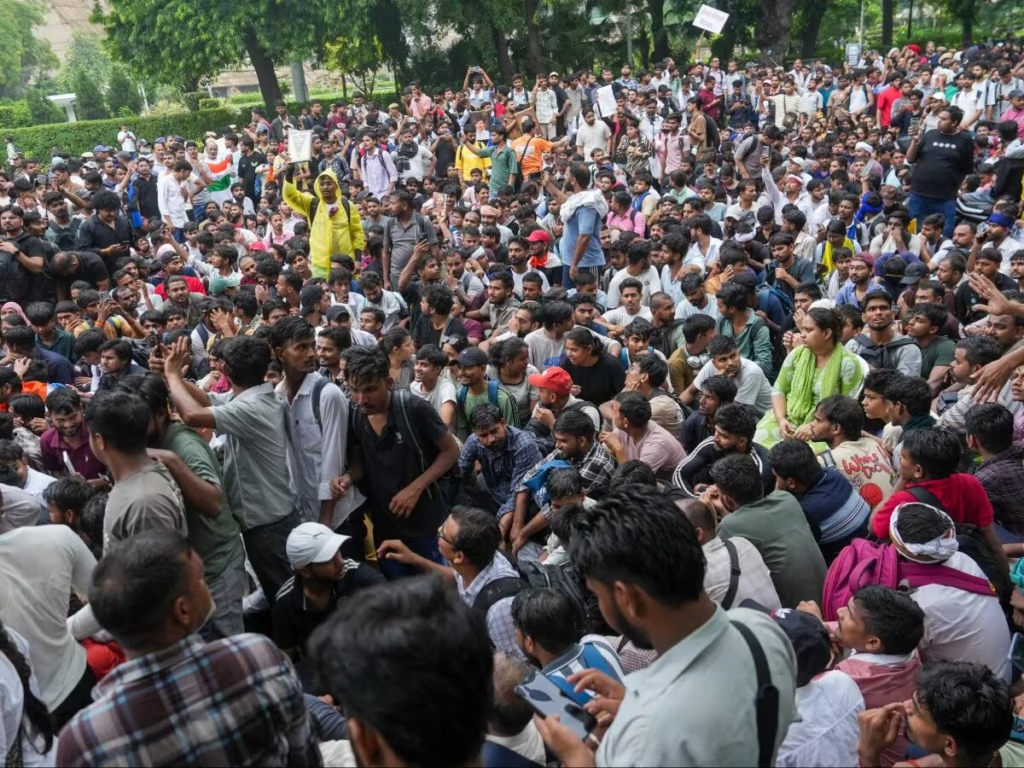
The July 20 Parliament Clash became a major development after the Cockroach Janta Party’s (CJP) “Chalo Sansad” march on July 20 resulted in a significant security standoff near the Parliament area. According to the available information, the demonstration led to heightened security arrangements as authorities managed the gathering and maintained restrictions around the designated zone.
Jyotiraditya Scindia Attendance at Agartala Conclave Focuses on Regional Trade Logistics Review
July 20 Parliament Clash During CJP March Draws Attention
The July 20 Parliament Clash occurred after CJP organized its “Chalo Sansad” march, which aimed to bring attention to the issues raised by the organization. According to the available information, the march resulted in a large security response due to the movement toward the Parliament area.
Security agencies typically increase deployment during major demonstrations near sensitive government locations. Moreover, authorities often establish measures to regulate movement and maintain public order during such events.
The march became a significant moment in the broader sequence of events involving CJP and government discussions. Therefore, the security standoff on July 20 attracted attention from political observers and the public.
No additional details regarding injuries, arrests, or specific incidents during the standoff were provided in the available information.
July 20 Parliament Clash Followed “Chalo Sansad” March
The July 20 Parliament Clash followed the CJP’s “Chalo Sansad” march, which brought demonstrators closer to the Parliament area. According to the available information, security personnel responded by managing the situation and preventing further escalation.
Moreover, demonstrations near important government institutions require coordination between organizers and authorities. Such arrangements help balance the right to peaceful expression with the need to maintain security.
The march represented an important phase of the CJP-led agitation before later developments involving negotiations and the withdrawal of protest activities. Consequently, the July 20 event became a key point in the timeline of the movement.
Officials have not released additional information about the specific security measures used during the standoff.
July 20 Parliament Clash Highlighted Protest Management Challenges
The July 20 Parliament Clash highlighted the challenges authorities face while managing large public demonstrations near important national institutions. According to the available information, the security standoff developed as the CJP’s march approached the Parliament area.
Additionally, maintaining public order during major protests requires coordination between law enforcement agencies, organizers, and participants. Peaceful management of such situations helps prevent disruptions while allowing democratic expression.
The incident became part of the wider discussion surrounding the CJP’s campaign and subsequent negotiations with government representatives. Therefore, the July 20 march played an important role in shaping the developments that followed.
No official statement detailing the outcome of the security standoff was mentioned.
Why the July 20 Parliament Clash Matters
The July 20 Parliament Clash is significant because it marked a critical moment during the CJP’s nationwide agitation. Events involving demonstrations near Parliament often receive attention because they involve discussions about public participation, security responsibilities, and democratic expression.
Moreover, the standoff demonstrated the importance of communication between protest organizers and authorities during large-scale gatherings. Effective coordination can help manage sensitive situations while ensuring public safety.
The incident also preceded later developments, including negotiation efforts and the eventual conclusion of the protest activities. Similarly, the July 20 event provides context for understanding the sequence of events that followed.
Further official information may clarify additional details regarding the march and security arrangements.
Conclusion
The July 20 Parliament Clash marked a significant point in the CJP’s agitation after the organization’s “Chalo Sansad” march resulted in a major security standoff near Parliament. According to the available information, authorities managed the situation as demonstrators moved toward the sensitive government area.
Furthermore, the incident highlighted the challenges involved in handling large demonstrations near important public institutions. Maintaining security while allowing peaceful expression remains a key consideration during such events.
Overall, the Parliament Clash represents an important chapter in the timeline of the CJP movement. As later negotiations and developments unfolded, the event provided context for the discussions that eventually followed between the organization and government representatives.
FAQs
1. What is the July 20 Parliament Clash?
The Clash refers to the security standoff that occurred during the CJP’s “Chalo Sansad” march on July 20.
2. What was the purpose of the CJP’s “Chalo Sansad” march?
According to the available information, the march was organized as part of the CJP’s broader agitation to highlight its concerns.
3. Where did the security standoff occur?
The standoff occurred near the Parliament area during the CJP’s march.
4. Did the incident lead to further negotiations?
The event was followed by later developments involving discussions and negotiations between CJP representatives and government officials.
5. Were details about the security response released?
Based on the available information, detailed official information about the security arrangements has not been provided.