


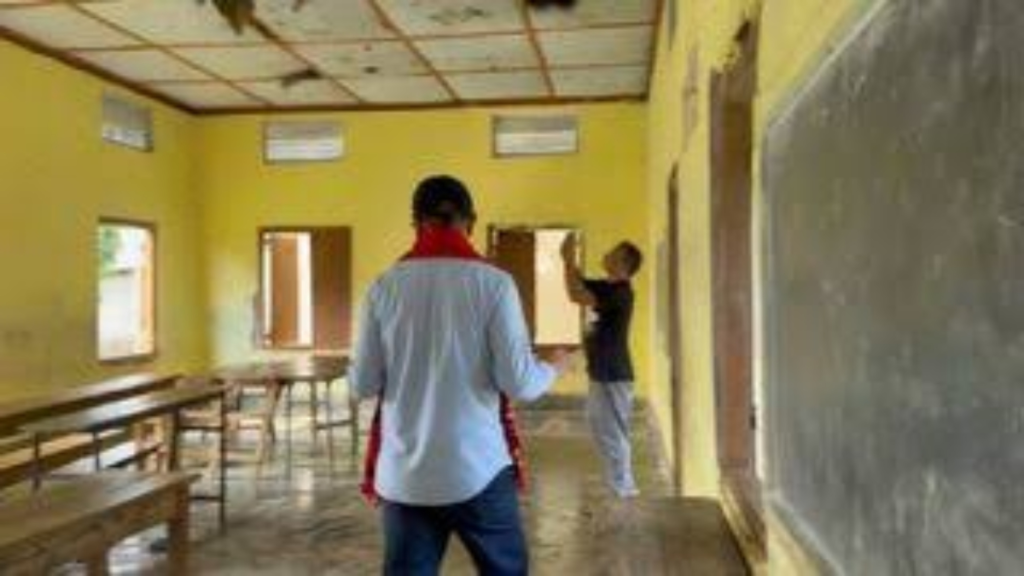
Karbi Anglong schools have come under scrutiny after a BJP MP raised concerns over poor infrastructure in educational institutions across the hill district of Assam. The MP questioned whether schools located in remote areas could have adequate facilities when even institutions along roads remain in poor condition.
The remarks have drawn attention to the wider challenge of maintaining school infrastructure in a geographically difficult region. The concerns also highlight the need to assess whether students in remote communities receive the same basic facilities as those in more accessible areas.
BJP MP flags poor condition of schools
The BJP MP raised the issue while pointing to the condition of schools in Karbi Anglong. The concern focused on basic infrastructure and the visible gap between the needs of students and the condition of some educational facilities.
The MP asked what the situation could be in remote areas if schools located along roads were already struggling with infrastructure. The question brings attention to the challenges faced by institutions that are farther from administrative centres and major transport routes.
However, the remarks do not establish that every school in the district suffers from the same problems. Conditions can vary between institutions, depending on location, access and available resources.
Karbi Anglong schools face geographic challenges
Karbi Anglong has a difficult terrain, with many settlements spread across hilly and remote areas. As a result, providing public services, including education infrastructure, can be more challenging than in areas with easier road access.
For Karbi Anglong schools, physical access can affect construction, repairs and the delivery of essential materials. Moreover, schools in remote communities may face additional difficulties when authorities need to carry out regular maintenance.
These challenges make infrastructure assessment particularly important. A school building may require more than classroom space. Students also need safe facilities and a suitable environment for learning.
Why remote schools need closer attention
The MP’s remarks raise a broader question about how education infrastructure is monitored across difficult terrain. If schools near major roads require attention, authorities may need to examine facilities located farther away as well.
Meanwhile, remote schools often serve communities where alternative educational facilities are limited. Therefore, any infrastructure gap can have a direct impact on students and families who depend on those institutions.
Regular inspections could help authorities identify schools requiring urgent repairs. Additionally, transparent assessments could help determine whether infrastructure problems are isolated or part of a wider pattern across the district.
Infrastructure affects the learning environment
School infrastructure plays an important role in creating a stable learning environment. Poor buildings or inadequate facilities can make it harder for students and teachers to carry out daily activities comfortably.
However, infrastructure is only one part of the education system. Teacher availability, learning materials, attendance and access to transport also influence educational outcomes. Therefore, infrastructure improvements need to form part of a wider effort to strengthen schools.
Need for clearer assessment and action
The concerns raised over Karbi Anglong schools also point to the importance of reliable information about their condition. A school-by-school assessment could help identify gaps and establish priorities for repair and improvement.
Furthermore, authorities can use such assessments to focus resources on schools facing the most serious infrastructure problems. Remote institutions may require special attention because their location can make repairs more difficult and costly.
The issue also calls for coordination between local authorities, education officials and communities. Local residents and teachers can provide useful information about problems that may not always appear in routine administrative reports.
Karbi Anglong schools need equal focus
The questions raised by the BJP MP have put school infrastructure in Karbi Anglong back in focus. More importantly, they highlight the need to look beyond schools located along major roads and examine institutions in remote communities.
Overall, Karbi Anglong schools need consistent monitoring so that students across the district can access safe and functional learning spaces. Addressing infrastructure gaps will require accurate assessments, targeted investment and sustained oversight.
The debate ultimately centres on equal access to quality education. Students living in remote areas should not face weaker facilities simply because their schools are harder to reach.
Tripura HC Custody Order Directs Immediate Return of Minor Girl