


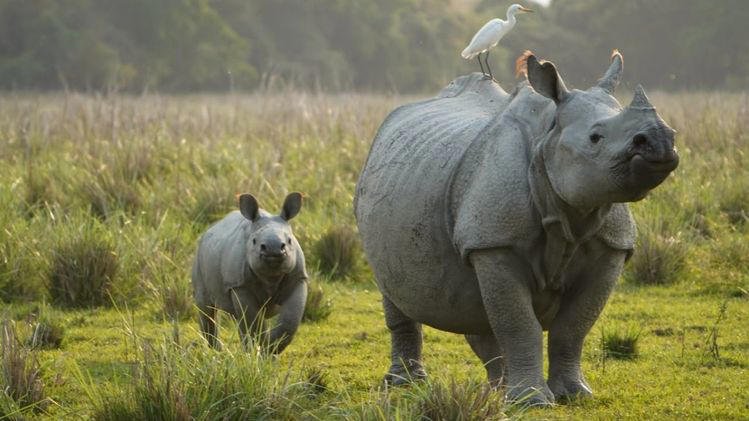
Assam Chief Minister Himanta Biswa Sarma has highlighted Kaziranga National Park’s success in protecting the greater one-horned rhinoceros. He described the conservation journey as a model that can inspire wildlife protection efforts around the world.
Sarma shared the message on World Rhino Day, observed annually on September 22. He also recognised the work of forest officials, frontline staff and local communities. Their combined efforts have helped Assam protect one of the world’s largest populations of the greater one-horned rhinoceros.
Kaziranga has become strongly associated with rhino conservation. Over the years, the national park has developed extensive protection and monitoring systems. These measures have helped the species recover from the serious threats it faced in the past.
Read More: Assam Down Town University Rewards 80 Researchers with Rs 67.48 Lakh
Kaziranga Remains a Rhino Conservation Stronghold
Kaziranga National Park remains one of the most important habitats for the greater one-horned rhinoceros. The protected area supports the world’s largest population of the species.
The park’s success did not happen overnight. Instead, Assam gradually strengthened wildlife protection, habitat management and anti-poaching measures. Forest personnel now conduct regular patrols across different parts of the park.
Moreover, authorities use monitoring systems to track wildlife and identify potential threats. Such efforts have helped reduce the pressure on rhino populations.
Kaziranga also protects many other important species. Tigers, elephants, wild water buffaloes, swamp deer and several bird species live within its diverse habitats. Consequently, rhino conservation has also contributed to the protection of a wider ecosystem.
World Rhino Day Draws Attention to Protection
World Rhino Day takes place every year on September 22. The international observance aims to raise awareness about the five surviving rhino species.
The greater one-horned rhinoceros represents one of the three rhino species found in Asia. India and Nepal hold the major populations of this species.
However, rhinos continue to face several threats. Habitat loss, illegal wildlife trade and human-wildlife conflict can affect their survival. Therefore, conservation authorities continue to focus on protection and habitat management.
In Assam, World Rhino Day provides an opportunity to highlight the state’s conservation work. It also encourages greater public participation in wildlife protection.
Assam Expands Rhino Conservation Efforts
Kaziranga is not the only protected area in Assam supporting rhinos. Pobitora Wildlife Sanctuary, Orang National Park and Manas National Park also provide important habitats.
Meanwhile, the state has undertaken rhino translocation programmes to strengthen populations in suitable protected areas. Such programmes can help create multiple viable populations and reduce dependence on a single habitat.
The Indian Rhino Vision 2020 programme represented an important step in this direction. The initiative focused on increasing rhino numbers and expanding their distribution across suitable protected areas.
For instance, authorities moved rhinos to Manas National Park as part of the conservation programme. The initiative helped restore a rhino population in an area where the species had faced severe losses in the past.
Floods Create Both Benefits and Risks
Kaziranga’s location in the Brahmaputra floodplain creates a unique challenge for conservation. Floods form an important part of the park’s natural ecological cycle.
At the same time, extreme flooding can create serious risks for wildlife. Animals sometimes move towards higher ground outside the park during severe floods. Such movement can increase the possibility of road accidents and human-wildlife conflict.
Therefore, authorities continue to monitor animals during flood periods. They also take measures to protect wildlife movement routes and reduce risks near surrounding roads.
In addition, habitat management remains important throughout the year. Healthy grasslands and wetlands provide food and shelter for rhinos and other herbivores.
Local Communities Have an Important Role
Wildlife conservation also depends on people living around protected areas. Local communities regularly interact with forest landscapes and wildlife.
For this reason, community participation can strengthen conservation efforts. Awareness programmes can help residents understand the importance of protecting wildlife and reporting suspicious activities.
At the same time, authorities need to address concerns linked to human-wildlife conflict. Compensation mechanisms and timely responses can help communities manage encounters with wild animals.
Kaziranga’s experience therefore involves more than forest protection. It also includes cooperation between government agencies, conservation groups and local residents.
Anti-Poaching Measures Remain Important
Poaching remains a major concern for rhino conservation. Rhino horns have historically attracted illegal trade because of demand in some international markets.
Assam has strengthened its anti-poaching efforts over the years. Forest guards conduct regular patrols and monitor vulnerable areas.
Furthermore, enforcement agencies work to identify illegal networks involved in wildlife crime. Better coordination between departments can help authorities respond more effectively to threats.
Technology has also become increasingly important. Modern monitoring tools can support patrol teams and help officials track wildlife movements.
New National Push for Rhino Conservation
The World Rhino Day observance has also coincided with wider efforts to strengthen rhino conservation in India.
The Centre has announced Project Rhino, a national initiative aimed at improving protection for the greater one-horned rhinoceros. The programme focuses on habitat management, scientific research, population monitoring and stronger protection measures.
Financial and technical support under the programme can help rhino-bearing states improve existing conservation systems.
For Assam, such national support could complement the work already taking place in Kaziranga and other protected areas.
Conservation Success Needs Long-Term Efforts
Kaziranga’s rhino population has benefited from decades of conservation work. However, continued success will require sustained attention.
Habitat pressure remains an important issue. Climate-related changes can also affect flood patterns and wildlife habitats. In addition, human settlements and infrastructure around protected areas require careful planning.
Therefore, conservation authorities need to balance development with ecological protection. Scientific research can help officials understand changing wildlife needs and plan future conservation measures.
Kaziranga Offers Lessons for the World
The Assam Chief Minister’s World Rhino Day message has once again highlighted Kaziranga’s role in global wildlife conservation.
The park’s experience demonstrates the importance of consistent protection, scientific monitoring and community participation. At the same time, conservation requires long-term commitment from governments, local communities and wildlife organisations.
As India strengthens its national rhino conservation efforts, Kaziranga will remain an important part of that journey. Its work with the greater one-horned rhinoceros shows how sustained conservation measures can support the recovery of a threatened species.
Ultimately, protecting rhinos requires more than increasing their numbers. It also means protecting their habitats, maintaining wildlife corridors and ensuring that people and animals can coexist safely. Through these combined efforts, Assam can continue building on Kaziranga’s conservation legacy.