


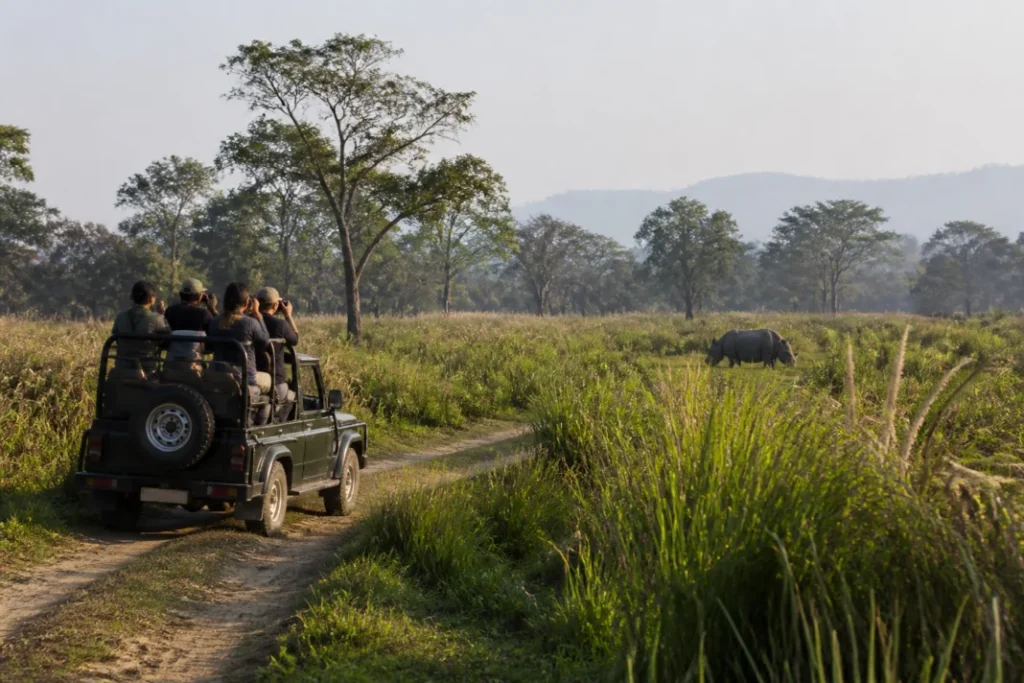
Kaziranga National Park in Assam has reopened for the 2026-27 tourism season, allowing visitors to return to one of the country’s most famous wildlife destinations. Jeep safaris have begun across designated areas of the park, giving tourists an opportunity to explore its forests and grasslands.
The reopening marks the start of another major wildlife tourism season in Assam. Kaziranga attracts visitors from across India and abroad because of its rich biodiversity and its population of the greater one-horned rhinoceros.
Jeep Safaris Begin Across Kaziranga
With the new tourism season underway, visitors can once again explore Kaziranga through authorised jeep safaris. These safaris allow tourists to travel through selected forest routes under the supervision of trained personnel.
The safari experience offers opportunities to observe rhinoceroses, elephants, deer and several other species. Visitors may also spot a wide variety of birds across the park’s grasslands and wetlands.
Safari routes and access can vary depending on weather, forest conditions and administrative decisions.
Kaziranga Reopens for 2026-27 Season
The annual reopening follows the seasonal closure of the park during the monsoon period. Heavy rainfall can cause flooding across parts of Kaziranga and make several forest routes difficult to access.
The closure also gives authorities an opportunity to carry out maintenance and prepare the park for the next tourism season.
With conditions improving, officials have reopened designated areas for visitors. The new season is expected to attract a large number of tourists to Assam.
Home to the One-Horned Rhinoceros
Kaziranga remains internationally known for its conservation efforts involving the greater one-horned rhinoceros. The park provides important habitat for the species and plays a major role in its protection.
Visitors can often spot rhinoceroses during jeep safaris, particularly in the park’s open grassland areas.
The park also supports elephants, wild water buffaloes, swamp deer and other wildlife. Its diverse habitats make it one of Assam’s most important protected areas.
Wildlife Tourism Boost for Assam
The reopening of Kaziranga is also significant for Assam’s tourism sector. Wildlife tourism attracts visitors to different parts of the state and supports local businesses.
Hotels, resorts, transport operators, guides and other tourism-related services benefit from the annual flow of visitors.
The safari season also gives tourists an opportunity to explore Assam’s natural landscapes. Many visitors combine their Kaziranga trip with visits to other destinations across the state.
Visitors Must Follow Park Rules
Tourists visiting Kaziranga must follow the rules set by park authorities. Safari vehicles must remain on designated routes, and visitors must maintain a safe distance from wild animals.
Tourists are also expected to avoid disturbing wildlife. Loud noises, feeding animals and littering can affect the natural environment.
Following these guidelines helps protect both visitors and wildlife. Responsible tourism also supports the long-term conservation of the park.
Conservation Remains a Priority
Tourism activities in Kaziranga operate alongside ongoing conservation efforts. Forest officials and wildlife teams continue to monitor the park and protect its animals and habitats.
The balance between tourism and conservation remains important. Well-managed tourism can generate economic benefits while creating greater awareness about wildlife protection.
Authorities therefore continue to regulate visitor movement and safari operations within the park.
A New Wildlife Season Begins
The reopening of Kaziranga marks the beginning of another busy tourism season in Assam. With jeep safaris now underway, wildlife enthusiasts can once again explore the park’s forests, wetlands and grasslands.
The 2026-27 season is expected to bring visitors closer to Assam’s rich wildlife while supporting the state’s tourism economy.
For tourists planning a visit, following official booking procedures and park guidelines will remain essential for a safe and responsible safari experience.