


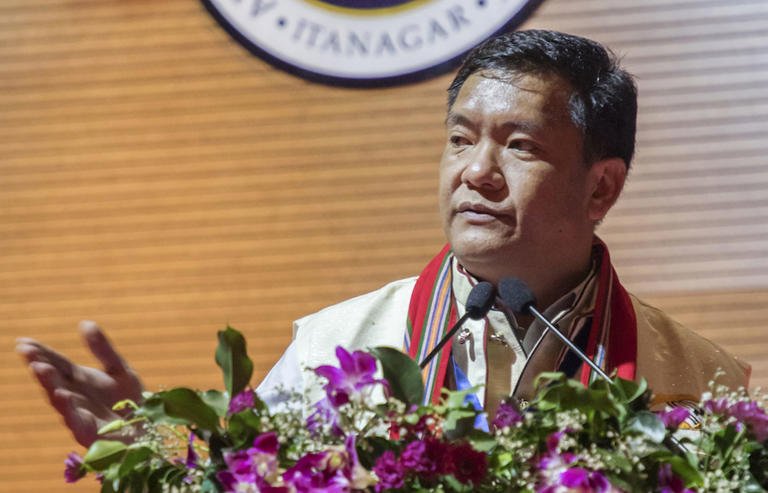
Arunachal Pradesh Chief Minister Pema Khandu has hailed a film that highlights the role of Tibetan fighters who helped the 14th Dalai Lama escape from Tibet and reach India in 1959.
The film brings renewed attention to one of the most significant episodes in modern Tibetan history. It focuses on the people who risked their lives to protect and assist the Dalai Lama during his difficult journey to India.
Khandu praised the effort to bring this story to a wider audience. He said such narratives help preserve important chapters of history and recognise the sacrifices made by people who played crucial roles during difficult times.
The story of the Dalai Lama’s journey to India remains an important part of the shared historical connection between India and Tibet.
Film Highlights the Role of Tibetan Fighters
The film focuses on the Tibetan fighters who supported the Dalai Lama during his escape from Tibet in 1959.
These individuals faced significant risks as they helped ensure his safe journey through difficult terrain and challenging circumstances.
The film seeks to highlight their courage and commitment during a critical moment in Tibetan history.
For many years, the role played by those who assisted the Dalai Lama’s journey has received less public attention than the larger political events surrounding his departure from Tibet.
The film brings their contribution into focus and presents their sacrifices as an important part of the historical narrative.
Khandu welcomed the initiative and said stories of courage and sacrifice deserve recognition.
Dalai Lama’s Historic Journey to India
The 14th Dalai Lama left Tibet in 1959 amid a period of political turmoil.
His journey took him across the Himalayan region before he eventually entered India.
The escape required careful planning and support from people who helped him travel through difficult and dangerous conditions.
After reaching India, the Dalai Lama received asylum and later established his residence in Dharamshala.
His arrival in India became a defining moment in the history of Tibet and the Tibetan community.
The journey also strengthened the historical and cultural connections between India and the Tibetan people.
The film revisits this historic journey through the perspective of those who helped make it possible.
Pema Khandu Praises Effort to Preserve History
Chief Minister Pema Khandu praised the filmmakers for highlighting an important but lesser-known chapter of history.
He said films can play an important role in preserving historical memories and introducing younger generations to stories that may otherwise receive limited attention.
Visual storytelling can make historical events more accessible to audiences.
A film can also encourage people to learn more about the individuals behind major historical moments.
Khandu’s appreciation reflects the importance of recognising personal courage alongside broader political developments.
The Chief Minister noted that stories involving sacrifice, loyalty and bravery can continue to inspire people across generations.
Arunachal Pradesh’s Connection to the Historic Journey
Arunachal Pradesh holds a special place in the history of the Dalai Lama’s journey to India.
The state shares a long border with Tibet and has deep cultural and religious connections with Tibetan Buddhism.
The Dalai Lama entered India through the region that is now part of Arunachal Pradesh.
His arrival marked an important moment for local communities and for India’s relationship with Tibet.
The journey remains part of the historical memory of the Himalayan region.
For Arunachal Pradesh, the story also reflects its geographical and cultural links with Tibet and the wider Buddhist world.
The film’s focus on the journey therefore carries particular significance for the state.
Recognising Courage and Sacrifice
The Tibetan fighters who assisted the Dalai Lama faced enormous challenges during the journey.
They operated under difficult conditions and accepted significant personal risks.
Their role required courage, determination and loyalty.
By telling their stories, the film aims to recognise individuals whose contributions may not always appear prominently in historical accounts.
Their actions played an important role in helping the Dalai Lama complete his journey safely.
Stories of such individuals often provide a human perspective on major historical events.
They remind audiences that historic moments often depend on the courage and decisions of ordinary people.
Khandu’s praise for the film highlights the importance of acknowledging those contributions.
Films Can Bring Forgotten Stories to New Audiences
Films have increasingly become an important medium for exploring history.
They can bring forgotten stories and lesser-known personalities to a wider audience.
The story of the Tibetan fighters provides filmmakers with an opportunity to explore a historic event through the experiences of those who lived through it.
Such films can also generate greater interest in historical research and discussion.
Young audiences, in particular, may connect with history through visual storytelling.
A film can encourage viewers to learn more about the events, people and circumstances behind the story.
Khandu’s response reflects the value of using cinema to preserve stories that hold cultural and historical significance.
A Story of History, Courage and Survival
The film on the Tibetan fighters highlights a story of courage during one of the most challenging moments in Tibet’s modern history.
The Dalai Lama’s journey to India changed the course of his life and shaped the future of the Tibetan community in exile.
The people who helped him along the way also became part of that historic journey.
Their contributions represent a story of sacrifice and determination under difficult circumstances.
By bringing their experiences to the screen, the film gives new recognition to those who helped protect and guide the Dalai Lama during his escape.
Khandu’s Praise Highlights Importance of Historical Memory
Pema Khandu’s appreciation for the film underlines the importance of preserving historical memory.
As generations change, stories from the past can lose public attention.
Films, books and other forms of storytelling can help keep these memories alive.
The film on the Tibetan fighters offers audiences an opportunity to revisit an important chapter in the history of Tibet and India.
It also highlights the individuals who contributed to the Dalai Lama’s historic journey.
For Khandu, recognising their courage represents an important act of remembrance.
The story continues to hold significance because it connects history, sacrifice and the enduring relationship between the Tibetan people and India.
The film now offers a new platform to share that story with audiences and ensure that the role of those Tibetan fighters remains part of the larger historical narrative.