


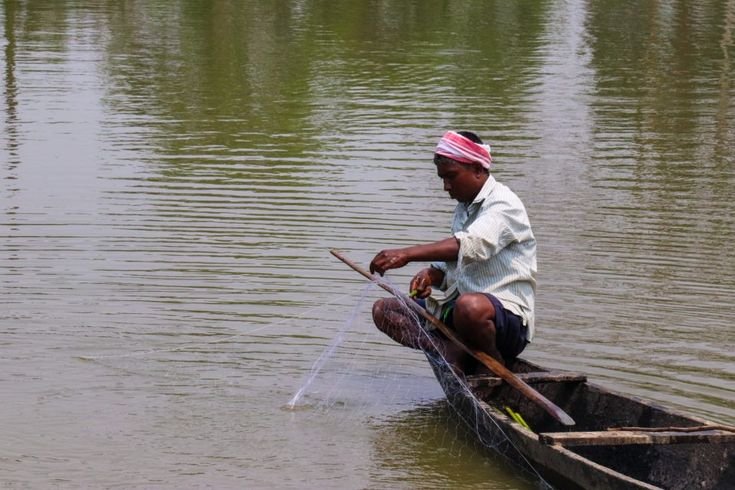
A new study suggests that Khasi traditional fishing techniques in Meghalaya may offer a sustainable way to tackle the state’s worsening fish-production shortfall. Despite an abundance of natural water bodies, Meghalaya currently produces just half of the fish it consumes annually.
As a result, the state imports over 21,000 metric tonnes of fish from other regions like Andhra Pradesh and West Bengal. However, researchers now believe that the answer to this problem lies not in technology alone—but in reviving age-old tribal practices rooted in ecological harmony.
Why Meghalaya’s Fish Deficit Is a Growing Concern
Meghalaya’s love for fish is well-known, yet its local production hasn’t kept pace with demand. The Department of Fisheries reports that fish contributes significantly to local diets, especially in tribal communities. However, rapid population growth, environmental degradation, and inadequate support for fish farmers have worsened the gap between supply and demand.
Relying heavily on imports affects both prices and freshness, and it leaves local ecosystems underutilized. This is where indigenous methods—particularly those from the Khasi tribes—could make a meaningful difference.
How Khasi Traditional Fishing Techniques Work
Sustainable Tribal Wisdom From the Hills
A collaborative study by the Centre for Indigenous Knowledge and Rural Development (CIKARD) and local researchers highlighted several Khasi traditional fishing techniques that promote sustainability, biodiversity, and community ownership.
Seasonal Bans to Protect Fish Populations
One of the most important practices is known as “Ka Jingkhrong”, where the community voluntarily enforces a fishing ban during breeding seasons. This allows fish to spawn undisturbed, naturally boosting population numbers.
These seasonal restrictions are regulated through village councils (Dorbar Shnong), reflecting strong local governance and environmental ethics.
Use of Bamboo Traps and Eco-Friendly Gear
Instead of nylon nets and industrial gear, Khasi fishers traditionally use bamboo traps and hand-woven nets, which are biodegradable and selective. These tools reduce bycatch and help maintain a balanced aquatic ecosystem.
Additionally, fishers avoid destructive practices such as poisoning or electric fishing—focusing instead on methods that preserve the river’s long-term health.
Sacred Water Bodies as Fish Sanctuaries
In many Khasi villages, rivers and streams considered sacred are treated as no-fishing zones. These sacred groves and water sanctuaries often serve as natural breeding grounds, enhancing the overall ecosystem and contributing to year-round biodiversity.
Bridging Traditional Knowledge With Modern Policy
The Meghalaya Fisheries Department has expressed interest in integrating these indigenous practices into its official aquaculture development strategy. As part of the State Aquaculture Mission 3.0, officials are exploring hybrid models that combine traditional wisdom with modern scientific approaches.
“We see real value in these time-tested methods,” said Fisheries Director P. Kharkongor. “They align well with our goals of low-impact, high-yield aquaculture.”
This also supports Meghalaya’s commitments under the State Biodiversity Strategy and Action Plan, which aims to preserve indigenous knowledge in accordance with the Convention on Biological Diversity (CBD).
Benefits of Traditional Fishing for Meghalaya’s Future
Incorporating Khasi traditional fishing techniques into mainstream aquaculture has several benefits:
- Ecological sustainability: Low-impact techniques avoid pollution and habitat destruction.
- Community engagement: Strong local governance promotes resource sharing and conservation.
- Food security: Improved fish yields mean better nutrition for rural families.
- Climate resilience: Indigenous systems are naturally adaptable to changing environments.
These advantages underscore the importance of shifting from purely industrial models toward more locally rooted, ecologically sound systems.
Reclaiming Indigenous Knowledge
To truly address Meghalaya’s fish crisis, the state must look beyond external imports and tap into its own traditional knowledge systems.
Policymakers should invest in documenting and supporting tribal fishing practices.
Educational institutions can incorporate indigenous methods into fisheries training.
Communities must be empowered as stewards of their water resources.
By scaling up these community-based practices, Meghalaya has the chance to lead the way in sustainable inland fisheries—not only for the Northeast but for India as a whole.
READ MORE: Aizawl Rail Link Inauguration: PM Modi to Open Bairabi–Sairang railway line
As this study shows, Khasi traditional fishing techniques are more than just cultural heritage—they are tools for sustainable development. Their revival can bridge the gap between food security and ecological balance.
Rather than chasing industrial solutions alone, Meghalaya can look inward—to its people, rivers, and traditions—for a better, more resilient future.
As a Khasi elder said: “To take only what you need, and give the river time to breathe—that is our way.”