


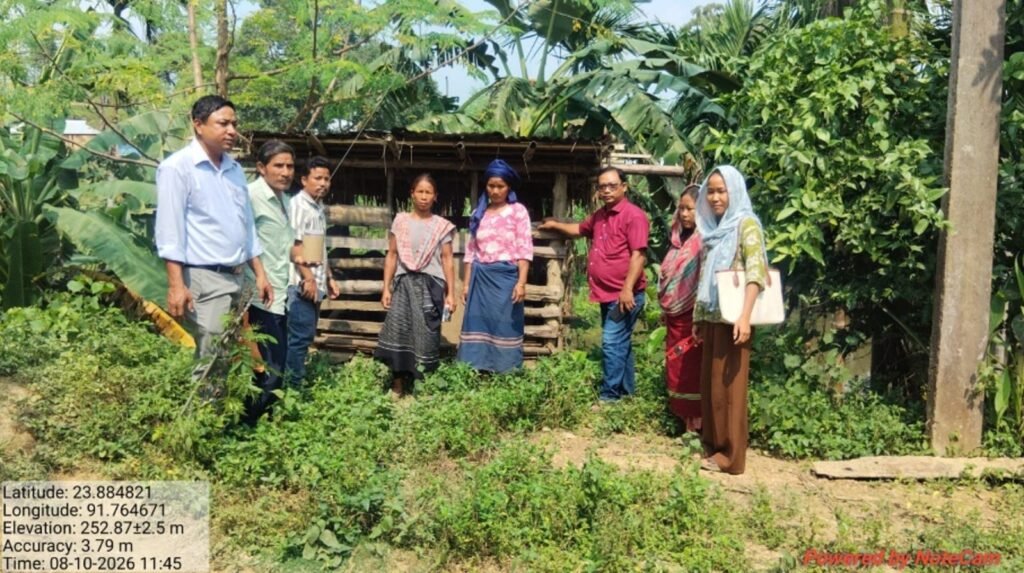
Khowai, Tripura: A two-day capacity-building programme on scientific pig rearing, livestock health management and livestock insurance took place at the Chakmaghat Beat Meeting Hall in Khowai on October 7 and 8. The Tripura Sustainable Catchment Forest Management Project (SCATFORM), a JICA-assisted initiative of the Forest Department, organised the programme with the Animal Resources Development Department (ARDD). The programme aimed to improve technical knowledge among Self-Help Group (SHG) members involved in piggery. It also focused on better livestock management, higher productivity, income generation and stronger livelihood security for rural households.
Read More: Tripura Congress Observes ‘Black Day’ in Agartala
Key Facts
- Location: Chakmaghat Beat Meeting Hall, Khowai, Tripura
- Date: October 7–8, 2026
- Programme: Capacity building on scientific pig rearing, livestock health and insurance
- Project: Tripura Sustainable Catchment Forest Management Project (SCATFORM)
- Support: Japan International Cooperation Agency (JICA)
- Departments: Forest Department and Animal Resources Development Department
- Target group: Self-Help Group members from Haludia, Chakmaghat and Atharamura
- Main focus: Piggery, animal healthcare, disease prevention and livestock insurance
Training Focuses on Scientific Pig Rearing
The programme brought together SHG members from Haludia, Chakmaghat and Atharamura areas. Organisers designed the sessions to help community members improve their piggery practices through scientific methods.
Technical experts from ARDD conducted detailed sessions on scientific breeding and breed selection. They also explained how farmers can choose suitable pig breeds according to local conditions and production requirements.
Furthermore, experts discussed hygienic housing, proper nutrition and piglet care. They highlighted the importance of maintaining clean housing conditions and providing animals with appropriate feed for healthy growth.
Experts Explain Disease Prevention
Livestock health management formed another major part of the training. Experts explained biosecurity measures that farmers can follow to reduce the risk of disease transmission.
Participants also learned about early identification of illness. This knowledge can help livestock owners seek veterinary assistance quickly and reduce the risk of serious disease outbreaks.
In addition, the sessions covered vaccination and preventive healthcare. Veterinary experts explained proper vaccine storage and handling to help farmers maintain vaccine effectiveness.
Participants also learned how to maintain livestock health records. Proper records can help farmers track vaccinations, treatments and other important healthcare information.
Training on Livestock Insurance
The programme also included a dedicated session on livestock insurance. Experts explained the importance of animal identification and tagging as part of the insurance process.
Participants received information about documentation requirements, enrolment procedures and premium payments. They also learned about the process for submitting insurance claims when livestock owners suffer losses.
The organisers highlighted livestock insurance as an important financial protection measure for households that depend on animal-based livelihoods.
Health and Insurance Camp Held
On the second day, organisers conducted a field-level livestock health and insurance camp. Veterinary personnel provided vaccination and other healthcare services to livestock owned by participating SHG members.
The veterinary teams also assisted eligible beneficiaries with livestock insurance enrolment. This practical component allowed participants to access services while learning how to apply the information discussed during the training.
Members of several SHGs, including Enhui, Twiphang Bodol, Hamjakma Bodol, Salka Bodol, Aichuk and Krishnamani Bodol, took part in the field activities.
Officials Support the Programme
The programme received guidance from Banumathi B., IFS, Chief Executive Officer and Project Director of the Tripura JICA Project. The Animal Resources Development Department provided technical support under the direction of Dr N.K. Chanchal, IFS, Director, ARDD.
Meanwhile, Dr Avishek Paul, Assistant Director, SDVH Teliamura, and Dr Martina Debbarma, Veterinary Officer, BVH Mungiakami, worked with field teams to conduct the technical sessions and health activities.
The coordination between the Forest Department and ARDD reflects an effort to connect livelihood programmes with livestock services at the community level.
Supporting Rural Livelihoods
Piggery provides an important livelihood opportunity for many rural households in Tripura. Therefore, better breeding, nutrition, housing and healthcare practices can help farmers improve productivity and income.
At the same time, livestock insurance can reduce the financial impact of unexpected animal losses. The combination of technical training, veterinary support and insurance access can therefore provide stronger livelihood protection for vulnerable households.
The programme also supports SCATFORM’s wider objective of promoting sustainable livelihood opportunities among forest-dependent communities.
Strengthening Departmental Convergence
The initiative demonstrates how different government departments can work together to support rural communities. While the JICA-assisted project focuses on sustainable catchment and forest management, ARDD brings specialised livestock expertise to participating communities.
As a result, SHG members can receive both technical knowledge and direct access to veterinary services. Such convergence can help communities adopt more sustainable livelihood practices while improving their economic resilience.
What was the Khowai programme about?
The two-day programme focused on scientific pig rearing, livestock health management and livestock insurance for SHG members.
When was the programme held?
The capacity-building programme took place on October 7 and 8, 2026, at the Chakmaghat Beat Meeting Hall in Khowai.
Who participated in the programme?
SHG members from Haludia, Chakmaghat and Atharamura participated. Several groups, including Enhui, Twiphang Bodol, Hamjakma Bodol, Salka Bodol, Aichuk and Krishnamani Bodol, also joined the field activities.
What did the livestock health camp provide?
Veterinary personnel provided vaccination and other livestock health services. They also helped eligible SHG members enrol their animals under livestock insurance.
Why is the programme important?
The programme can help rural households improve piggery productivity, prevent livestock diseases and protect themselves financially against animal losses.
Why is Khowai important for Tripura’s rural livelihood programmes?
Khowai is an important district in Tripura with rural and forest-dependent communities. Therefore, livelihood initiatives that combine agriculture, livestock and sustainable natural-resource management can play an important role in strengthening income opportunities across the state and Northeast India.
Also Read: Meghalaya Panel Flags 13 Lakh Tonnes Coal Shortage