


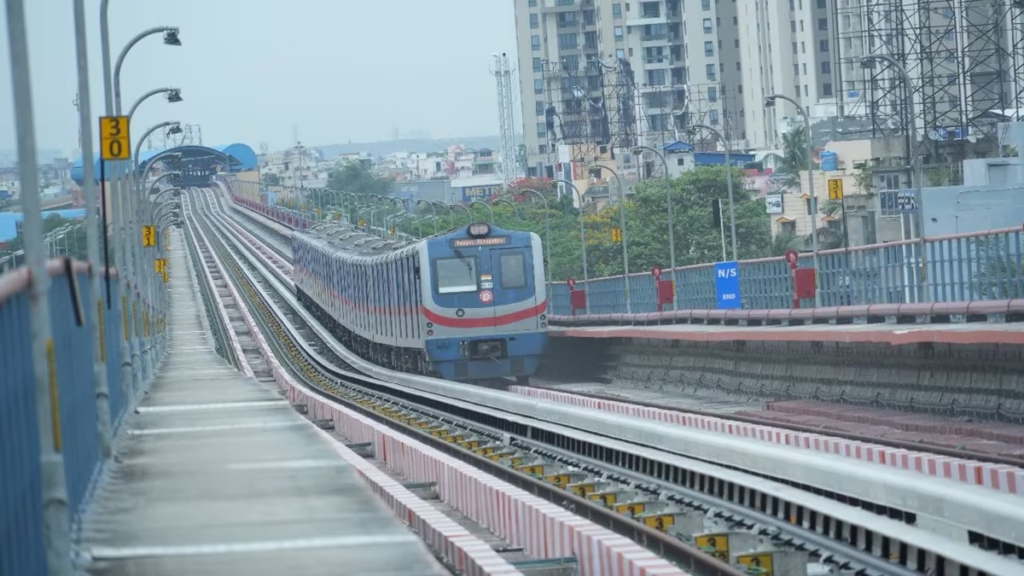
Kolkata Metro Orange Line expansion entered a major operational phase after authorities officially began trial runs on a newly completed stretch aimed at strengthening rapid transit connectivity across the city. Meanwhile, metro railway officials stated that the testing process will evaluate track systems, signaling technology, passenger safety mechanisms, and operational efficiency before commercial services begin. The development immediately attracted public attention because Kolkata continues expanding its urban transport infrastructure to address rising commuter demand and traffic congestion. Additionally, transportation authorities reportedly intensified technical monitoring and coordination during the initial trial operations across the new corridor.
The launch of trial runs emerged amid broader efforts to modernize public transportation systems in major Indian metropolitan centers. Furthermore, urban mobility experts observed that metro rail expansion remains essential for improving sustainable transportation and reducing pressure on overcrowded road networks.
Viral Tripura Zombie Drug Rumours Officially Debunked By Police
Fierce Shillong Mining Protests Challenge Cement Project Expansion
Authorities Launch Trial Operations on New Stretch
Metro Railway authorities formally initiated operational testing on the newly constructed corridor section. Kolkata Metro Orange Line development therefore became a major focus of urban infrastructure discussions across West Bengal.
Meanwhile, officials explained that the trial phase involves comprehensive evaluation of train movement systems, electrical operations, emergency response protocols, and station coordination. Additionally, engineers and technical personnel reportedly monitored real-time operational performance during the first series of controlled test runs.
Transportation representatives emphasized that trial operations remain a critical step before opening metro services for public use. Furthermore, authorities stated that safety certification and system validation processes would continue during the coming weeks.
Earlier, commuters repeatedly expressed expectations regarding faster completion of metro connectivity projects across Kolkata’s expanding suburban and commercial zones. Consequently, the beginning of trial runs generated optimism among daily passengers and urban planners.
At the same time, officials cautioned that commercial passenger services would commence only after all technical clearances receive approval.
Metro Expansion Expected to Improve Urban Mobility
The new corridor extension may significantly strengthen transportation efficiency across several densely populated areas of Kolkata. Kolkata Metro Orange Line progress therefore carries major implications for daily commuters and city infrastructure planning.
Meanwhile, urban transport experts observed that metro rail systems reduce travel delays, lower dependence on private vehicles, and improve commuting reliability in rapidly growing cities. Additionally, the expanded route may help ease pressure on overcrowded road corridors and traditional transport systems.
Infrastructure planners explained that mass rapid transit systems frequently support long-term urban sustainability and economic productivity. Furthermore, metro connectivity often improves accessibility between residential zones, business districts, and transportation hubs.
Several mobility analysts noted that Kolkata’s transportation network continues facing increasing strain because of rising population density and vehicle growth. Consequently, metro infrastructure expansion gained greater importance within broader city modernization strategies.
However, some commuter groups requested faster completion of additional connecting routes and feeder transport services.
Technical Safety and System Checks Underway
Metro authorities indicated that the trial period will focus heavily on safety verification and operational reliability assessments. Kolkata Metro Orange Line testing therefore involves extensive technical examination before public rollout.
Meanwhile, engineers reportedly conducted evaluations involving braking systems, communication networks, track alignment, signaling coordination, and emergency response procedures. Additionally, operational teams monitored train speed control and energy distribution systems during the trial phase.
Railway safety experts explained that metro systems require rigorous testing because passenger safety and uninterrupted operations remain critical priorities within urban transit infrastructure. Furthermore, trial runs help identify technical adjustments necessary before full-scale passenger movement begins.
Several transportation researchers observed that modern metro networks increasingly rely on advanced automation and digital monitoring systems for efficient service management. Consequently, authorities continued emphasizing comprehensive testing and certification standards.
At the same time, maintenance teams remained stationed along the route to address any operational irregularities during the trial phase.
Commuters Anticipate Faster Travel and Better Connectivity
The metro extension generated strong public interest among residents and daily office commuters across Kolkata. Kolkata Metro Orange Line expansion therefore became closely associated with expectations regarding reduced travel time and improved convenience.
Meanwhile, passengers stated that expanding metro connectivity could significantly reduce dependence on road transport affected by heavy traffic congestion and unpredictable delays. Additionally, improved rail connectivity may strengthen access between residential suburbs and commercial centers.
Urban economists observed that efficient public transport systems frequently improve workforce mobility, economic productivity, and urban accessibility. Furthermore, metro expansion often contributes to lower fuel consumption and reduced transportation costs for commuters.
Several civic observers emphasized that public transport modernization remains essential for improving quality of life within densely populated metropolitan regions. Consequently, metro infrastructure projects continued receiving strong public and administrative attention.
However, some residents also stressed the importance of affordable fares and integrated transport connectivity across the wider metropolitan network.
Infrastructure Expansion Reflects Modernization Push
The latest trial operations highlighted Kolkata’s ongoing efforts to modernize transportation infrastructure and expand mass transit systems. Kolkata Metro Orange Line growth therefore reflected broader urban development priorities across the city.
Meanwhile, policymakers stated that metro expansion supports long-term strategies involving sustainable mobility, pollution reduction, and infrastructure modernization. Additionally, public transport investment increasingly became a central focus of urban governance and planning frameworks.
Infrastructure experts explained that metro systems often play a transformative role in shaping modern metropolitan growth and reducing environmental pressure from excessive vehicle usage. Furthermore, integrated transport planning may strengthen urban resilience and future mobility efficiency.
Several development analysts noted that Kolkata’s expanding metro network may influence future commercial growth and residential development patterns near transit corridors. Consequently, transportation infrastructure continued shaping broader urban transformation discussions.
At the same time, authorities reportedly evaluated future expansion possibilities involving additional metro corridors and interchange systems.
Economic and Environmental Benefits Highlighted
Experts also emphasized the potential economic and environmental advantages linked to metro rail expansion in Kolkata. Kolkata Metro Orange Line development therefore extended beyond transportation benefits alone.
Meanwhile, environmental specialists observed that mass transit systems may reduce vehicular emissions and contribute to cleaner urban air quality by encouraging greater public transport usage. Additionally, reduced traffic congestion may lower fuel wastage and improve overall transportation efficiency.
Economic researchers explained that reliable metro connectivity frequently supports commercial activity, real estate development, and investment growth surrounding transit zones. Furthermore, large-scale public transport infrastructure often generates long-term employment opportunities within operations and maintenance sectors.
Several sustainability experts highlighted that environmentally efficient transportation systems increasingly influence future urban planning strategies across major global cities. Consequently, metro expansion remained closely aligned with broader sustainable development objectives.
At the same time, city residents continued monitoring updates regarding the expected launch timeline for passenger services.
Conclusion
Kolkata Metro Orange Line trial runs officially began on a newly completed corridor stretch aimed at improving rapid transit connectivity and urban mobility across the city. Meanwhile, metro authorities emphasized that extensive technical and safety evaluations will continue before public passenger operations commence. Experts highlighted the importance of metro infrastructure expansion for reducing congestion, improving transportation efficiency, and supporting sustainable urban development in Kolkata. Ultimately, observers believe the successful rollout of the new corridor may significantly strengthen the city’s evolving mass transit network.
FAQs
What development took place on the Kolkata Metro Orange Line?
Authorities officially began trial runs on a newly completed metro corridor stretch.
Why are metro trial runs important?
The testing process checks safety systems, signaling, operations, and technical reliability.
How could the metro extension benefit commuters?
The new corridor may reduce travel time and improve urban connectivity across Kolkata.
What systems are being tested during the trials?
Officials are evaluating signaling, braking, communication, and operational safety systems.
Could the metro help reduce traffic congestion?
Yes, expanded metro connectivity may reduce dependence on overcrowded road transport.
When will public services begin on the new stretch?
Passenger services will begin after technical testing and safety clearances are completed.