


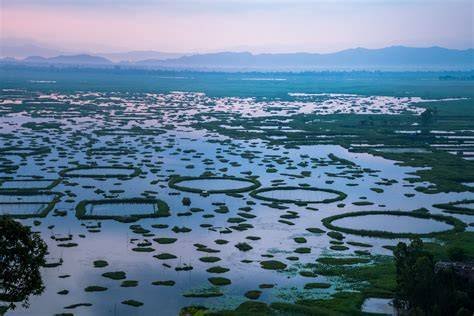
Nestled in the heart of Manipur, Loktak Lake is one of India’s most enchanting natural wonders. Known for its floating phumdis and serene waters, it has earned the nickname “Floating Paradise of Manipur.” This lake is not only a scenic treasure but also a lifeline for the local communities who depend on it for fishing, agriculture, and tourism. Visitors from across the country and the world flock to Loktak Lake to experience its tranquil beauty and unique ecosystem.
Read More: Assam unveils Bhogeswar Baruah Sports Award trophy
Discovering Loktak Lake Manipur
Loktak Lake spreads over an area of approximately 287 square kilometers, making it the largest freshwater lake in the northeastern region. It is situated near the town of Moirang, about 53 kilometers from Imphal, the state capital. The lake’s calm waters reflect the sky, creating breathtaking views at sunrise and sunset. One of its most remarkable features is the presence of phumdis—floating biomass that forms islands of various sizes across the lake.
The phumdis are not only visually striking but also ecologically significant. They provide a natural habitat for several endangered species, including the Sangai deer, the state animal of Manipur. These floating islands move slowly across the lake, giving it a dynamic and ever-changing landscape.
Unique flora and fauna
Loktak Lake Manipur is home to a rich variety of flora and fauna. Aquatic plants, lotus flowers, and reeds grow abundantly, enhancing the lake’s beauty. The lake also supports a thriving population of fish, which is crucial for the livelihood of local fishermen. Migratory birds visit during winter, adding vibrancy to the ecosystem and attracting birdwatchers.
The Sangai deer, found in the Keibul Lamjao National Park located on the phumdis, is a rare and endangered species. It is known for its graceful movements and striking antlers. Nature enthusiasts often visit Loktak Lake specifically to catch glimpses of this elusive deer in its natural habitat.
Boating and sightseeing experiences
One of the best ways to explore Loktak Lake Manipur is by taking a boat ride. Tourists can hire motorboats or traditional wooden boats to navigate through the floating islands and reach remote corners of the lake. The serene waters offer a peaceful experience, while the scenic surroundings provide excellent photography opportunities.
Visitors can also explore the nearby villages, where locals engage in traditional fishing and farming. Observing their daily routines provides insight into the unique lifestyle adapted to life on and around the lake. Homestays and eco-tourism initiatives have become popular, allowing travelers to experience authentic Manipuri culture.
Floating phumdis and Keibul Lamjao National Park
Keibul Lamjao National Park, the world’s only floating national park, is situated on the phumdis of Loktak Lake. It spans an area of 40 square kilometers and is a sanctuary for the endangered Sangai deer. The park is also home to various waterfowl, reptiles, and aquatic plants.
Walking on the phumdis and observing wildlife gives visitors a sense of being part of a living ecosystem. The park authorities conduct guided tours to educate tourists about conservation efforts and the ecological significance of the lake and its floating islands.
Cultural significance of Loktak Lake
Loktak Lake Manipur holds cultural and religious importance for local communities. It is closely linked with several traditional festivals and rituals. Fishermen offer prayers to ensure a good catch, and locals celebrate the lake as a source of life and prosperity. Folk songs, dances, and handicrafts related to the lake reflect the deep connection between the people and their natural environment.
Festivals such as Lai Haraoba, which honors local deities, often feature rituals performed near or on the lake. Visitors can witness these vibrant cultural expressions, adding a spiritual dimension to their travel experience.
Best time to visit
The ideal time to visit Loktak Lake is between November and February when the weather is pleasant and migratory birds arrive. The lake is also stunning during the monsoon season, from June to September, when water levels rise, and the surrounding landscape becomes lush green. Early mornings and evenings offer the best light for photography, capturing the magical reflections of the phumdis on calm waters.
Tourists are advised to carry light rain gear during the monsoon and comfortable shoes for exploring nearby villages and the phumdis. Local guides are available to help visitors navigate the lake safely and enjoy a richer travel experience.
Accessibility and nearby attractions
Loktak Lake is well-connected by road from Imphal, which has an airport with flights from major Indian cities. Accommodation options range from hotels in Moirang and Imphal to eco-friendly homestays near the lake.
Nearby attractions include the Keibul Lamjao National Park, Sendra Island, and the Loktak Floating Market. These sites provide additional experiences for tourists, making the lake a hub for nature, adventure, and culture.
Conservation efforts
Loktak Lake Manipur faces environmental challenges, including pollution, excessive fishing, and encroachment on phumdis. Authorities and NGOs have launched conservation initiatives to preserve the lake’s delicate ecosystem. These efforts focus on sustainable fishing, afforestation around the lake, and awareness programs for local communities.
Tourists are encouraged to follow eco-friendly practices, such as avoiding plastic use and respecting wildlife, to ensure that Loktak Lake remains a magical paradise for generations to come.
Loktak Lake Manipur is truly a floating paradise that combines natural beauty, cultural richness, and ecological significance. From its mesmerizing phumdis and rare wildlife to boating experiences and cultural traditions, the lake offers something unique for every traveler. Visiting Loktak Lake is not just a trip but an immersion into the heart of Manipur’s natural and cultural heritage.
By highlighting the lake’s charm and ecological importance, Assam and Manipur aim to promote responsible tourism while inspiring conservation. Loktak Lake stands as a symbol of harmony between humans and nature, inviting everyone to witness its magic firsthand.
Read More: 5 Best Juices for Hair Growth: Amla to Beetroot Drinks