


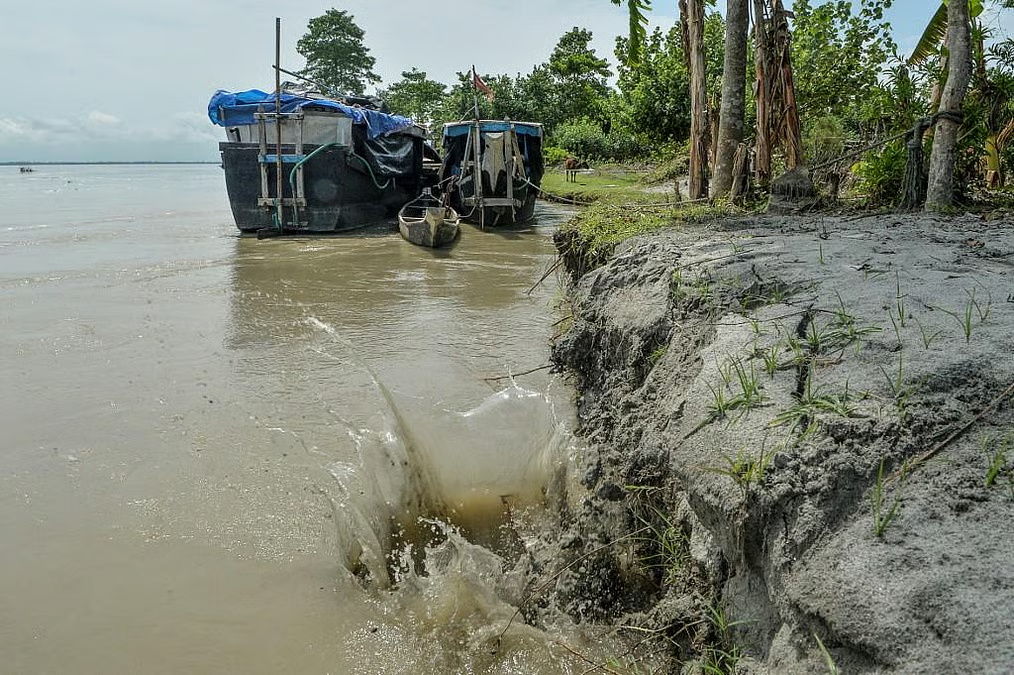
Majuli Island erosion has intensified after strong Brahmaputra currents caused severe embankment erosion in the Aphalamukh area on August 22. The latest damage has raised concerns among residents living close to vulnerable riverbank stretches. Moreover, continued erosion could threaten agricultural land, homes and local infrastructure if river conditions remain unstable. Authorities and local communities now face the challenge of monitoring the affected areas and protecting vulnerable stretches.
Imphal Arms Recovery: Joint Forces Seize 7 Automatic Weapons and 50 Rounds of Ammunition
Majuli Island Erosion Raises Fresh Concerns in Aphalamukh
Heavy currents in the Brahmaputra caused severe erosion along an embankment in the Aphalamukh area of Majuli, Assam, on August 22. The powerful river flow placed additional pressure on already vulnerable sections of the island.
Majuli remains closely connected to the Brahmaputra, which shapes the island’s landscape through continuous sediment movement and riverbank changes. Consequently, erosion has become a recurring environmental and social concern for communities living along exposed stretches.
The latest incident has renewed attention on the condition of embankments around Aphalamukh. These structures play an important role in protecting settlements and agricultural areas from the river’s force.
Furthermore, strong currents can weaken embankments rapidly when water levels and river dynamics change. Therefore, timely inspection and maintenance remain essential for reducing risks to nearby communities.
Majuli Island Erosion Threatens Land and Livelihoods
Riverbank erosion can create serious challenges for families whose homes and farmland lie close to the Brahmaputra. When the river gradually or suddenly removes land, residents can lose productive agricultural areas and access routes.
Additionally, repeated erosion can place pressure on local infrastructure. Roads, embankments and other public facilities may require repairs when river activity damages nearby land.
For farmers, the loss of land can directly affect their livelihoods. Moreover, communities may face uncertainty when erosion repeatedly changes the boundaries of habitable and cultivable areas.
The Aphalamukh erosion therefore represents more than an environmental problem. It also highlights the economic and social challenges that riverbank communities across Assam regularly face.
However, the severity of the impact depends on how the river behaves in the coming days. Continued strong currents could increase pressure on vulnerable embankment sections, while calmer conditions could slow the immediate damage.
Authorities Face Challenge of Protecting Vulnerable Areas
The latest erosion has highlighted the importance of monitoring the affected embankment closely. Authorities can assess damaged sections, identify weak points and determine where emergency protection measures may prove necessary.
Meanwhile, local residents can play an important role by reporting new cracks, erosion or structural damage to officials. Early information can help authorities respond before vulnerable sections deteriorate further.
Embankment protection also requires long-term planning. Temporary measures may provide immediate support, but recurring erosion often demands broader river-management strategies and regular maintenance.
Furthermore, officials must consider the changing nature of the Brahmaputra. River currents, sediment deposition and shifting channels can influence erosion patterns across Majuli.
Therefore, protecting the island requires continuous observation rather than a one-time response. Coordinated action between government agencies and affected communities can improve preparedness during periods of strong river activity.
Majuli Island Erosion Highlights Assam’s Riverbank Challenge
The latest incident in Aphalamukh once again demonstrates the difficult relationship between Majuli and the Brahmaputra. While the river sustains the island’s ecosystem and communities, its powerful currents can also reshape the landscape.
Moreover, recurring erosion can create long-term uncertainty for residents. Families may have to adapt to changing riverbanks, while authorities must continuously assess infrastructure and embankment conditions.
Public awareness also remains important during periods of severe river activity. Residents in vulnerable areas should stay informed about official advisories and follow instructions if authorities identify immediate risks.
At the same time, sustained investment in embankment maintenance and erosion-control measures can strengthen the island’s resilience. Authorities can combine local observations with technical assessments to identify areas requiring priority attention.
The August 22 incident has consequently brought fresh focus to the need for effective protection along vulnerable stretches of Majuli. Continued monitoring will remain important as the Brahmaputra’s currents shape the island’s landscape.
Conclusion
Majuli Island erosion along the Aphalamukh area has highlighted the continuing threat posed by strong Brahmaputra currents in Assam. The severe embankment erosion reported on August 22 has raised concerns about nearby land, infrastructure and livelihoods. Therefore, regular monitoring, timely maintenance and effective erosion-control measures will remain essential for protecting vulnerable communities on Majuli Island.
FAQs
1. What happened in Majuli on August 22?
Heavy Brahmaputra currents caused severe embankment erosion in the Aphalamukh area of Majuli, Assam.
2. Why does Majuli face erosion problems?
Majuli lies within the Brahmaputra’s dynamic river system, where strong currents and shifting river channels can contribute to ongoing bank erosion.
3. What can severe embankment erosion affect?
Severe erosion can threaten agricultural land, settlements, roads and other infrastructure located near vulnerable river stretches.
4. Why are embankments important in Majuli?
Embankments help protect vulnerable areas from river flows and can reduce the immediate impact of strong currents on nearby communities.
5. What could help address Majuli Island erosion?
Regular monitoring, timely embankment maintenance, technical assessments and long-term erosion-management measures can help improve protection.