


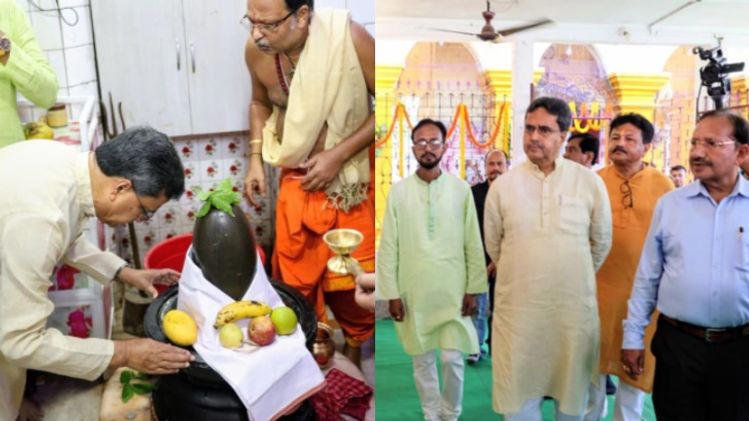
Tripura Chief Minister Manik Saha on Monday said India has witnessed large-scale redevelopment and protection of ancient temples, cultural heritage, and traditions since Prime Minister Narendra Modi assumed office in 2014.
Addressing the ‘Somnath Swabhiman Parv’ programme in Agartala, Saha said the country has entered a new phase of cultural and spiritual revival under the Modi government. He stated that several historic temples and heritage sites have received renewed attention during the past decade.
The programme marked 1,000 years since the invasion of the Somnath Temple by Mahmud of Ghazni in 1026. Political leaders, cultural figures, and members of various organisations attended the event in the Tripura capital.
Read More: Supreme Court Allows TMC To File Plea Over Excluded Votes
Manik Saha highlights Somnath Temple’s legacy
During his address, Manik Saha spoke about the historical importance of the Somnath Temple. He said repeated attempts were made throughout history to destroy the temple, yet it continued to stand as a symbol of India’s religious and civilisational pride.
According to the chief minister, the temple represents the resilience of Indian culture and faith despite centuries of invasions and attacks.
Saha said the Somnath Temple remains deeply connected to the emotions and spiritual beliefs of millions of people across the country.
He also noted that the reconstruction of the temple after Independence reflected the determination of national leaders to restore India’s cultural identity.
The chief minister stated that preserving such heritage sites helps younger generations understand the country’s civilisational roots and historical struggles.
Modi government focused on cultural revival
The Tripura chief minister praised the Narendra Modi-led government for prioritising the restoration of temples and heritage sites across India.
He said several ancient religious locations have undergone redevelopment during the last decade. According to him, the government has also worked to preserve traditions, languages, and cultural practices linked to India’s history.
Saha stated that the revival of heritage sites has strengthened public awareness regarding the country’s cultural legacy.
He also mentioned that projects linked to spiritual tourism have improved infrastructure and created economic opportunities in many regions.
The chief minister said the government’s efforts have encouraged people to reconnect with India’s ancient traditions and values.
Political observers noted that cultural heritage and temple restoration have remained important themes in the BJP’s public outreach programmes.
Focus on preserving traditions
Manik Saha said cultural heritage extends beyond monuments and temples. He explained that traditions, rituals, languages, and spiritual practices also form an important part of India’s identity.
According to him, the Modi government has promoted programmes aimed at preserving traditional art forms and cultural practices across different states.
The chief minister said India’s diversity remains one of its greatest strengths. He added that protecting heritage helps strengthen national unity and social harmony.
Saha also highlighted the importance of educating younger generations about India’s cultural history.
He stated that awareness regarding heritage and civilisation creates a stronger sense of national pride among citizens.
Somnath Temple’s historical significance
The Somnath Temple in Gujarat remains one of the most important religious sites in Hindu tradition. Historical records mention that invaders attacked and looted the temple multiple times over the centuries.
Mahmud of Ghazni invaded the temple in 1026, an event that continues to hold historical significance in Indian history.
Despite repeated destruction, rulers and devotees rebuilt the temple several times. After Independence, the reconstruction of the Somnath Temple became an important national project.
India’s first Home Minister, Sardar Vallabhbhai Patel, strongly supported rebuilding the temple. The reconstruction later emerged as a symbol of cultural restoration and national pride.
Speakers at the Agartala programme said the temple represents resilience and continuity in Indian civilisation.
BJP leaders stress cultural identity
Leaders attending the event stated that cultural heritage remains closely linked to national identity. They said protecting historical and spiritual sites helps preserve the values and traditions passed down through generations.
Several speakers highlighted initiatives related to temple redevelopment, riverfront beautification, pilgrimage infrastructure, and restoration of heritage structures.
According to BJP leaders, such projects have increased tourism and boosted local economies in many states.
The programme also included discussions on India’s historical heritage and the significance of preserving ancient traditions in modern society.
Participants described the Somnath Temple as a symbol of faith, resilience, and cultural continuity.
Tripura government’s cultural initiatives
The Tripura government has also focused on promoting cultural heritage and tourism within the state. Officials said several initiatives aim to preserve historical sites, indigenous traditions, and religious landmarks.
The state administration has been working on tourism infrastructure projects linked to temples, eco-tourism, and cultural destinations.
Manik Saha said preserving heritage remains important for both cultural and economic reasons. He noted that tourism connected to spiritual and historical sites can generate employment and support local communities.
The chief minister also stressed the importance of protecting indigenous traditions and promoting cultural awareness among younger people in Tripura.
Officials said the state government plans to continue initiatives related to heritage conservation and tourism development.
Cultural heritage and national pride
Political analysts believe the BJP has increasingly focused on cultural heritage and civilisational identity in its political messaging.
Temple redevelopment projects and heritage restoration programmes have become prominent themes in public discourse over the past few years.
Supporters of the government argue that such initiatives help restore historical sites neglected for decades. Critics, however, often accuse the ruling party of mixing politics with religion.
Despite political debates, heritage-related projects continue to receive public attention across different parts of the country.
At the Agartala event, speakers repeatedly stressed the need to preserve India’s cultural roots while embracing modern development.
Event draws large participation
The ‘Somnath Swabhiman Parv’ programme witnessed participation from political leaders, social organisations, cultural groups, and members of the public.
Organisers said the event aimed to remember the historical significance of the Somnath Temple and highlight the importance of protecting India’s cultural heritage.
The programme included speeches, cultural presentations, and discussions on Indian civilisation and history.
As the event concluded, Manik Saha reiterated that India’s cultural and spiritual identity has gained renewed recognition during the Modi government’s tenure.
He said the country must continue preserving its temples, traditions, and heritage for future generations while strengthening national unity and pride.
Read More: Meghalaya Seeks Rs 234 Crore Hike For New Shillong Water Project