


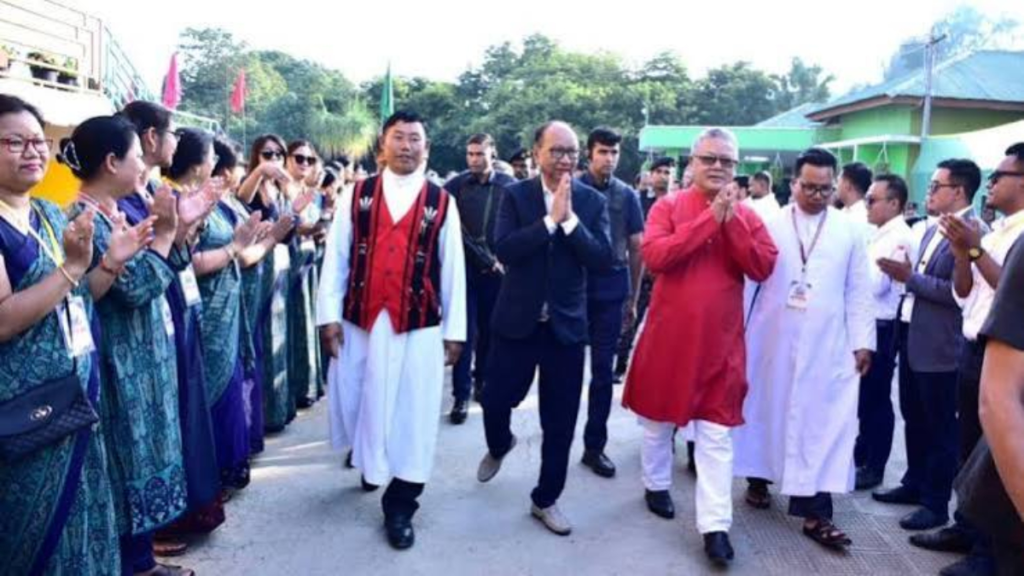
Manipur bandhs have renewed concern over students’ education, as Chief Minister Yumnam Khemchand Singh urges communities to choose peace, reconciliation and dialogue amid continuing unrest. He has warned that shutdowns and blockades disrupt learning and place additional pressure on families already facing uncertainty.
The Chief Minister’s appeal comes as the state continues to deal with tensions in several areas. He has asked civil society groups and other stakeholders to work together to restore normalcy, while stressing that students should not have to bear the cost of prolonged disruption.
Manipur bandhs put learning at risk
Bandhs, road blockades and protests can prevent students from reaching schools and colleges. They can also affect teachers, transport services and other staff needed to keep institutions running. When classes stop repeatedly, students may struggle to complete lessons and prepare for examinations.
Khemchand raised the impact of agitations on education during the state-level Teachers’ Day celebration in Imphal on September 5. He said bandhs, blockades and agitations harm both the education sector and the wider economy.
Manipur bandhs and the call for peace
The Chief Minister has also urged civil society organisations and other stakeholders to avoid bandhs and general strikes. In an appeal reported on September 1, he said shutdowns hurt daily-wage earners, students and other vulnerable groups.
He called for collective efforts to address public concerns and restore lasting peace and normalcy.
Meanwhile, Khemchand has called on community leaders, including Church leaders, and students to help promote harmony, particularly in the hill districts where tensions remain. The appeal highlights the role that trusted local voices can play in encouraging restraint and rebuilding confidence between communities.
Students caught between unrest and exams
Repeated disruption can create uncertainty for students, parents and teachers. Delays can also complicate exam preparation, especially for students facing important school or college assessments.
The state has already seen education institutions close during periods of tension. In August, the government ordered schools, colleges and universities to remain shut for several days amid a shutdown linked to demands concerning the National Register of Citizens and the Census.
Such measures may be necessary when authorities assess a safety risk. However, they also show how unrest can quickly affect education, even when students are not directly involved in protests. Keeping children safe and protecting their access to learning remain parallel concerns.
Dialogue remains central to reconciliation
Manipur’s wider tensions cannot be resolved through appeals alone. A lasting improvement will require sustained dialogue, attention to public concerns and cooperation among communities, civil society groups and the administration. Peaceful ways to express grievances can help prevent further disruption while allowing discussions to continue.
The Chief Minister has pointed to signs of gradual improvement and praised students who showed restraint during a recent issue related to the Census. His remarks placed responsibility on adults and community leaders to encourage calm rather than draw young people into confrontation.
At the same time, public concerns need channels where people feel they can be heard. Transparent communication and consistent engagement can help reduce mistrust and create room for practical solutions. Avoiding shutdowns does not remove the issues behind protests, but it can protect students and workers while those issues are discussed.
Manipur bandhs must give way to stability
For students, stability means being able to travel safely, attend classes regularly and prepare for their future without repeated interruptions. Teachers also need a predictable environment to deliver lessons and support learners.
Khemchand’s appeal for peace and reconciliation therefore carries a clear educational concern as well as a wider social one. Community organisations, families and authorities all have a role in reducing tensions and keeping schools accessible wherever conditions allow.
Ultimately, lasting normalcy will depend on dialogue, restraint and practical action. Protecting education should remain a shared priority, so that students do not lose valuable learning time whenever tensions rise across Manipur.