


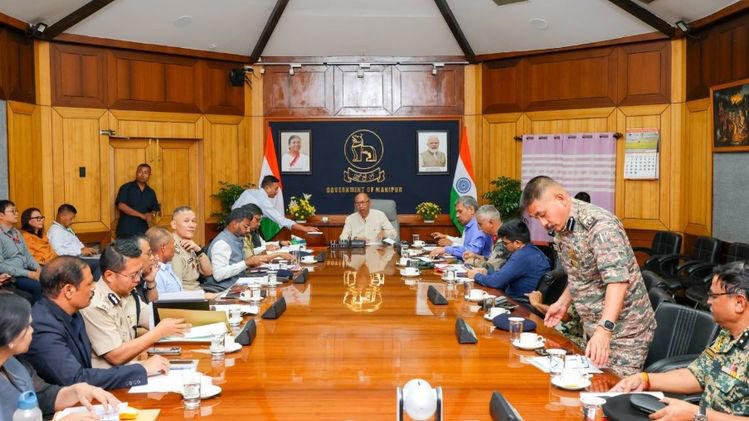
Manipur Chief Minister N. Biren Singh chaired a meeting of the Narco Coordination Centre (NCORD) and reaffirmed the state’s commitment to intensifying the fight against drug trafficking and narcotics-related crimes. The meeting brought together senior officials from various departments and law enforcement agencies to review ongoing anti-drug operations and discuss strategies for strengthening enforcement efforts.
Addressing the gathering, the Chief Minister said drug trafficking remains one of the most serious challenges facing the state. He emphasized that the government will continue to take strong and coordinated action against individuals and networks involved in the illegal drug trade.
Read More: El Nino May Hit India’s Monsoon, Rice and Maize Output: FAO
The NCORD meeting focused on evaluating the progress of anti-narcotics initiatives and identifying areas where agencies can improve coordination. According to the Chief Minister, effective collaboration among departments is essential for tackling the complex challenges posed by drug trafficking.
He stressed that the government remains committed to protecting communities, especially young people, from the harmful effects of narcotics. Therefore, authorities will continue to strengthen preventive measures while intensifying enforcement activities across the state.
Drug Trafficking Poses Serious Threat to Society
During the meeting, the Chief Minister highlighted the social and economic consequences of drug abuse and trafficking. He said narcotics not only affect individuals and families but also create wider challenges for society.
Drug addiction can damage the health and future prospects of young people. Moreover, illegal drug networks often contribute to criminal activities and undermine public safety. For this reason, the government considers the fight against drugs a top priority.
Singh noted that Manipur’s geographical location presents unique challenges in combating narcotics trafficking. However, he stressed that authorities remain determined to prevent the state from becoming a transit route for illegal drugs.
The Chief Minister urged all agencies to remain vigilant and continue their efforts to identify and dismantle trafficking networks. He added that sustained action is necessary to achieve long-term success in the fight against narcotics.
Strengthening Coordination Among Agencies
A major focus of the NCORD meeting was improving coordination among law enforcement and government departments. The Chief Minister said drug trafficking networks often operate across multiple jurisdictions. Therefore, agencies must work together to respond effectively.
Officials reviewed existing mechanisms for information sharing and operational coordination. They also discussed ways to enhance cooperation between police, security agencies, intelligence units, and administrative departments.
Singh emphasized that a coordinated approach increases the effectiveness of anti-drug operations. When agencies share information and resources, they can identify criminal networks more quickly and respond more efficiently.
Furthermore, better coordination helps prevent duplication of efforts and ensures that enforcement actions produce stronger results. The government plans to continue strengthening institutional cooperation as part of its broader anti-drug strategy.
Continued Focus on the War on Drugs Campaign
The Chief Minister reiterated the importance of the state’s “War on Drugs” campaign, which has become a central component of Manipur’s anti-narcotics efforts. Since its launch, the campaign has focused on curbing drug trafficking, destroying illegal cultivation, and raising public awareness.
Singh said the initiative has produced encouraging results through sustained enforcement actions and community participation. Authorities have conducted numerous operations against drug traffickers and seized significant quantities of narcotics.
In addition, the government has taken steps to eliminate illegal cultivation of narcotic crops. These efforts aim to disrupt the supply chain and reduce the availability of illegal substances.
The Chief Minister stated that the campaign will continue with renewed intensity. He urged all stakeholders to remain committed to the shared goal of creating a drug-free Manipur.
Protecting Youth from Drug Abuse
The Chief Minister stressed that protecting young people remains one of the most important objectives of the government’s anti-drug efforts. He noted that drug abuse can have devastating consequences for students and youth, affecting education, employment, and overall well-being.
Therefore, the government is combining enforcement measures with awareness programmes and preventive initiatives. Educational institutions, community organizations, and civil society groups play an important role in spreading awareness about the dangers of narcotics.
Singh encouraged parents, teachers, and community leaders to actively participate in anti-drug campaigns. Their involvement can help identify problems early and provide support to vulnerable individuals.
Moreover, awareness programmes can empower young people to make informed decisions and resist the influence of drug-related activities. The government believes that prevention and education are essential components of a successful anti-drug strategy.
Technology and Intelligence to Enhance Enforcement
During the meeting, officials discussed the use of technology and intelligence-based approaches to strengthen anti-narcotics operations. The Chief Minister said modern challenges require modern solutions.
Advanced surveillance systems, intelligence gathering, and data analysis can help authorities identify trafficking routes and criminal networks more effectively. As a result, law enforcement agencies can conduct targeted operations and improve enforcement outcomes.
Singh emphasized the importance of adopting innovative methods to stay ahead of traffickers. Criminal networks often change their tactics, making continuous adaptation necessary.
Read More: Tripura Minister Calls for Faster Implementation of Welfare Schemes for Scheduled Castes
The government plans to support agencies with the tools and resources needed to strengthen investigations and improve operational efficiency. Consequently, enforcement agencies will be better equipped to combat organized drug trafficking.
Community Participation Remains Essential
The Chief Minister highlighted the role of communities in supporting anti-drug initiatives. He said government action alone cannot eliminate the problem. Instead, success requires active participation from citizens and local organizations.
Community members can provide valuable information about suspicious activities and help authorities identify emerging threats. Additionally, local support strengthens awareness campaigns and prevention efforts.
Singh urged citizens to cooperate with law enforcement agencies and report activities related to drug trafficking. Such cooperation can significantly enhance the effectiveness of enforcement operations.
Furthermore, community involvement helps build a collective commitment to creating safer and healthier environments. The government intends to strengthen partnerships with local organizations as part of its ongoing anti-drug efforts.
Commitment to a Drug-Free Manipur
Concluding the NCORD meeting, the Chief Minister reaffirmed the government’s determination to continue its fight against drug trafficking and substance abuse. He said the administration will adopt a comprehensive approach that combines enforcement, prevention, awareness, and rehabilitation.
According to Singh, the state’s anti-drug efforts have already achieved significant progress. However, continued vigilance and stronger coordination remain essential for sustaining these gains.
The Chief Minister directed officials to intensify operations against traffickers and ensure effective implementation of anti-narcotics measures. He also called for regular reviews of enforcement strategies to address emerging challenges.
As Manipur continues its campaign against narcotics, the government remains focused on protecting communities, safeguarding youth, and strengthening public safety. Through coordinated action and community participation, the state aims to move closer to its vision of a drug-free and healthier future.