


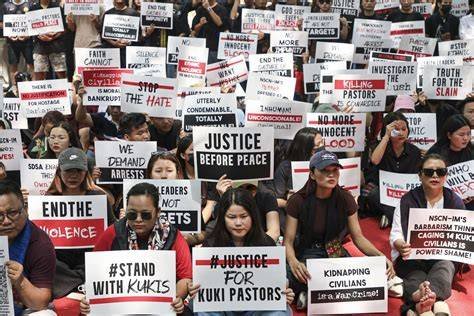
The ongoing electoral roll revision process in Manipur has triggered fresh concerns among political observers, civil society groups, and displaced residents as the state continues to grapple with prolonged ethnic violence. The revision exercise, aimed at updating voter records ahead of future elections, has now become a sensitive issue due to the large-scale displacement and instability witnessed across several districts.
Read More: Assam’s Gram Panchayats Shine At National Panchayat Awards 2025
Thousands of people in Manipur continue to live in relief camps after violence erupted between communities in 2023. Even after months of security operations and peace efforts, normalcy has not fully returned in many affected regions. Against this backdrop, concerns are growing over whether all eligible voters will be able to participate fairly in the electoral process.
Several organisations and activists have raised questions about the challenges of revising electoral rolls in a conflict-hit environment. They argue that displacement, migration, and damaged documentation could affect voter inclusion. The issue has become politically significant as different groups fear possible exclusion from voter lists.
Concerns grow over displaced voters
One of the biggest concerns surrounding the electoral roll revision is the status of internally displaced people living in temporary shelters. Thousands of residents were forced to flee their homes during the violence and have since relocated to relief camps or safer areas.
Many displaced families reportedly lost important documents such as voter identity cards, Aadhaar cards, and residential certificates while escaping violence-hit areas. This has made the verification process difficult for election officials and residents alike.
Civil society groups have urged authorities to ensure that displaced persons do not lose their voting rights because of technical or procedural issues. They stressed that special arrangements may be needed to guarantee fair participation in future elections.
Political analysts believe the situation is particularly sensitive because electoral representation in Manipur often carries strong ethnic and regional implications. Any perceived irregularity in the voter revision process could further deepen mistrust among communities already affected by conflict.
The Election Commission has reportedly been working to address logistical challenges during the revision exercise. However, concerns remain over accessibility in remote and sensitive areas where security conditions continue to remain fragile.
Violence continues to affect normal life
Despite several rounds of peace appeals and security deployment, violence and tension continue to affect many parts of Manipur. Incidents of clashes, arson, and firing have periodically resurfaced in vulnerable districts, keeping residents on edge.
The prolonged unrest has severely impacted education, healthcare, transportation, and economic activities across the state. Many schools and institutions have struggled to function normally due to security concerns and displacement.
The continuing instability has also complicated administrative processes, including electoral work. Officials involved in voter verification reportedly face difficulties in accessing certain areas due to security risks.
Political leaders and community organisations have repeatedly called for lasting peace before major democratic exercises move forward. They argue that rebuilding trust among communities is essential to ensure transparent and peaceful elections.
Security agencies remain deployed in sensitive regions, while the central and state authorities continue monitoring the situation closely. However, sporadic incidents of violence continue to raise concerns about the overall law-and-order situation.
Political parties closely monitor revision process
Political parties in Manipur are also closely watching the electoral roll revision process due to its potential impact on future elections. Leaders from different political groups have demanded transparency and accuracy in voter registration.
Some organisations have alleged that displacement patterns could alter electoral demographics in certain constituencies. Others have stressed that all genuine voters must be protected from exclusion regardless of their current place of residence.
Political experts believe the issue may emerge as a major debate ahead of future assembly or parliamentary elections in the state. Electoral rolls play a crucial role in determining voter participation and constituency representation.
Opposition parties and community bodies have reportedly sought greater clarity regarding the mechanisms being used for updating voter records. They have also demanded adequate grievance redressal systems for affected residents.
Meanwhile, election authorities have maintained that the revision exercise is being conducted according to established procedures. Officials have also appealed to residents to cooperate with verification teams and complete required formalities.
Civil society groups seek inclusive approach
Several rights groups and social organisations have called for a more inclusive and humanitarian approach during the electoral roll revision process. They believe extraordinary circumstances in Manipur require flexible administrative measures to protect democratic rights.
Activists have suggested the creation of special voter assistance centres in relief camps to help displaced residents update their records. They have also recommended mobile verification units for inaccessible regions.
Legal experts argue that the right to vote remains fundamental in a democracy, especially during periods of social and political instability. Ensuring participation from all communities could also help restore confidence in democratic institutions.
Many observers feel that transparent communication from authorities will be essential to reduce confusion and rumours surrounding the process. Misinformation and mistrust continue to remain major challenges in conflict-hit areas.
Community leaders have also urged political groups not to politicise the issue further, warning that inflammatory rhetoric could worsen tensions on the ground. Instead, they have appealed for cooperation to ensure peaceful and fair electoral participation.
Challenges remain ahead for Manipur
The electoral roll revision in Manipur comes at a time when the state is still struggling to recover from one of the most difficult phases in its recent history. Although efforts are underway to restore peace and normalcy, deep divisions and security concerns remain unresolved.
For many displaced families, survival and rehabilitation continue to be the immediate priorities. However, concerns about political representation and democratic participation are also becoming increasingly important as future elections approach.
The success of the electoral roll revision process may depend on how effectively authorities balance administrative procedures with the realities of conflict and displacement. Ensuring fairness, transparency, and inclusion will remain critical in maintaining public confidence.
As Manipur continues its difficult journey towards stability, the voter revision exercise has emerged as more than just an administrative task. It now reflects broader questions about trust, representation, and democratic rights in a state still dealing with the impact of prolonged violence.
Read More: Assam CM Felicitates Lovlina Borgohain for Asian and Commonwealth Games Qualification