


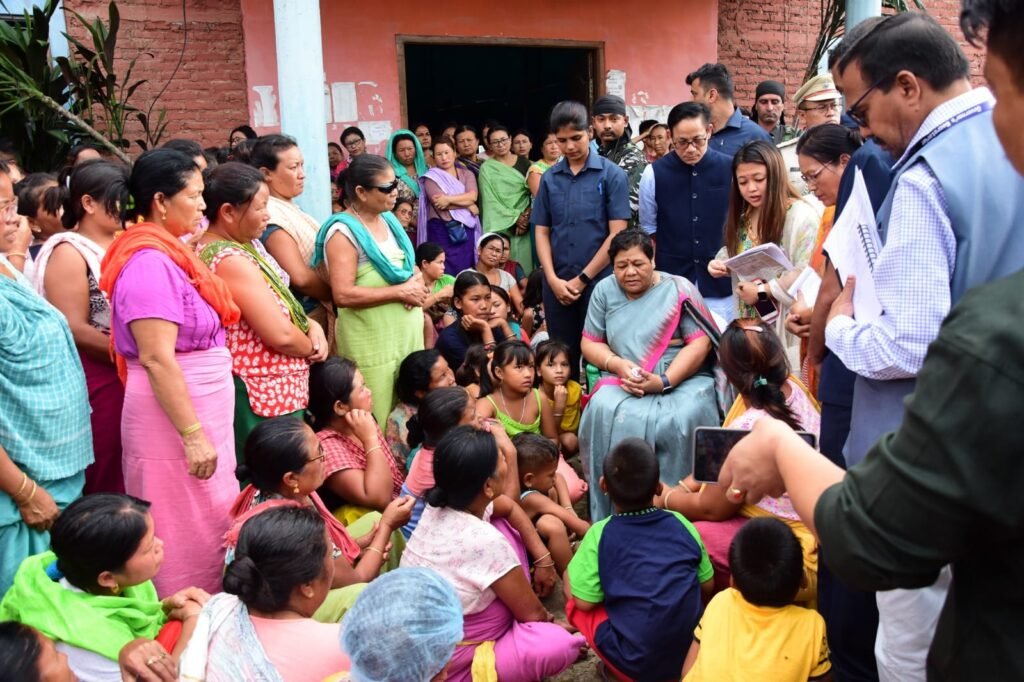
The Manipur Inquiry Commission Visit has gained renewed attention as the central inquiry commission probing the state’s ethnic violence visited relief camps to record testimonies from internally displaced persons (IDPs). The visit forms part of ongoing efforts to document the humanitarian impact of the unrest and assess the conditions faced by displaced communities. Commission members interacted with residents, gathered firsthand accounts, and reviewed the functioning of relief arrangements. The process is expected to contribute to a detailed understanding of the crisis while supporting recommendations aimed at rehabilitation, accountability, and long-term peacebuilding in the state.
Assam Cabinet Expansion Confirmed for June 5
Arunachal CM Resignation Rumours Rejected
Commission Records Statements From Displaced Families
During the visit, members of the inquiry panel directly interacted with families living in relief camps across affected areas. The Manipur Inquiry Commission Visit focused on collecting detailed testimonies from individuals who lost their homes due to violence.
Families described displacement, property loss, security fears, and difficulties in accessing basic services. Moreover, these accounts will play a key role in the commission’s broader investigation into the causes and consequences of the conflict.
Officials examined camp conditions as well, including food supply, healthcare access, sanitation, and education for children. In addition, these assessments help the commission understand urgent humanitarian needs among displaced populations.
Focus on Humanitarian Impact of Violence
The inquiry commission aims to document the humanitarian consequences of ethnic violence in Manipur. Accordingly, the Manipur Inquiry Commission Visit ensures that affected communities’ voices enter the official record.
Internally displaced persons remain among the most affected groups. Many continue living in temporary shelters for long periods. Furthermore, their testimonies reveal the scale of disruption and the difficulty of rebuilding normal life.
Experts emphasize that such inquiries support future policy decisions. These include rehabilitation programs, compensation frameworks, and social reintegration measures.
Relief Camps Under Administrative Review
Along with recording testimonies, the commission reviewed relief camp facilities and management. Authorities provide essential services to displaced families, although gaps still exist in delivery and consistency.
The Manipur Inquiry Commission Visit assessed infrastructure, resource distribution, and coordination between local administration and support agencies. Consequently, these evaluations help identify weaknesses in the current relief system.
Officials are expected to improve healthcare access, housing conditions, and long-term rehabilitation planning based on the findings. In addition, they may strengthen coordination mechanisms to improve service delivery.
Step Toward Accountability and Long-Term Peace
The inquiry process represents a major step toward accountability and reconciliation after violence. The commission collected firsthand testimonies and built a structured record of civilian experiences.
The Manipur Inquiry Commission Visit may also support policy recommendations aimed at preventing future conflict and strengthening institutional response systems. Moreover, legal experts highlight that such commissions improve transparency and ensure grievance redressal through formal mechanisms.
While immediate relief remains essential, long-term peace will depend on implementing inquiry findings. In addition, reforms based on these findings will shape future governance and conflict prevention strategies.
Conclusion
The Manipur Inquiry Commission Visit to relief camps reflects ongoing efforts to document the experiences of internally displaced persons and assess humanitarian conditions. Overall, the commission recorded testimonies, reviewed camp facilities, and examined administrative gaps. Furthermore, its findings will guide rehabilitation measures, accountability processes, and long-term peacebuilding efforts aimed at restoring stability in Manipur.
FAQs
What is the Manipur Inquiry Commission doing?
It is recording testimonies from internally displaced persons and reviewing relief camp conditions.
Who are IDPs in this context?
Internally displaced persons are people forced to leave their homes due to violence within the state.
What is the Manipur Inquiry Commission Visit?
It refers to the commission’s visit to relief camps to collect evidence and assess humanitarian conditions.
Why are relief camps being inspected?
To evaluate living conditions and ensure proper support for displaced families.
What will happen to the collected testimonies?
They will be used in the commission’s report and recommendations on the violence.
Why is the inquiry important?
It helps ensure accountability and supports long-term rehabilitation and peacebuilding efforts.