


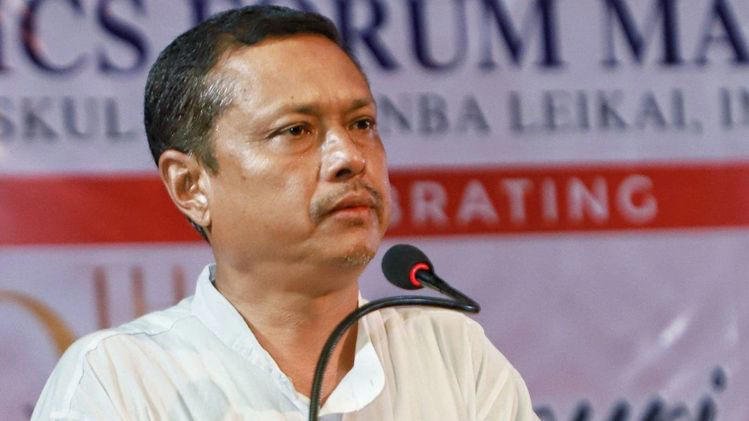
The Manipur MP poorest Rajya Sabha finding has drawn national attention after a recent report by the Association for Democratic Reforms (ADR) revealed stark contrasts in the financial profiles of Members of Parliament. The report highlights that while many MPs possess significant wealth, some stand at the opposite end of the spectrum.
Among them is Maharaja Sanajaoba Leishemba, the ceremonial monarch of Manipur and a Bharatiya Janata Party (BJP) representative in the Rajya Sabha. Despite his royal lineage, he has declared assets of just around Rs 5 lakh, making him the second-poorest member of the Upper House.
Read More: Arunachal CM Welcomes Small Hydro Power Scheme Approved by Union Cabinet
A King Without a Kingdom
Maharaja Sanajaoba Leishemba’s position in the wealth rankings presents a striking paradox. Often described as a king without a kingdom, he represents Manipur in the Rajya Sabha but reports minimal personal wealth.
His declaration of approximately Rs 5 lakh in assets places him near the bottom of the wealth table among MPs. Therefore, his case stands out in a political landscape where many lawmakers are known for their substantial financial holdings.
Moreover, his background as a traditional monarch adds a symbolic dimension to the findings. It reflects how historical titles do not necessarily translate into modern economic status.
ADR Report Highlights Wealth Disparities
The ADR report provides a comprehensive analysis of the financial declarations of Rajya Sabha members. It reveals a wide gap between the richest and poorest MPs.
While some members have assets worth hundreds of crores, others like Leishemba report modest financial standings. Consequently, the report underscores the diversity in economic backgrounds among lawmakers.
Additionally, the findings raise questions about representation and accessibility in Indian politics. The presence of MPs from varied economic backgrounds suggests that political participation is not limited to the wealthy alone.
Criminal Cases Among MPs Raise Concerns
Apart from financial data, the ADR report also sheds light on the legal backgrounds of MPs. It states that nearly one-third of the sitting Rajya Sabha members have declared criminal cases against themselves.
This statistic has sparked debate about the need for stricter candidate selection and greater transparency. Therefore, the report highlights an important issue in India’s political system.
While asset declarations provide insight into financial status, criminal records raise concerns about governance and accountability. Hence, both aspects are crucial for evaluating public representatives.
Understanding the Broader Context
The case of Maharaja Sanajaoba Leishemba reflects broader trends in Indian politics. While wealth often plays a significant role in elections, there are exceptions where individuals with limited financial resources secure positions of influence.
This diversity can strengthen democratic representation. However, it also highlights disparities that exist within the political system.
Furthermore, the report emphasizes the importance of transparency in public life. By making asset and criminal records publicly available, it allows voters to make informed decisions.
Political and Public Reactions
The ADR report has generated mixed reactions from political leaders and the public. Some view the findings as a positive sign of inclusivity, where individuals from different economic backgrounds can participate in governance.
Others, however, express concern over the high number of MPs with criminal cases. They argue that this undermines public trust and calls for reforms in the electoral process.
In the case of Leishemba, many have expressed surprise at his low asset declaration. Therefore, his situation has become a focal point in discussions about wealth and representation.
Role of Transparency in Democracy
The publication of such reports plays a crucial role in strengthening democracy. Transparency regarding assets and legal records ensures accountability among elected representatives.
Organizations like ADR have consistently worked to provide voters with accurate information. As a result, these efforts contribute to a more informed electorate.
Moreover, the data can influence policy discussions and encourage political parties to adopt stricter standards for candidate selection.
Implications for Future Elections
The findings of the ADR report may have implications for future elections. Voters are increasingly paying attention to the financial and legal backgrounds of candidates.
Therefore, parties may need to prioritize transparency and integrity while selecting nominees. Additionally, public awareness campaigns can help educate voters about the importance of these factors.
The presence of MPs with modest financial backgrounds, such as Leishemba, may also encourage greater participation from diverse sections of society.
Conclusion
The Manipur MP poorest Rajya Sabha revelation highlights the diverse economic profiles of India’s lawmakers. Maharaja Sanajaoba Leishemba’s position as one of the least wealthy MPs stands in contrast to the substantial assets declared by many others.
At the same time, the ADR report’s findings on criminal cases raise important questions about governance and accountability. Together, these insights provide a deeper understanding of the current political landscape.
As discussions continue, the focus will remain on transparency, representation, and the need for reforms. Ultimately, such reports play a vital role in strengthening democratic processes and ensuring that public representatives are held accountable.
Read More: Pradyut Bordoloi’s Volte-Face: From Congress Chargesheet to BJP Induction