


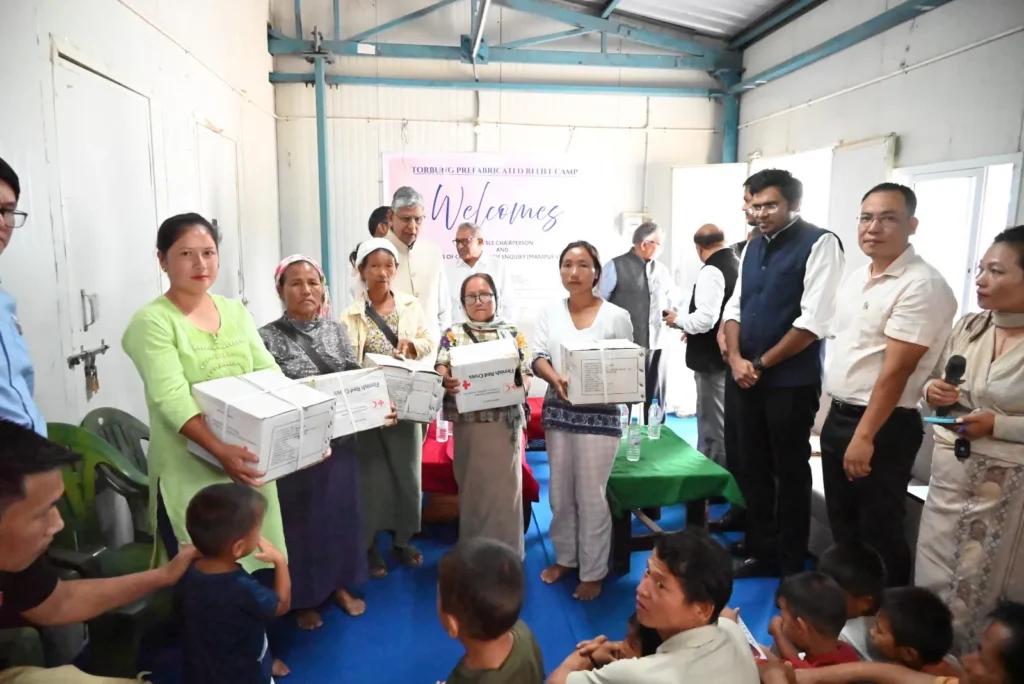
The Manipur violence inquiry commission has intensified its fact-finding efforts by visiting relief camps housing people displaced by the state’s prolonged ethnic conflict. During its latest engagement, members of the commission interacted with camp residents, assessed living conditions, and gathered firsthand accounts related to the violence that has affected several districts over the past years. The visit formed part of the commission’s broader mandate to examine the causes, impact, and circumstances surrounding the unrest. Additionally, the commission held a closed-door briefing with the Chief Minister, signaling continued efforts to collect information from both affected communities and government authorities.
Itanagar Disaster Response Facility Foundation Laid
Tripura FRA Digital Atlas Inaugurated
Commission Conducts Ground Assessment In Relief Camps
Members of the inquiry panel visited multiple relief camps established for families displaced by the ethnic violence. During these visits, the commission observed camp facilities and listened to concerns raised by residents regarding security, rehabilitation, and access to essential services. The interactions provided an opportunity for affected individuals to present their experiences directly to the panel.
Officials associated with the exercise emphasized the importance of obtaining firsthand testimonies from those most impacted by the conflict. Such accounts are expected to contribute significantly to the commission’s understanding of the humanitarian consequences of the violence. The Manipur violence inquiry commission is tasked with documenting these experiences to support a comprehensive examination of events and their aftermath.
Focus On Humanitarian And Rehabilitation Concerns
The relief camp visits also highlighted ongoing challenges faced by displaced families. Many residents continue to depend on government assistance and humanitarian support while awaiting long-term rehabilitation measures. Issues related to housing, education, healthcare, and livelihood restoration remain important concerns among affected communities.
Commission members reportedly reviewed available facilities and sought information about the support mechanisms currently in place. Furthermore, the panel examined how various agencies have responded to the needs of displaced populations. By collecting detailed feedback from camp residents, the Manipur violence inquiry commission aims to better understand the broader social and economic impact of the conflict on local communities.
Closed-Door Briefing Held With Chief Minister
Alongside its field visits, the commission conducted a closed-door meeting with the Chief Minister as part of its ongoing inquiry process. The discussion reportedly focused on developments related to the violence, administrative responses, security measures, and rehabilitation initiatives undertaken by the state government.
Such interactions form an important component of the commission’s investigative work because they allow officials to provide institutional perspectives on the crisis. Government representatives can offer details regarding policy decisions, law-and-order measures, and coordination efforts implemented during various stages of the unrest. The Manipur violence inquiry commission is expected to incorporate information gathered from these discussions into its broader assessment of the situation.
Inquiry Seeks Comprehensive Understanding Of Conflict
The commission’s mandate extends beyond documenting individual incidents. Its objective includes examining the factors that contributed to the outbreak and continuation of violence, as well as evaluating responses from different institutions. Consequently, the inquiry process involves consultations with affected citizens, civil society organizations, government departments, and security agencies.
Observers note that a thorough investigation requires balancing humanitarian concerns with administrative and legal considerations. Therefore, the commission has adopted a multi-layered approach that combines field inspections, stakeholder consultations, and document reviews. Through these efforts, the Manipur violence inquiry commission seeks to develop a clearer picture of the conflict’s origins, progression, and consequences.
Expectations From The Inquiry Process
Residents, community groups, and policymakers are closely monitoring the commission’s work. Many stakeholders hope that the inquiry will identify key lessons and provide recommendations that can help prevent future unrest. At the same time, affected communities continue to seek accountability, rehabilitation, and lasting peace.
Experts believe that findings from the inquiry could contribute to future policy decisions concerning conflict management, social reconciliation, and community engagement. The process may also help authorities strengthen mechanisms designed to address grievances and maintain stability. As investigations continue, the commission is expected to engage with additional stakeholders across different parts of the state.
Conclusion
The Manipur violence inquiry commission has taken another significant step in its investigation by visiting relief camps and holding discussions with the Chief Minister. Through direct interactions with displaced residents and consultations with government authorities, the panel is gathering information essential to understanding the full impact of the ethnic violence. The inquiry remains an important mechanism for examining the causes and consequences of the conflict while informing future efforts toward rehabilitation, accountability, and long-term peace. Stakeholders across Manipur will be watching closely as the commission advances its work and prepares its findings.
FAQs
Q1. Why did the commission visit relief camps?
The visits allowed members to gather firsthand testimonies from people affected by the violence.
Q2. What was discussed with the Chief Minister?
The briefing reportedly covered administrative responses, security measures, and rehabilitation efforts.
Q3. What is the Manipur violence inquiry commission?
It is a judicial body established to investigate the causes, impact, and circumstances of the ethnic violence.
Q4. Who can provide information to the commission?
Affected residents, government officials, civil society groups, and other stakeholders may contribute information.
Q5. Why are relief camp visits important?
They help investigators understand the humanitarian consequences of the conflict directly from displaced families.
Q6. What outcome is expected from the inquiry?
The commission is expected to prepare findings and recommendations related to accountability, peace, and rehabilitation.