


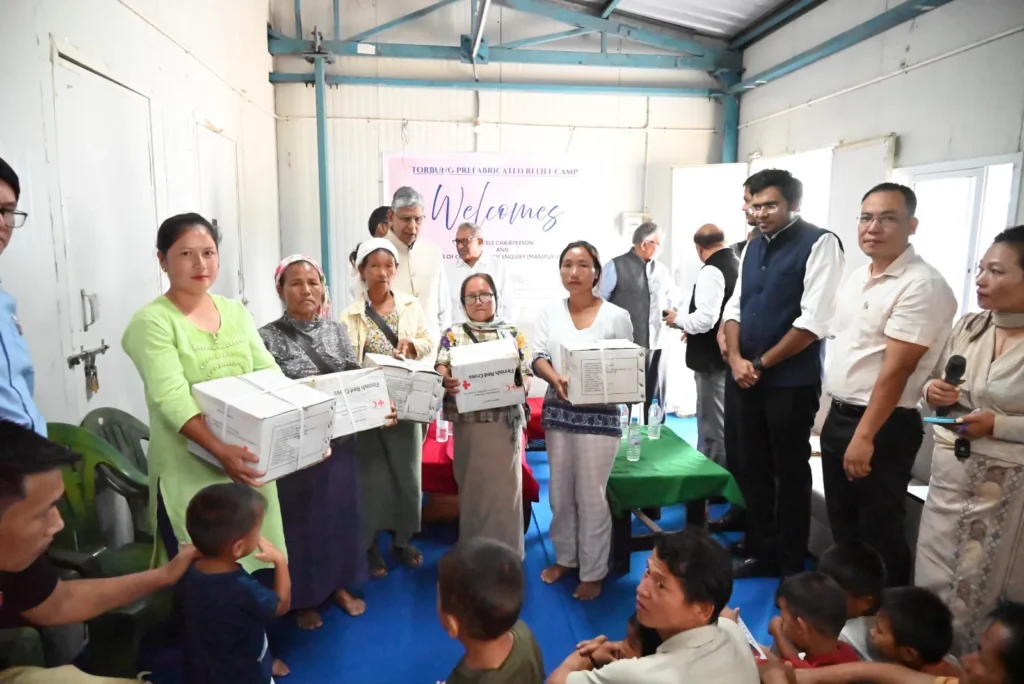
The Manipur Violence Inquiry Commission continued its fact-finding efforts by visiting several relief camps across the state to collect firsthand accounts and evidence from internally displaced persons (IDPs) affected by the violence. The commission, appointed by the Union government, is tasked with examining the circumstances surrounding the unrest and documenting testimonies from those directly impacted. The latest outreach marks an important phase in the investigation, as displaced residents are being given an opportunity to share their experiences, concerns, and observations before the panel. The exercise is expected to contribute significantly to the commission’s assessment of the events and their humanitarian consequences.
Mizoram Power Network Upgrade Funds Released
Shillong Reviews Preparations For National Games
Commission Conducts Field Visits to Relief Camps
The Manipur Violence Inquiry Commission visited multiple relief camps across affected regions of the state, and it actively recorded statements from internally displaced persons (IDPs). The commission aimed to gather firsthand information, document evidence, and understand how the violence affected local communities. Moreover, inquiry commissions rely heavily on field investigations to build a clear picture of complex situations. In this case, officials directly interacted with affected individuals, verified facts on the ground, and documented personal experiences in a structured format. As a result, the process improved the depth of evidence collection. Additionally, officials accompanying the commission coordinated with local administrations and camp authorities. Therefore, they ensured smooth interaction between displaced families and investigators. This step helped affected residents share their experiences without procedural difficulties.
IDPs Share Firsthand Testimonies
During the visit, the commission actively recorded detailed statements from internally displaced persons living in relief camps. Many residents had to leave their homes due to the violence, and they continue to depend on temporary shelter facilities. Furthermore, residents shared incidents they witnessed or directly experienced. Consequently, these testimonies helped investigators understand the sequence of events and assess the humanitarian impact more clearly. Although authorities will verify all statements, these personal accounts still provide crucial insight in large-scale investigations. Meanwhile, officials ensured that they recorded every statement carefully and systematically to maintain accuracy.
Evidence Collection and Verification Process
In addition to oral testimonies, the Manipur Violence Inquiry Commission collected supporting evidence such as documents, written submissions, and other relevant records. Furthermore, investigators reviewed materials from administrative departments and law enforcement agencies. Consequently, they cross-checked statements against official records to improve reliability. This approach helped them build a more complete and balanced understanding of the situation. Moreover, experts emphasized that structured documentation strengthens transparency and accountability. Therefore, the collected material will play a key role in shaping the commission’s final findings and recommendations.
Significance of the Inquiry
The inquiry commission plays an important role because it examines both the causes and consequences of the violence. Additionally, it ensures that displaced communities receive a platform to share their experiences directly. Moreover, such commissions help strengthen public accountability and guide future policy decisions. Therefore, their findings often influence administrative and governance reforms. Meanwhile, direct engagement with affected communities improves the credibility of the investigation. As a result, policymakers, civil society groups, and stakeholders continue to closely monitor the commission’s work.
Conclusion
The Manipur Violence Inquiry Commission has entered a crucial phase as it visits relief camps and records testimonies from internally displaced persons. Moreover, it actively collects and verifies evidence to build a comprehensive understanding of the situation. Consequently, the inquiry strengthens transparency and accountability while documenting the humanitarian impact of the violence. Ultimately, the findings will play an important role in shaping future policy responses.
FAQs
Q1. Why did the commission visit relief camps?
The visits were conducted to gather firsthand testimonies and evidence from internally displaced persons affected by the violence.
Q2. Who established the inquiry commission?
The commission was appointed by the Union government to investigate the violence and related issues.
Q3. What information is being collected from camp residents?
Investigators are recording statements, experiences, observations, and other relevant evidence.
Q4. Why are testimonies from displaced persons important?
They provide firsthand accounts that can help investigators better understand the impact of the violence.
Q5. What does Manipur Violence Inquiry Commission refer to?
It refers to the government-appointed body investigating the circumstances surrounding the violence in Manipur.
Q6. What happens to the evidence collected by the commission?
The information is reviewed, documented, and considered as part of the commission’s overall investigation and findings.